

10 Cool Gadgets You Can Only Buy In Japan
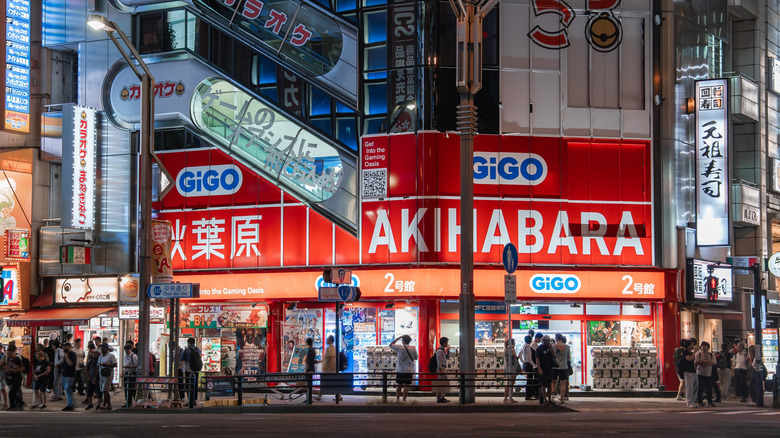
After World War II, Japan turned the industrial foundation that had sustained its war effort into a thriving consumer tech sector. Japan's tech revolution sent ripples across the globe, establishing Japan as the de facto leader of consumer technology. Gadgets like the Sony Walkman and CASIO calculator watches were some of the '80s tech items that nearly every home had, defining entire categories and brands that are now legendary.
Even now, companies like Sony and Panasonic continue to dominate the tech market, with products covering the entire range of consumer technology. But is Japanese tech still innovative enough? From a cursory glance, it would be easy to answer this with a no. After all, there are no market-defining new products coming out of Japan anymore, with the famous brands just producing the same products at a better quality.
But if you head to Japan, you will notice a lot of cool little gadgets that are not really marketed outside the country. These aren't revolutionary by any means, yet they are certainly creative and show that the country's innovative spirit is still alive and kicking. Japan loves solving tiny everyday problems with dedicated little gadgets, some of which aren't even that technologically complex. They are just ingenious designs to fix issues that other countries don't consider worth solving. You can actually find many of these gadgets outside Japan as well, through e-commerce and even at the occasional store.
Folding washing machine
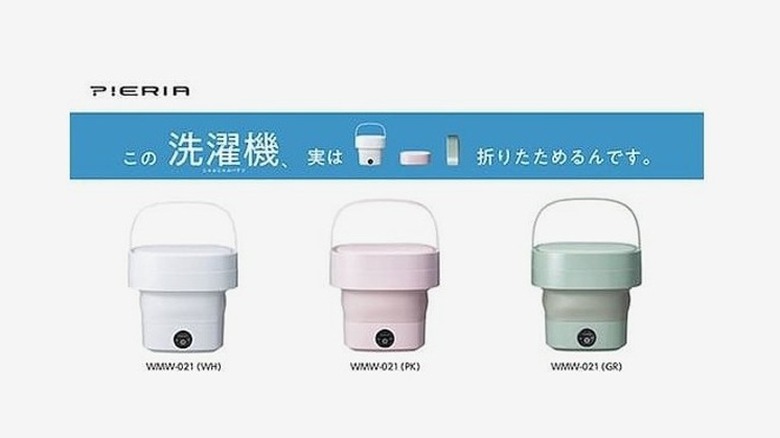
One thing that remains common in all major washing machine brands, from the worst to the best, is that they are bulky. As a result, some houses ditch washing machines entirely to rely on laundromats, saving space. But what do you do when you are traveling? For most people, the answer is to just pack extra sets of clothes. Can't exactly carry a huge washing machine along with you now, can't you? At least not a normal one. But for Japan, that's not an acceptable solution.
You see, Japan has a thing for cleanliness. Whether it's the outdoors or the indoors, the environment or even the clothes we wear, the Japanese believe in keeping things squeaky clean. This means they dislike lugging around dirty laundry and would rather have a way to wash it, even when traveling. And they have figured out a solution – a portable washing machine. A small device that can fold up to further minimize its size, allowing it to be carried easily in a bag.
And it is actually functional. The portable washing machine has all the functions you can expect, from washing to spin drying. Of course, the smaller size means it cannot wash too many clothes at once, but for fewer clothes, it does the job. Making it a great partner for frequent travelers, or even for home usage. Tokyo's tiny apartments mean that space-saving technology is preferred, and a portable washing machine fits the bill.
Bento rice cooker
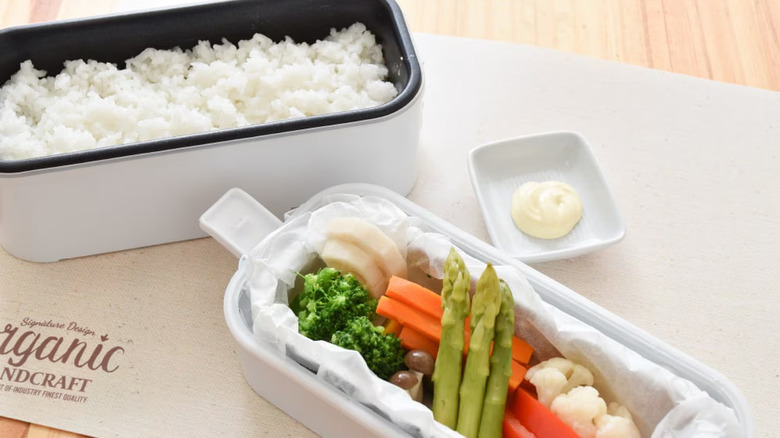
Bento boxes have become a global phenomenon, as many things Japanese tend to do. At its core, a Bento box is rather simple: a lunchbox based on rice, some protein, and vegetables for a nutritious meal that can be eaten anywhere. There is one problem, though — the rice. Unlike a sandwich, rice tastes best fresh, and eating it from a lunchbox packed in the morning is not the best experience. The rice clumps up, becomes too dry, and loses its texture.
This might not be a big issue for someone just copying a trend, but for the Japanese, for whom Bento boxes are a tradition and a staple, it is unconscionable. Japan loves its rice and cares a lot about getting it right. This is why Japanese rice cookers are widely considered the best and will cook rice perfectly with minimal input. And while the big, fancy rice cookers from Zojirushi take the spotlight, Japan also has some portable options.
Meet the Bento rice cooker. It is a small, Bento box-sized – and shaped – rice cooker that can cook up a serving of steaming hot rice anywhere, anytime. Aimed at office-goers who miss the taste of freshly cooked rice at lunch, this Bento rice cooker can whip up a meal right at their desks. And it works. It is a bit pricey for how little rice it cooks at a time, but the convenience of a bento box that cooks the food is unmatched.
Huis E-Ink Remote Controller
Most appliances in our home come with their own remote. With enough gadgets, you end up with a whole collection of remotes – a remote for your TV, for your air conditioner, for your Blu-ray player, and whatnot. And the most annoying part is that all these remotes have their own layouts and sizes, even for the same functions. The buttons that increase the volume on your TV are not the same as those on your Blu-ray player, and you just have to get used to it. Or maybe not.
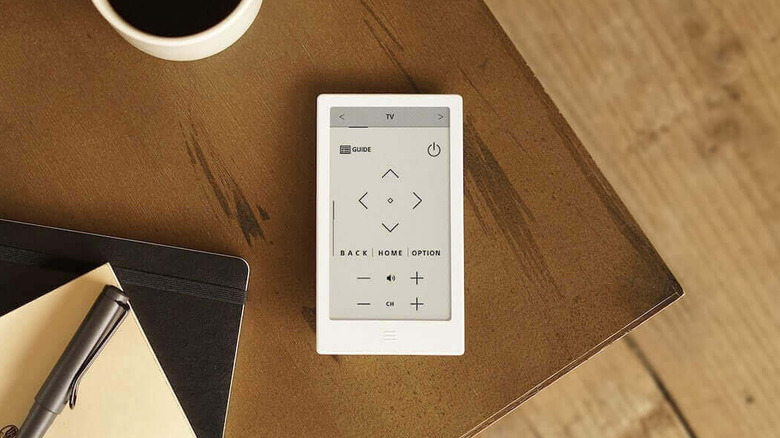
Because Sony Japan has created a fully configurable universal remote control. Called the Huis Remote Controller, it is basically a small tablet with an e-ink display, where all the buttons appear as virtual icons. This is why the buttons are customizable — you can freely modify the layout to create any kind of buttons and labels you want. The real smart move is using e-ink; that is what elevates it from a standard digital display to something that can serve as a remote.
Thanks to the e-paper display, the Huis remote can always stay on, showing the buttons like any normal remote, without guzzling power like a smartphone. It can last for months without needing to recharge, which exceeds the battery life of most standard remotes. And the e-ink means it doesn't glare brightly in the dark either. Of course, there is no real need for universal remotes anymore, but Japan likes its nifty gadgets.
KunKun
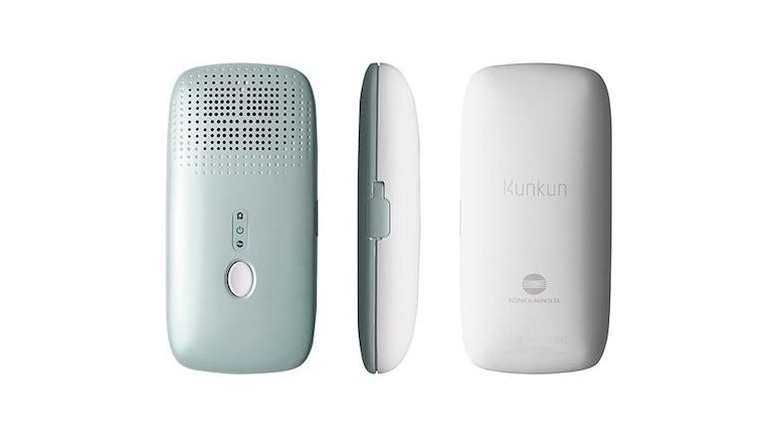
Remember when we talked about how Japan is really big on cleanliness? Well, the sentiment doesn't end with laundered clothes; it also includes body odor. And not just in the general sense of being annoyed by bad odor; the Japanese consider poor body odor to be a form of harassment, elevating it to an actual social issue. They even have a dedicated term for it: "sumehara", literally meaning smell harassment.
The biggest hurdle in curbing the issue is not the lack of deodorants. No, the difficult part is for a person to tell when they smell bad. The way our sense of smell works is that it can get used to background odors. So a person's own nose might be too used to their own odor to tell if there is a problem. And the Japanese are polite to a fault – even if your co-workers are annoyed at your smell, they won't tell you that to your face.
So they invented a body odor scanner. Called KunKun (literally "sniff sniff"), the little device measures the odor of any body part it is held up to and grades it, giving a measurable metric of how good or bad a smell is. It works for underarms, feet, socks, anything really, giving an easy way of telling if something has started smelling foul. The ratings are pretty accurate, so it does the job well, though it is pretty expensive for a simple gadget.
Fanbrella
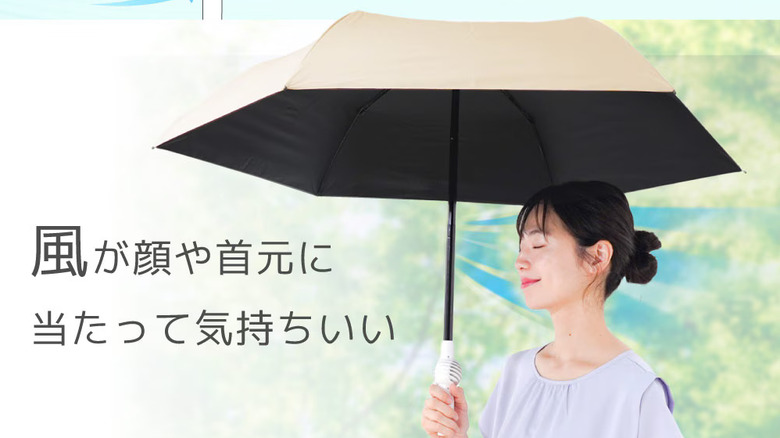
The idea of using an umbrella to shade from the sun is nothing new. But when dealing with Japanese summers, it falls short of doing anything. Simple shade can block the sun, but what about the stifling heat around you? There are other wearable cooling devices (that aren't neck fans), but they don't work that well in the sweltering sun and are only moderately effective. Not to mention, they can be expensive and a bit inconvenient to carry around.
Make room for the nifty Fanbrella. Looking like an ordinary umbrella from the outside, this gadget hides a fan under the parasol, blowing the cooler air toward your face as you hold it up against the sun. It runs on batteries, of course, and can keep going for a few hours – enough to help you make it to the neighboring store and back in the scorching sun. And if the heat still feels too much, try inserting the umbrella's handle into a water bottle. No, we are not joking.
You see, the Fanbrella is also equipped with a mist sprayer. It can suck up water through its handle and then spray it alongside the fan, blowing a cool mist over your face. The fact that it can use any bottle you have is great because it keeps the umbrella from getting bulkier with water storage, and you can even use a cold water bottle from a vending machine for extra cooling.
Roomba Mini
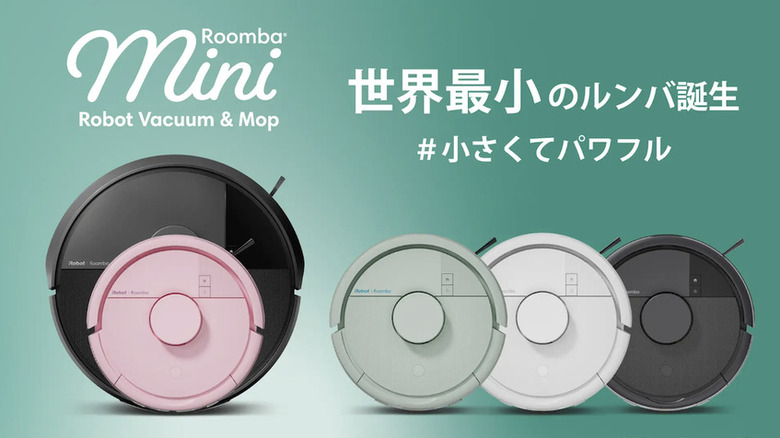
Robot vacuum cleaners aren't unique to Japan. They have become popular worldwide, and iRobot is one of the best robot vacuum cleaner brands, according to Consumer Reports. But Japanese apartments pose some unique challenges that make the general iRobot Roomba unsuitable. Chiefly, the problem is size. Tokyo apartments can be really small, with the furnishings leaving little room for a Roomba to maneuver. Not to mention the amount of space the charging station takes up.
So the company made Roomba Mini, a more compact version of its robot vacuum. It is about half the size of a regular Roomba, with a correspondingly smaller docking station as well, that you can easily fit into a corner of a small flat. Its tiny size means it can navigate the most packed apartment with ease, and even nudge itself into small gaps and crevices to clean thoroughly. This means that places that are usually out of reach for a regular robot vacuum — under the bed, between the legs of a chair, etc. — are fair game for this little Roomba Mini.
This is one of the products the company went on to sell globally, though its small size and relatively expensive price tag meant it was not the market favorite. Not to mention the weaker battery, compared to the larger models. But in Japan, with its smaller-than-average apartments and cultural disposition for space efficiency, the Roomba Mini is a winner.
Fan-jakketo
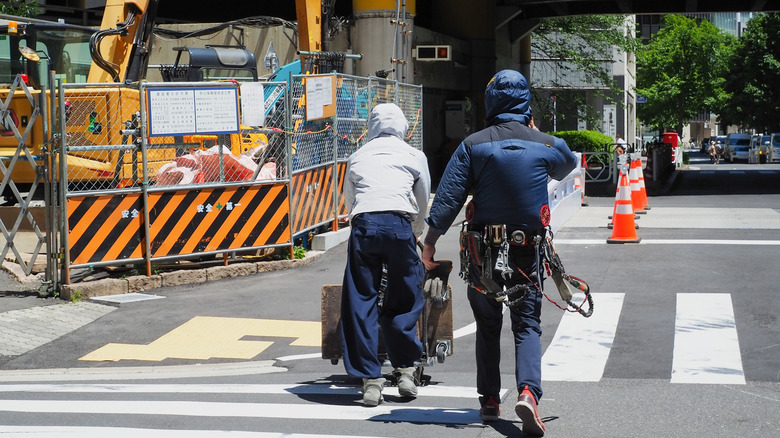
Hot and humid summers are a problem in many parts of the world. Air conditioners are the accepted way to deal with heat, but they only work in enclosed environments. What about the outdoors, then? For most of the world, the answer is to just grin and bear it, because it isn't like you can carry cooling gadgets with you. There are some great neck fans you can buy, of course, but they don't work that well in the sweltering tropical heat.
So Japan figured out a different solution — the fan jacket, or fan-jakketo as they call it in Japan. The main issue with gadgets like neck fans is that they simply circulate the already warm air around a person. Japan has tried to solve this problem with wearable cooling devices like the Sony Reon, which can effectively cool a localized area using cooling plates, but they don't provide full-body cooling. So why not create a contained environment around a person's body?
That's the principle behind a Japanese fan jacket. A jacket that cinches tightly at the arms and waist, creating a sealed environment where outside air cannot get in, then uses two fans at the back to circulate this air, cooling the body. It looks a bit odd, since the jacket puffs up like an inflatable, but the functionality is so life-saving that it is a common sight for construction workers and other professionals who work outdoors in Japan.
Flaundry shoe dryer
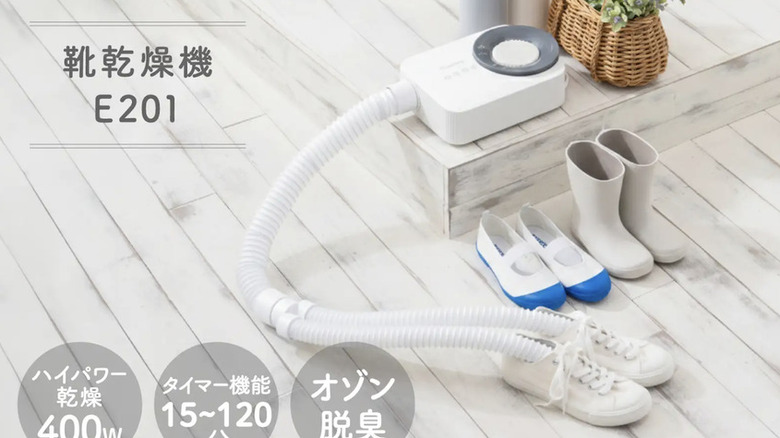
We have mentioned Japan's struggles with its hot, humid weather and the challenges are not limited to cooling solutions alone. The humidity is an issue as well, making things damp and smelly. While clothes can just be laundered to get rid of the smell, what do you do about shoes? Even though you can always wash the shoes, drying them is another matter. When the weather is bright and sunny, you can just let them dry outside, but Japan also sees frequent rainfall and overcast skies, so drying your shoes can be a problem.
Enter the Flaundry shoe dryer. It is a gadget specifically designed to dry out shoes, with two slim hoses that can be inserted into a pair of shoes to tackle the damp insides. Often paired with an ozone deodorizing function, the shoe dryer can completely get rid of the entrenched sweaty smell inside shoes worn all day in the humid heat, and make them crisp as new again.
This may seem odd, but Japan cares about cleanliness and has a tradition of keeping things dry and smelling fresh even in the rainy, humid environment. This extends to the traditional bedding, "futon", leading to futon dryers as well, to air out mattresses and keep them from getting damp and moldy. As a result, most Japanese homes have a shoe dryer near the washing machine. Even laundromats in Japan have coin-operated shoe-washing and drying machines.
Kotatsu
We have talked about Japan's humid summers, but that doesn't mean the rest of the year is milder. Japanese winters tend to be quite harsh as well, posing a different set of challenges for homes. The main struggle is the insulation. Or rather, the lack of it. Japanese houses are designed to mitigate the humid heat that prevails for most of the year and are ill-equipped to handle the cold. And this is not easily fixed through centralized heating either.
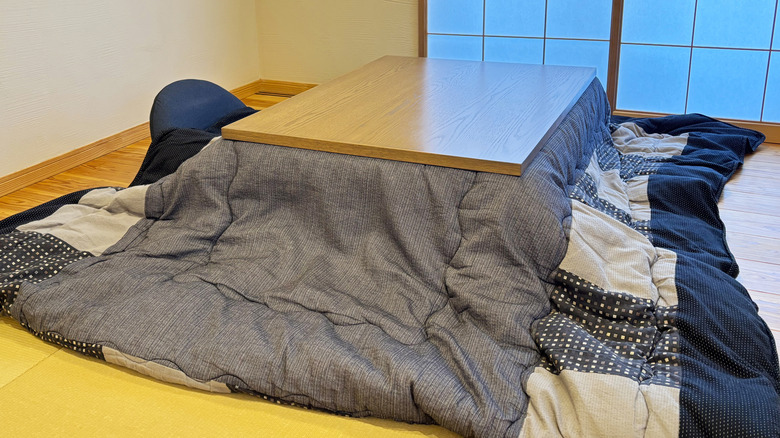
Japanese homes are designed to be airy and well-ventilated, which helps circulate air during the stagnant summer, reducing humidity. But this very quality becomes a problem in winter, letting cold air seep in and failing to trap any heat inside. This means that a more localized form of heating is needed, creating a zone of warmth and protection from the biting chill. And that's the Kotatsu. It is a simple yet ingenious solution that solves the problem without any incredible technical complexity.
A Kotatsu consists of a table covered with a futon that drapes over the floor, with a heating source underneath the table. This efficiently heats up the air trapped underneath the futon, creating a warm atmosphere even in an otherwise cold room. People can put their feet inside the Kotatsu to bask in the heat, gathering together to watch TV, have dinner, and relax. The Kotatsu is now both a practical solution and a cultural tradition in Japan.
ArchelisFX
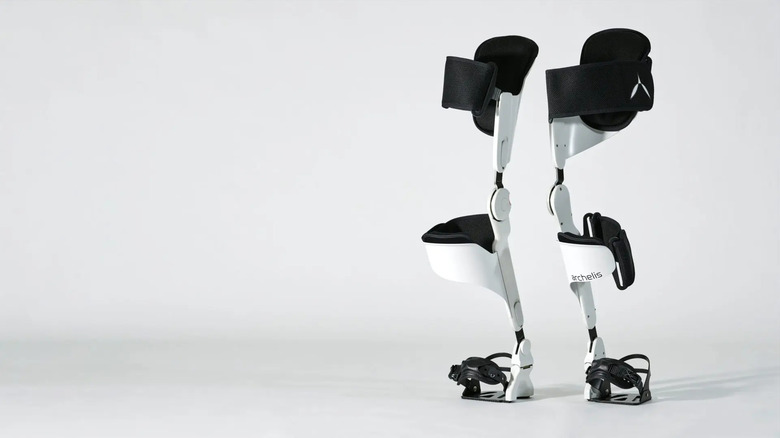
We started our list with a relatively normal washing machine, and progressively touched upon more creatively Japanese gadgets. But this is probably the weirdest gadget on this list – ArchelisFX. Or, as it is more commonly known, a wearable chair. Yes, you heard that right. Crazy as it may sound, Archelis is a Japanese invention that lets you sit in midair. But how does that even work?
The answer is relatively simple. A chair is just a device that lets you rest your legs. It achieves this by supporting your body weight on your lower torso, taking pressure off your knees and heels. Now, what if you had a device that could do this without requiring the actual furniture? That's exactly what the Archelis project is about. It is effectively an exoskeleton you wear on your lower body, with a specific design to let you rest your legs whenever you want, without any electricity required.
It may sound like a goofy concept, but it actually has serious real-world applications. Surgeons, for example, often have to spend hours at a time in the operating theater, without any way to rest their legs. The Archelis lets them alleviate the fatigue without interrupting their work. This principle extends to many other medical staff, as well as workers in factory or retail settings. Any of these professionals can wear the ArchelisFX underneath their clothes and rest while standing, without limiting their movement when not in use.