

5 Electronics That Are Much Cheaper To Buy In Japan
We may receive a commission on purchases made from links.
Have you ever wanted to visit Japan? Of course you have; you wouldn't be reading this article otherwise. But what should you bring back as a souvenir? How about some Nintendo products that aren't a Switch or games (e.g., fidget toys and hanafuda cards)? Or maybe a unique item from one of the country's innumerable shrines? You can't go wrong with electronics, especially since they're often less expensive than back home.
Electronics in Japan are cheaper than those in the U.S. for several reasons. First, there's the exchange rate. While you can get a good idea of prices by assuming that ¥100 is the equivalent of $1, as of writing, it's closer to $0.62. Exchange rates fluctuate daily, but generally U.S. currency is worth more than Japanese currency, which means tourists can squeeze more out of their cash while abroad. Moreover, stores in Japan are required by law to include sales tax in their prices, whereas U.S. stores often tack on the tax during checkout. If you see an item in Japan that costs as much as it would stateside, you're still saving money if you buy while abroad because the Japanese price takes the tax into account. And even if it doesn't, tourists are often exempt from paying sales tax in Japan. So long as the item carries a special "tax-free shop" symbol and is part of a transaction costing over $100 (about ¥10,000).
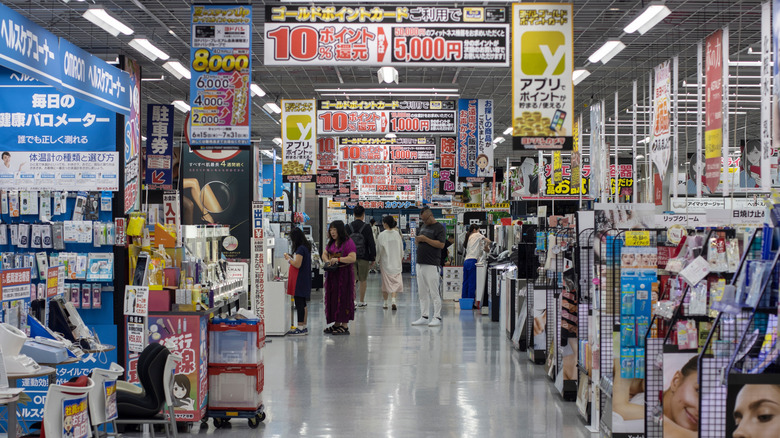
You can often find top sales on electronics in stores such as Yamada Denki and Yodobashi Camera. Think of these as the B&H Photo and Best Buy of Japan, only better. Here are what we believe are the best deals.
Game consoles and controllers
When many people think about Japanese electronics, Nintendo and Sony are some of the first companies that come to mind. After all, they've been entertaining audiences for decades. If you don't think the PlayStation 5 is worth $900, you can buy one in Japan. Just keep in mind that money isn't the only cost.
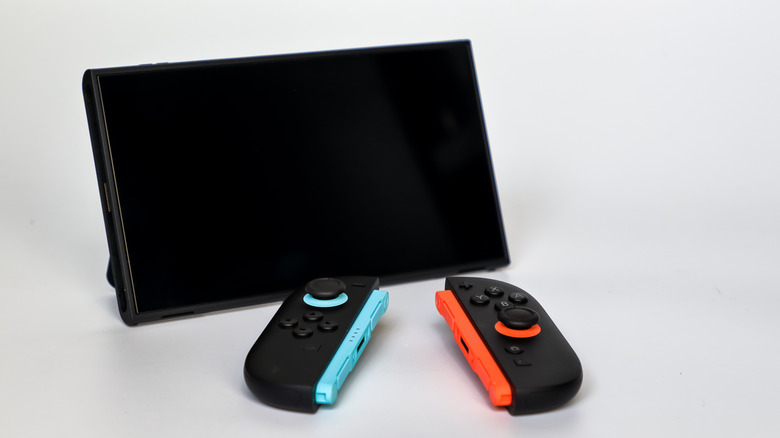
The price of a PS5 in the U.S. varies depending on the model you want. For instance, the vanilla version of the PS5 with 1TB of storage goes for $649, whereas the PS5 Pro with 2TB sells for $899 — before tax, mind you. But in Japan, the PS5 Pro retails for ¥137,980 ($849.67) or less. Assuming you can find one, since they're often sold out. You can also buy a digital PS5 with 825GB for only ¥54,950 ($338.37), and that's including tax. But unlike all other PS5s, these are region-locked and only play Japanese games with Japanese language options. Likewise, Japanese Switch 2s follow a similar pricing structure: You can purchase one for ¥59,980 ($369.38), but it's Japanese only.
Buying certain electronics in Japan also comes with one particular bugbear: They use Japanese power adapters that are incompatible with U.S. outlets (yet another factor that sets Japanese and U.S. Switch 2 consoles apart). However, you can often circumvent this issue if the device uses a USB power cord. Case in point, the PS5 DualSense controller. These peripherals start at $74 (plus tax) in the U.S., but you can buy them in Japan for as low as ¥11,190 ($68.90). Heck, limited edition models that go for $84 stateside sell for only ¥12,480 ($76.84).
Headphones and earbuds

Let's say you forgot to pack your headphones or earbuds before visiting Japan. Or maybe the ones you brought got lost, stolen, or broken. You can buy a new pair in Japan for pennies on the yen.
If you walk into a general electronics store, including Yodobashi, you can often find a wide array of quality headsets. For instance, a pair of Bose QuietComfort Ultra Headphones (over-ear headphones that are cheaper than AirPods Max 2) would normally run you $449 in a Best Buy, but in Japan, you can pick them up for only ¥59,400 ($365.80). And yes, we're talking about a model that comes with noise-canceling technology and spatial audio.
While you can save plenty of money on Japanese headphones, earbuds are more popular in the country, so you'll probably find them often. And their regional discounts are just as tempting. Since Sony is based in Japan and does more than just manufacture game consoles, you can buy plenty of their audio products and save money doing so. A Sony SF-1000XM6 (another pair of noise-canceling devices) normally costs $329.99, but in Japanese stores like Yodobashi, they only go for ¥39,600 ($243.91). Just don't expect to get the same savings if you go shopping for devices like the Apple AirPods Pro 3. You can buy them for around $249 (not including tax) at many U.S. stores, but in Japan, they cost only a slightly smaller ¥39,800 ($245.11). Even though Apple products are popular in Japan, don't expect to save much money on them while in the country.
Cameras
Many people like to immortalize their vacations with photo albums, and Japan is full of scenic vistas and locales begging for a pic (although some areas prohibit photography, so always research them beforehand). While many popular smartphone cameras work in a pinch, a dedicated camera will give you a better picture. And if you buy the camera in Japan, you'll save money to boot.
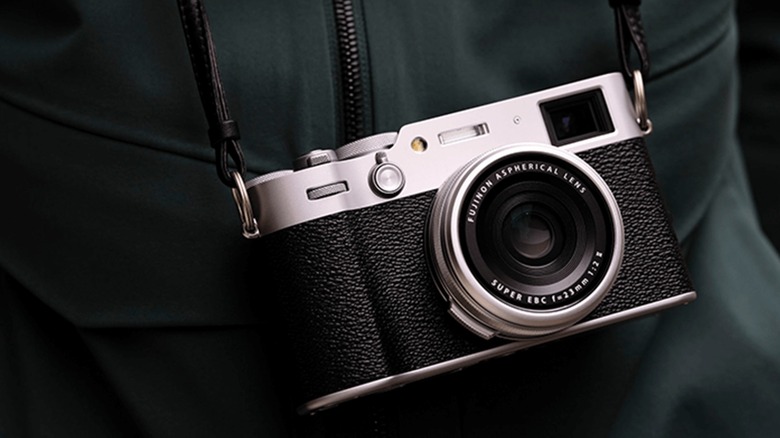
If you want to find the best deals, buy a camera built by a company headquartered in Japan. Sony has popped up several times in this article, and we must mention the company again, as the Sony ZV-E10 is one of the best travel vlogging cameras you can buy. You'll have to spend $800 to purchase this item directly through Sony's U.S. store, but the entry model retails for ¥105,600 ($649.91) in Japan. Even high-end cameras like the Fujifilm X100VI, which run for a prohibitively expensive $2,199 through Amazon, are a (slightly) more affordable ¥281,600 ($1,732.82) in Japanese stores such as Yamada Denki.
If you're more into video cameras, Japanese stores have you covered with both selection and discounts. The GoPro Hero 12 is one of if not the best action camera on the market, but it costs $369.99 in the U.S. You can pick one up in Japan for ¥52,660 ($324.10). Should you prefer vlogging with something a bit more gimbaled, the DJI Osmo Pocket 3 can suit your needs for $439 through Amazon in the U.S. But in Japan, you can walk into a Yodobashi and snag a Pocket 3 for ¥56,950 ($350.53).
Hair dryers
Relying on hotel hair dryers is a roll of the dice, even in Japan. Sure, they're more likely to work than the hair dryers of U.S. hotels, but Japanese hotel hair dryers might not be strong enough to your liking. Depending on your hair's needs, if you didn't pack a hair dryer, you might have to run out and buy one. But you won't have to spend too much money.
Let's start with one of the most recognizable names in air technology: Dyson. You probably associate the name with vacuums and bladeless fans, but Dyson also makes a "supersonic" travel hair dryer that runs on the same bladeless technology. Many people love the device because, according to reviews, it gently dries hair without stripping away too much moisture. You might be tempted to pick one up in the U.S. for $299.99 (not including tax), but you can buy them at Yodobashi starting at ¥42,800 ($263.51), which includes tax.
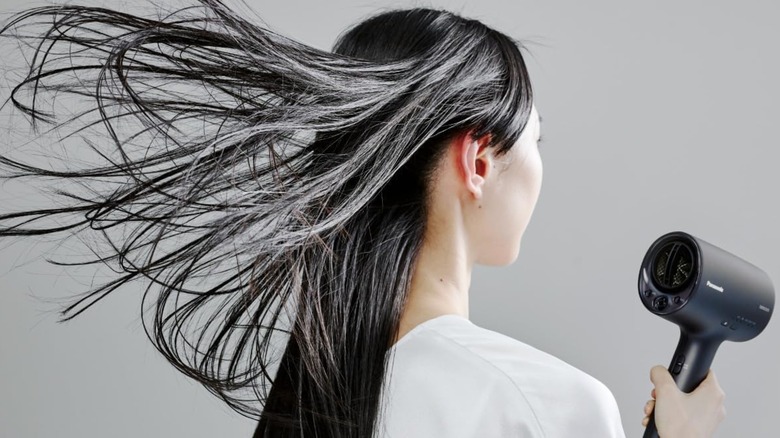
One company you might be surprised to hear sells hair dryers is Panasonic. Almost everyone is familiar with Panasonic TVs, but Panasonic's hair dryers use patented technology to draw moisture from the air to keep hair hydrated and healthy. The company sells compact hair dryers starting at $94.99 in the U.S., but then there's Nanocare models that add in extra features such as shooting negative ions — which apparently makes you feel better. If you want to buy a Nanocare dryer in the U.S., your options are limited; one model on Amazon sells for $359.99. But in Japan, Panasonic Nanocare devices are much more plentiful and retail starting around ¥20,000 ($123.13).
Rice cookers
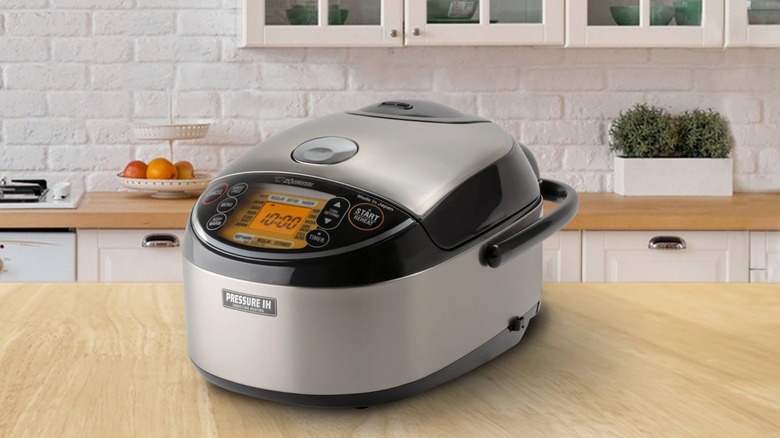
Rice is one of the food staples of Japan. In fact, rice was once the country's national "currency," so one could argue it's a cornerstone of Japanese culture and history. Is it any surprise some of the best rice cookers hail from Japanese manufacturers?
If you want the best, fluffiest rice for your meal, many swear by Zojirushi and its line of cookers, some of which use fuzzy logic to autonomously adjust temperature and heating time to cook the perfect bowl of rice. If you wonder why some think fuzzy logic hard drives are the next evolution of computer storage, cook rice in a Zojirushi. While the cheapest Zojirushi rice cookers sell for $59.99, these are little more than electric boiling pots with a "Keep Warm" function. More advanced models add technology such as induction heating and the aforementioned fuzzy logic circuits, which retail starting at $354.99 in the U.S. But you can buy these Zojirushi rice cookers through Amazon Japan starting at ¥20,258 ($124.71).
A word of warning if you buy a rice cooker in Japan, Zojirushi or otherwise. Heck, this might as well apply to virtually all Japanese electronics: More often than not, their labels will be in Japanese. For some devices, such as Zojirushi rice cookers, this language barrier is only a minor hurdle, and you can easily get accustomed to the device without understanding what the words on the buttons mean. But if you purchase the Japanese-only Switch 2 and PS5 consoles, good luck learning to navigate their menus.