

5 Cheaper Android Phones You Should Try Instead Of The OnePlus 15
We may receive a commission on purchases made from links.
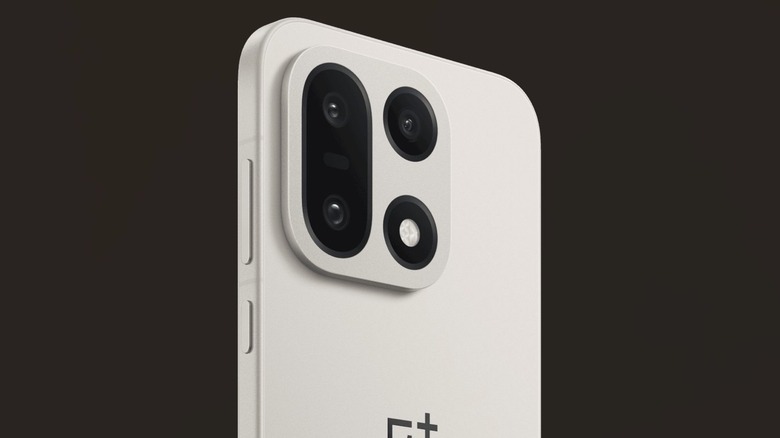
The OnePlus 15 was the Chinese company's latest and what eventually became its last flagship phone before it bowed out of North America and Europe. But it exited with a bang! The OnePlus 15 is widely considered one of the best, if not the best, Android flagships you can buy right now. It offers a massive 7,300mAh battery, snappy performance, excellent durability, a great set of cameras, and a clean design, plus you get 12 GB of RAM and 256 GB of storage at a competitive $899 price point. That said, you can no longer buy the OnePlus 15 as it is out of stock on OnePlus' official website.
Also, while the OnePlus 15 is a capable phone, for a company that first burst onto the scene with its flagship-killing smartphones, it was one of the most expensive Android phones. In fact, it only really undercut the likes of the iPhone 17 Pro and the Samsung Galaxy S26 Ultra. There are still several Android phones that can rival the OnePlus 15 while also being cheaper than it. And those are exactly the kind of phones we've hunted down today. Our selection includes Android smartphones like the Google Pixel 10, the Samsung Galaxy S26, and the Nothing Phone (3), all excellent new-gen options from mainstream smartphone manufacturers. Plus, they're all easily available in the US, both offline and online, either on their official websites or through reliable third-party retail outlets like Amazon and Best Buy.
Google Pixel 10
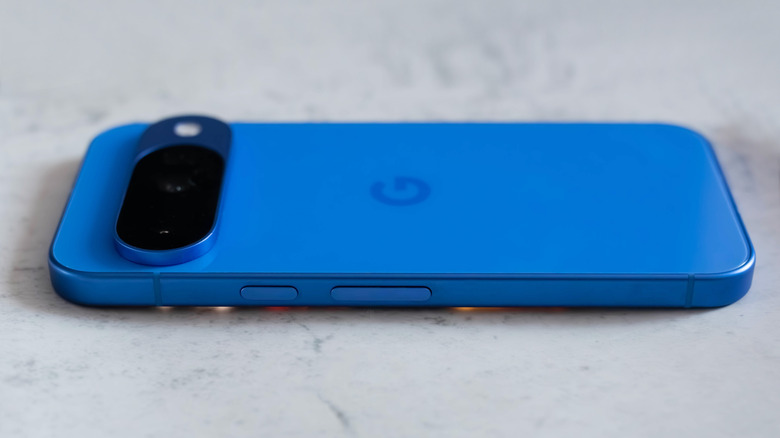
The Google Pixel 10 might not be a specs monster, but it's a highly capable Android phone that's more than enough for most people. As TechRadar put it, it "embodies everything good about Android at a reasonable starting price point." Its base variant, priced at $799 for 128 GB of storage and 12 GB of RAM, is cheaper than the OnePlus 15, but if you want the same 256 GB of storage as the OnePlus 15's entry-level model, you'll need to spend $100 more.
You get a crisp and bright 6.3-inch OLED display with a 120Hz refresh rate, along with the Google Tensor G5 chipset, which is the same processor found in the more expensive Pixel 10 Pro. It can handle day-to-day multitasking, gaming, and, of course, Google's wide array of AI tools. The Pixel 10's AI features are, in fact, one of its biggest selling points, especially compared to the OnePlus 15. For example, Voice Translate preserves your voice while translating it into another language, and does the same for the person on the other end. There's also a new feature called Magic Cue, which is like an intuitive AI assistant and helps you save time on various tasks. Android Central called it "the most proactive and useful example of AI on a phone."
The Pixel 10 is also the first base Pixel model to include a telephoto camera. In addition to its 48MP main sensor and 13MP ultrawide camera, you now get a 10.8MP telephoto lens with 5x optical zoom — more than both the OnePlus 15 and the Galaxy S25 offer. Lastly, the Pixel 10 gets seven years of both OS and security updates, making it significantly more future-proof than the OnePlus 15's four years of OS updates and six years of security updates.
Samsung Galaxy S26
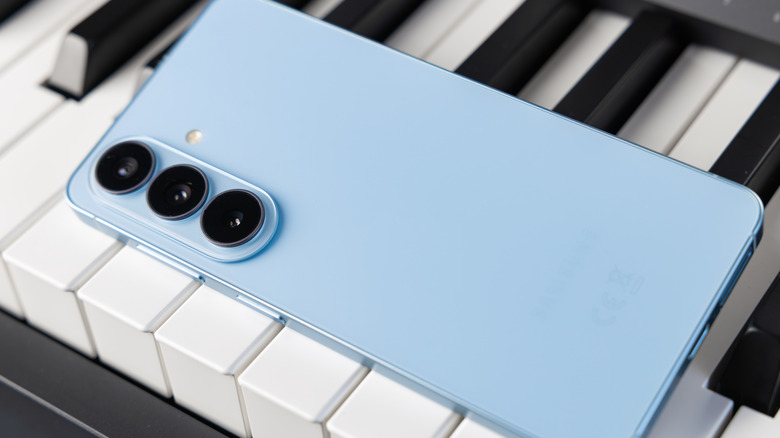
The Samsung Galaxy S26 is one of the best small phones you can buy right now, which makes it ideal for people who want to ditch big phones like the OnePlus 15. It weighs just 0.37 pounds and measures 5.89 x 2.82 x 0.28 inches, making it far less bulky and more travel-friendly than the 0.47-pound OnePlus 15, which measures 6.35 x 3.02 x 0.32 inches. Right now, you can get the 12 GB/256 GB Galaxy S26 starting at $710 on Walmart.
The Galaxy S26 features a compact 6.3-inch Dynamic AMOLED display with a 120Hz refresh rate. It also packs a bigger battery (4,300mAh vs. 4,000mAh) than the previous-generation Galaxy S25, though charging speeds (25W wired and 15W wireless) have remained the same. Under the hood, it's powered by the same chipset as the Galaxy S26 Ultra — the Snapdragon 8 Elite Gen 5 — and outscored the OnePlus 15 in CNET's 3DMark Wild Life Extreme benchmark.
Although the Galaxy S26 has the same camera hardware as the Galaxy S25, its camera performance has improved, with warmer colors and no underexposure, according to PhoneArena. One of its highlights, however, is the new Horizon Lock feature, which PhoneArena describes as being "straight out of an action camera." It keeps your video stable no matter how much the phone moves, helping you shoot professional-grade footage, but you'll be limited to Quad HD resolution at 60 FPS. Lastly, like the Pixel 10, the Galaxy S26 also has the edge over the OnePlus 15 with seven years of updates and a stronger suite of AI features. Tom's Guide tested its AI editing tools and found that they were "not only accurate to prompts but also remarkably realistic."
Nothing Phone (3)
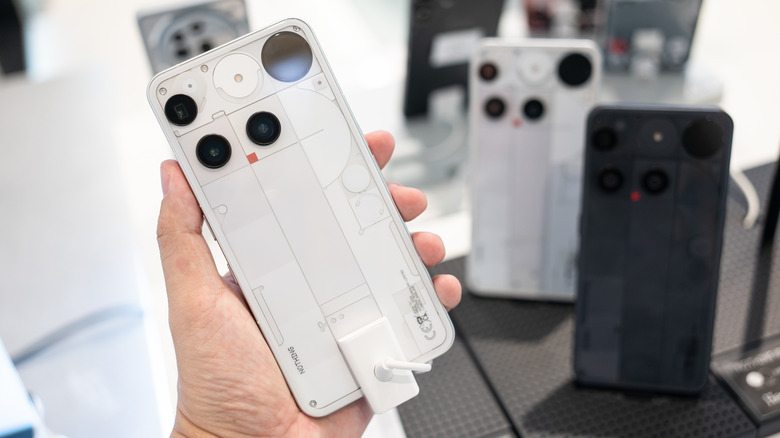
If you aren't a huge fan of the OnePlus 15's more modest, almost uptight design, the Nothing Phone (3) is worth a look. With a fully transparent glass back and a unique Glyph Matrix lighting system, it's easily among the most striking smartphone designs we've seen. It's also very competitively priced, with 12 GB RAM/256 GB storage available for $599. In fact, even the upgraded 16 GB RAM/512 GB storage model, at $699, is cheaper than the OnePlus 15.
While the previous Nothing Phone (3a) and Phone (3a) Pro came with the Glyph Interface, the Nothing Phone (3) introduces the Glyph Matrix — a dedicated circular display at the top right of the phone's rear. It's fully functional and shows useful information such as the time, remaining battery percentage, a stopwatch, and can even run mini-games like Rock Paper Scissors. An unorthodox design isn't the Nothing Phone (3)'s only strength, though. It's a well-rounded package featuring a crisp 6.67-inch display with a resolution of 2,800 x 1,260 and a 120Hz refresh rate. Although its Snapdragon 8s Gen 4 chipset doesn't beat the latest flagship chips, Tom's Guide concluded that "you don't really notice the performance gap."
There's also a dedicated Essential Key on the right side. Reviewers have complained about its frustrating placement, but it's a useful addition because it enables several handy shortcuts: screenshots, voice recordings, or launching the Essential Space app. The Nothing Phone (3) also boasts decent cameras. It has three 50MP rear cameras, including a newly added 3x telephoto lens that wasn't available on the Nothing Phone (2). The photos are "quite colorful and [...] certainly shareable," as per PhoneArena. Moreover, it packs an above-par 5,150mAh battery that lasted up to 15 hours in PCMag's testing.
Moto Razr (2026)
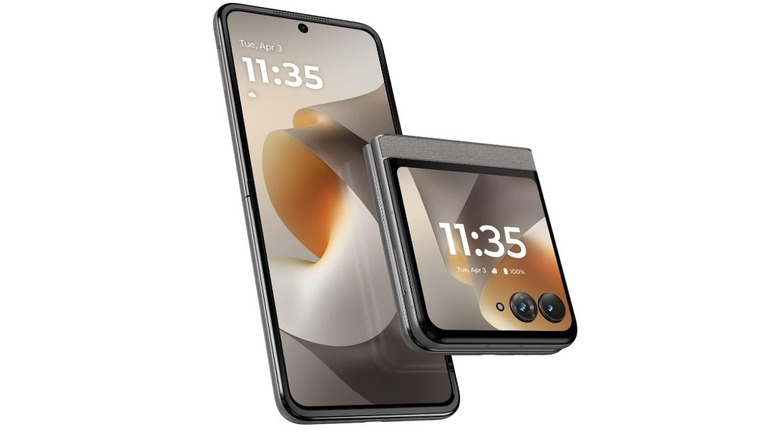
If you want to ditch big slab phones like the OnePlus 15 without compromising on screen real estate, then consider getting a flip phone. And in that case, the Moto Razr (2026) is a solid choice. Several tech outlets, including Wired and PCMag, rate it as the best budget-friendly flip right now, and for good reason. The Moto Razr starts at $800 while still packing the same 256 GB of storage as the OnePlus 15, though you get slightly less RAM (8 GB). That said, it doesn't skimp on performance.
The MediaTek Dimensity 7450X chipset, which, despite being only a slight bump from last year's 7400X, is still powerful enough for everyday tasks such as web browsing, sending texts and emails, and streaming. It also has the "same fluid interface animations as the Razr Ultra 2026," according to Tom's Guide. Furthermore, PhoneArena found in its testing that it's faster than last year's Moto Razr when it comes to opening apps, loading games, or scrolling through photos and videos, thanks to the new UFS 3.1 storage.
Coming to the displays, its main inner 6.9-inch AMOLED display is actually the brightest screen Tom's Guide has yet tested. Tests showed that it clocked in at 2,761 nits of peak brightness, which is better than even the Samsung Galaxy Z Flip 8, which costs $400 more. The cover display (3.6-inch) is slightly smaller than most competitors, but as one Amazon reviewer put it, it's still "super handy for quick replies, media control, notifications, etc." Another highlight is its battery life. The Razr 2026 gets a 4,800mAh battery, which is 300mAh larger than its 2025 version. PCMag tested it and recorded over 19 hours of use when streaming an HD video at full brightness.
Samsung Galaxy A57
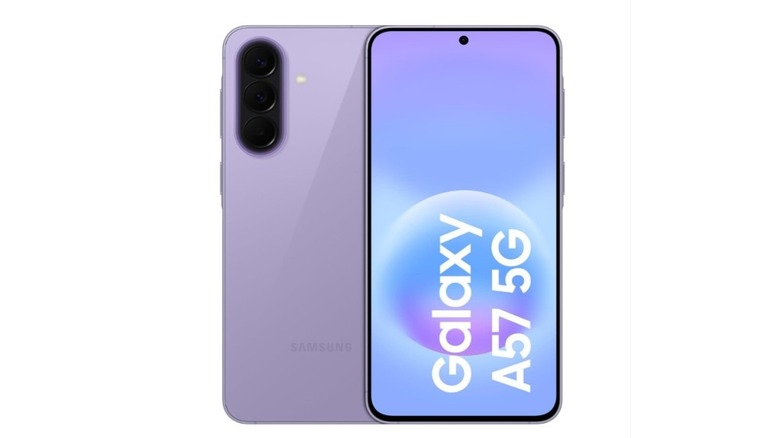
The Samsung Galaxy A57 is an Android phone that punches above its price bracket. It's the latest addition to Samsung's mid-tier A series and a great choice for anyone looking for a reliable all-around smartphone at around the $500 mark. It starts at $450 for 8 GB of RAM and 128 GB of storage, but we'd recommend getting the 256 GB variant as it costs just $60 extra. As we've come to expect from A-series smartphones, it has one of the best screens in its price range. You get a large 6.7-inch Super AMOLED+ display with 1,900 nits of peak brightness, support for HDR10+, and a 120Hz refresh rate.
When PCMag tested it, they recorded "punchy colors, crisp text, and decent visibility under direct sunlight." It's also the thinnest A-series smartphone ever. At 0.27 inches thick and 0.39 pounds, it's both slimmer and lighter than the OnePlus 15. It's also more durable than the A56 thanks to an upgraded IP68 rating, which makes it more resistant to dust and water. While the Galaxy A57 isn't built for longer gaming sessions, it does have "all the performance credentials necessary for non-intensive everyday tasks like scrolling and streaming," according to TechRadar.
Better yet, the software experience of the A57 outdoes most phones in this range. Not only do you get a clean UI, but you also get Android 16 out of the box and six years of software support. Granted, you don't get all the AI features you would with a flagship Samsung Galaxy, but there's still more than enough to make it feel like an AI-powered phone. You get Circle to Search, Edit Suggestion, Voice Transcription, and Object Eraser, as well as brand-new AI features such as Call Captions.
How we selected these cheap OnePlus 15 Android alternatives
The first and biggest thing we looked at while sifting through options for the best cheap OnePlus 15 alternatives was whether their current price was lower than the OnePlus 15's $899 base model price. However, we didn't just select any phones that were cheaper, as there were still a lot of options to look at from different manufacturers, including Samsung, Google Pixel, Motorola, Nothing, and CMF.
Instead, we carefully picked products that can rival the OnePlus 15 in one or more criteria, be it offering a more compact, travel-friendly design, better software and security support, or better AI features, while also offering an overall balanced package. That means having a good battery life, solid performance, and decent cameras. In our selection process, we considered both expert takes as well as the reviews and ratings these phones have received from everyday users.
These Android phones are also all relatively new. They're all either the latest releases or only a generation old, at the time of writing. Most importantly, we only picked those phones that are currently available for purchase all over the world, including in North America (the US and Canada) and Europe.