

8 Times When Deep Discounts On Tech Are Actually A Warning Sign

You should always be on the lookout for amazing bargains on tech products, especially with the rising prices in the industry. However, that doesn't mean you should grab any opportunity for massive savings. That's because sometimes, these deep discounts are actually warning signs that you may want to avoid the deal.
We've identified eight times when tech discounts are too good to be true, such as when the device fails to meet expectations, when the product that's advertised isn't what you'll actually get, and when the platform where you saw the sale price is attempting to steal your data. We also give advice on what to do when you encounter these scenarios so that you can come out of these situations unscathed.
Low prices aren't instant indicators that you're walking into a problem, as there are some legitimate deals out there. You need to be very careful, though. The goal of this article, then, is to help you determine if a discounted gadget is a bargain you shouldn't miss out on, or an offer that you can and should refuse.
The device may be obsolete

If you're considering a device with a large discount, make sure that you're not looking at an older version. There could be a newer model available, with updated specifications and the latest features. You may be checking out a gadget that's no longer quite the bargain it seems to be, even with the savings, as you'll be missing out on a lot of functionality.
There's a more dangerous side to this, though. A device may have a very low price because it's approaching or has already reached its end of life. That means it will no longer receive security patches from its manufacturer, opening it up to vulnerabilities. Apple, for example, recently added the iPhone 11 Pro and iPhone 11 Pro Max to its list of vintage iPhones, which no longer receive software updates.
Before buying a device, double-check to make sure you're looking at its latest model so that you'll get the maximum years of security updates. If you're thinking of buying a previous-generation version for a bigger discount, decide on whether or not you'll take advantage of the deal based at least partly on how comfortable you are with how much time is remaining until support ends.
The gadget may be of low quality

A cheap gadget may look good on paper, with helpful features and solid specifications. However, that's all coming from the manufacturer. Real-world performance is a different thing entirely, and products may receive a huge price cut if they're not delivering what was promised.
For any tech product you're considering, especially one that's really expensive or offered at a deep discount, you should check for reviews from trustworthy websites or channels before you proceed with your purchase. If you're looking at a listing on a retailer's website, you can also consult the feedback left behind by other shoppers, which is usually accompanied by ratings so that you can compare similar products from different brands.
One caveat here is that, just because the brand of a gadget is unfamiliar to you, that doesn't necessarily mean you should expect it to be of low quality. Recommendations from other shoppers and/or professional reviewers will be more important here, though. If you can't find any, it's probably better to be safe and seek alternatives with good feedback, rather than spending money on an untested product that could turn out to be a waste of money.
The product may have an inflated MSRP

One way to make a tech product's discount look larger is to inflate its listed manufacturer's suggested retail price, or MRSP. There's a chance that the original price that's shown on a discounted listing for the device is higher than when it launched, sometimes for this very purpose.
This trend is currently happening among phones and laptops because of the global RAM crisis. The increased prices for the RAM inside these gadgets are being considered when listing them, so when they go on sale with huge savings, it isn't really a lot if you only take into consideration their legitimate (original) MSRP.
Knowing the fair prices of products that you're planning to buy will help you identify inflated MSRPs and discounts. Luckily, you can usually search for their original prices to see if the price cuts are as good as they look. You may also consult price trackers to see if the prices of products were raised right before a discount. Amazon has its own price history tool, but there are also websites like CamelCamelCamel and Keepa that provide a more in-depth look at how prices for individual products have changed over time. Some of the essential apps for tracking discounts on tech will also give you this information.
The seller appears suspicious

Public online marketplaces like eBay and Facebook Marketplace can offer hidden gems, with both brand new and used devices available for good prices. However, they're also filled with sellers who may be suspicious in various ways. If the discounts that they're offering seem too good to be true, or if the sellers exhibit strange behavior like pressuring you to pay immediately or asking you to move your communications to another platform, you likely shouldn't push forward with that transaction.
These shady sellers might suddenly block you or disappear from the platform right after you send your money. They may also be selling fake products, which can look like the real thing but are actually cheap knockoffs, or stolen goods that can get you in trouble if they're traced to you. In your attempt to save a few extra dollars, you could end up being scammed for the entire cost of the gadget that you're trying to purchase.
In general, you should only buy from large retailers with clear return and refund policies, and from verified and trusted sellers when you're browsing on online forums. It's generally advised to meet up with the seller so that you can inspect the product before you pay, but if you go this route, only agree to do this in a public place for your safety.
The product listing may be incorrect
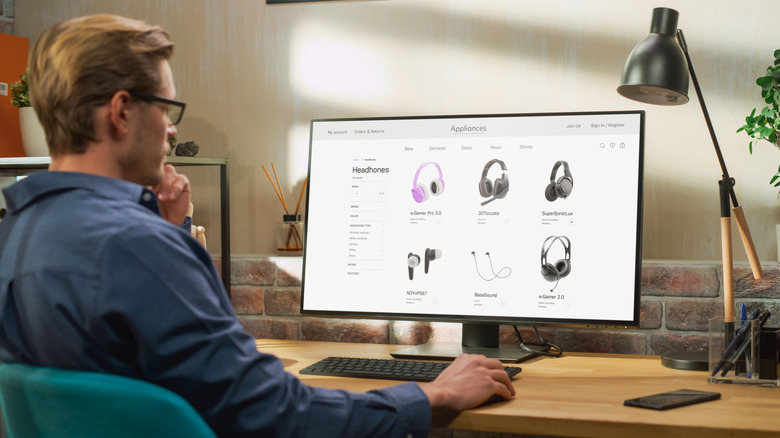
If you're checking a product listing and it seems like the discounted price is too low for what you get, there could be an error somewhere in the posting. For example, the specifications may be wrong, such as a laptop that's described with 32 gigabytes (GB) of RAM but that really only has four gigabytes, or a phone that's shown as the 2026 model but is actually a 2022 model. These could be accidental on the part of the seller, but it can also be intentional to try to deceive buyers.
The condition of the gadget should also be considered here, particularly if differentiating between brand new or used items. There are merits to buying refurbished tech, but it becomes a problem when you think that you're getting a brand new device for the price that you paid.
If there's something that's off about the listing, your best bet is to reach out to the seller or retailer first. While the savings may be tempting, you need to make sure that you're going to be purchasing the item as stated. Otherwise, you may have to go through the hassle of returning the device when you find out once it arrives that there was a mistake in the advertised details.
The device may come with hidden costs

Some sellers will decrease the selling price of their products to make them more attractive, but after you've completed the purchase, they'll tack on additional charges. These include extra shipping fees, setup fees, unlocking fees, or just about any other type of fee they can think of to boost their bottom line.
It's illegal for vendors to tack on additional charges after you've made your purchase, as mandated by the Federal Trade Commission. Online marketplaces are required to clearly show you the final full pricing information of anything that's up for sale before you complete your transaction, so if you've already finished the purchase of a product, there shouldn't be any extra charges afterwards.
Avoiding such unscrupulous sellers requires the same care as spotting suspicious ones — rely on the feedback system of the platform where you meet them. You probably won't be the first victim of such a scam, so other buyers will likely post their feedback on the website, or elsewhere. Reputable platforms also ban vendors who attempt these shady tactics if they gather enough proof, but you still need to be vigilant. If the seller doesn't have any ratings yet, and no other customers can vouch for them, you may want to place your trust elsewhere.
The gadget may be part of a recall
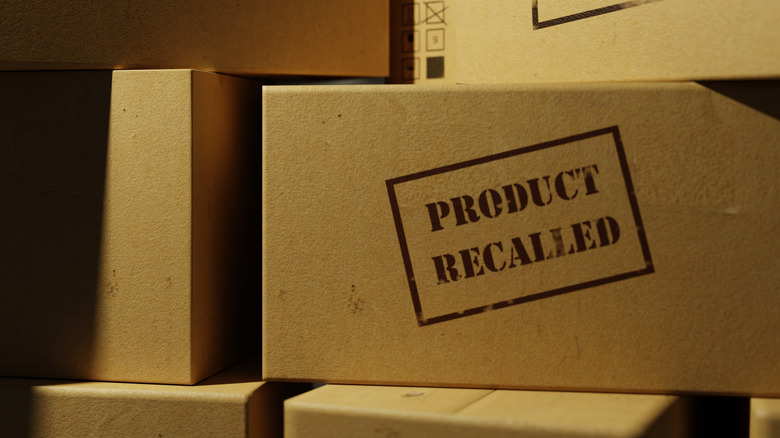
Product recalls, which are often issued because devices are found to have defects that can sometimes be potentially harmful to people, can affect everything from power banks to Tesla Cybertrucks. Once a particular device is part of a recall, it's illegal to resell that device, according to the Consumer Product Safety Commission. That won't stop some sellers from trying to make a quick buck from stock they still have in their inventory, though.
Recalled products will likely be listed at very low prices so that sellers can offload them right away. The discount can be very enticing, but a quick online search would show that the device is cheap because it has been recalled and is likely unsafe. The CPSC won't be issuing a recall order if it isn't a serious matter.
As a consumer, don't be tempted to buy a recalled gadget just to get a low price, as you'll be placing yourself and your loved ones in danger. The savings aren't worth it in these cases, as you can end up with a product that might explode into a fireball at any moment, for example. If you discover someone selling such devices, you should consider reporting it to the authorities.
The platform may be a phishing website

If you come across a great deal on a website that you've visited for the first time, you need to stay alert. While there's a chance that it's a legitimate platform and the offer is real, there's also a risk that it could be a scam and that the website could be trying to acquire your confidential information, such as passwords or credit card details.
Phishing is one of the most common ways passwords are hacked, manipulating users into handing over the information through schemes that look trustworthy. One method is building fake websites that list products at incredibly low prices, then the hackers steal your login details for your banking accounts once you pay for the scam listings.
Fake shopping websites are getting harder to spot because scammers are using AI to trick you, but there are still some ways to identify them. These include watching out for unusual payment methods, such as the acceptance of only wire transfers or gift cards, and unrealistic promises like 24-hour shipping for international orders and additional discounts for prices that are already the lowest anywhere. You can also check the website's certificates on your browser, accessible beside the URL, or use the Safe Browsing tool in Google's Transparency Report.