

I've Never Liked Folding Phones, But Here's Why I'm Pre-Ordering The iPhone Duo
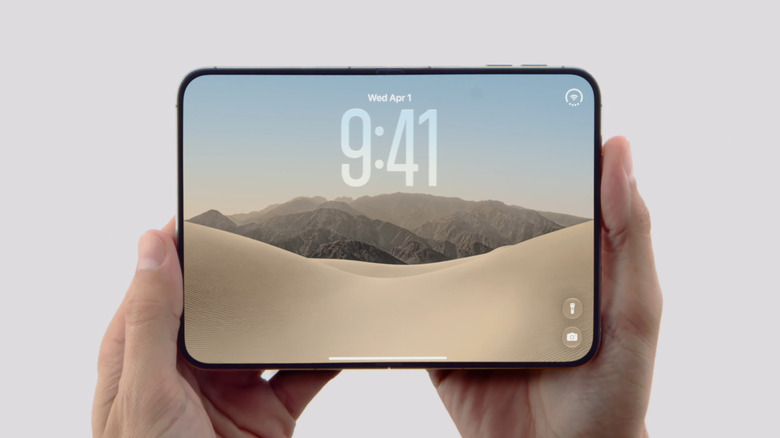
Apple finally launched its long-rumored folding phone, which it unexpectedly decided to call the iPhone Duo, and I'm planning to pre-order one. That isn't a sentence I expected to write. I've tried most of the foldable phones from the past few years, including the Galaxy Z Fold 7, Pixel 11 Pro Fold, Honor Magic V5, and the Galaxy Z Fold 8, and not one of them has become my daily phone after reviewing them. The Fold 8 is the closest I've been to switching, and the only folding phone I've ever really warmed to before that was the Galaxy Z Flip 4.
The biggest problem I have with foldable phones is that I never open the big screen often enough to justify the price of these more expensive devices — though the Galaxy Z Fold 8 changed this as it's more useful for watching content. As a result, I was never willing to switch to one full-time, especially as I'd have to leave the Apple ecosystem behind. Thickness stopped being a complaint somewhere around the Magic V5 and the Fold 7. The iPhone Duo — announced during Apple's September 9 event — solves those two problems for me.
Everything you need to know about the iPhone Duo
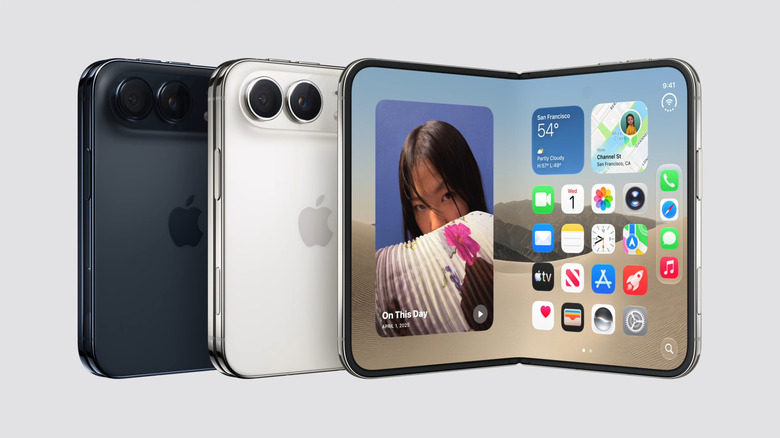
The iPhone Duo is a passport-style foldable, like the Galaxy Z Fold 8, that opens sideways into a square canvas similar to the iPad mini. Apple pairs a 5.4-inch outer display with a 7.6-inch inner display, both sharing the same aspect ratio so content scales between them. Closed, the outer screen covers 90% of the screen area of an iPhone 18 Pro. Opened, the inner display is 50% larger than the one on an iPhone 18 Pro Max, making it the largest screen Apple has ever fitted to an iPhone.
The frame is titanium with a mirror-polished finish — much like the iPhone Air — and a 3D-printed hinge cover. Apple says the opened device is the thinnest iPhone ever, at 5.2mm open and 11.3mm closed. That's not quite as thin as the iPad Pro, but it is thinner than the iPhone Air. Ceramic Shield 2 covers the outer display with reportedly three times the scratch resistance of the previous generation, and the phone carries an IP68 rating. Inside is the A20 Pro, the same chip as the iPhone 18 Pro, paired with a vapor chamber and a battery on each side. Apple rates the Duo for up to 31 hours of video playback on the inner display and 44 hours on the outer one.
Face ID is gone, and Touch ID returns in the side button, though you can also unlock the iPhone Duo with an Apple Watch — just like you can on a Mac. There are two rear cameras, a 48MP Fusion Main and a 48MP Fusion Ultrawide, as well as two selfie cameras, one on the inside display under the screen and another (12MP) on the cover screen. And speaking of cameras, unlike the iPhone 18, this foldable iPhone is not equipped with a telephoto lens. It's also eSIM-only worldwide, just like the iPhone Air. Apple has kept Camera Control button, which you'll probably never use, but there's no Action button and no mute switch, making the Duo the first iPhone to ship with neither. That's a long list of things removed from the most expensive iPhone ever made. I'm pre-ordering it anyway.
Apple may have finally solved foldable phone design
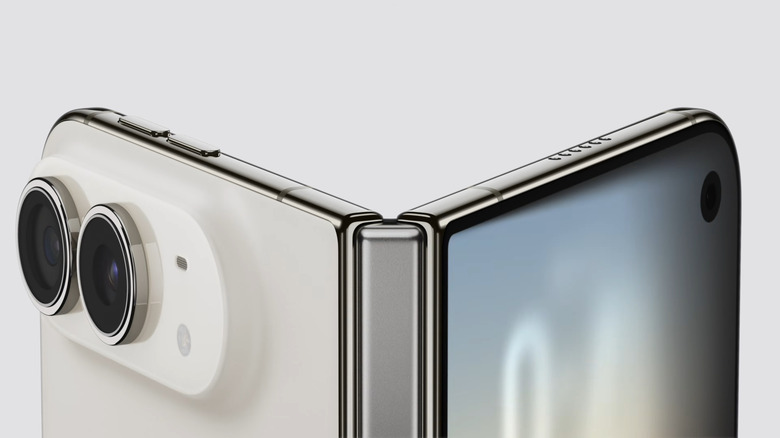
Every foldable phone has a crease. While foldables have come a long way in making the crease less noticeable visually, I can always still feel it. My thumb finds the dip every time I scroll a long page, and once I've noticed it, I can't stop noticing it. But Apple appears to have gotten closer to solving this than anyone else has.
The inner display uses a nano-texture finish that cuts glare and reflections, which Apple says also reduces how visible the crease is. Underneath, high-strength glass sits above and below the folding panel, with custom adhesives that let the layers slide past one another as the phone closes, plus a titanium plate at the base. The hinge is built to support the center of the display and hold it flat when open.
Early hands-on impressions seem to back up the fact that the crease isn't particularly visible. In a video shared by analyst Neil Cybart, the crease is visible while the iPhone Duo is being unfolded, then disappears once the phone is flat. Ray Wong, a tech journalist who had hands-on time with the device at the event, reported that the crease is visible at certain angles. Analyst Ben Bajarin called it "supremely thin" and said it went into his pocket without any trouble. I still won't know how well this holds up until I've used the iPhone Duo for a number of months, but if the crease has stopped being something I can feel as much, the device becomes easier to switch to.
The passport-style shape is more useful
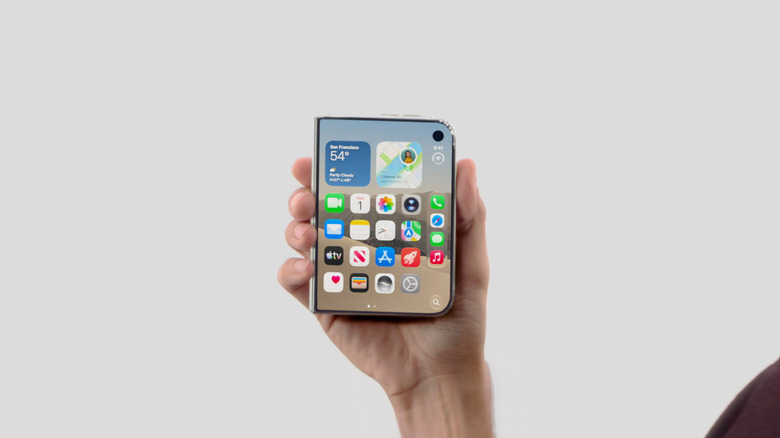
The passport-style form factor is the other major design choice that has swayed me toward the iPhone Duo. I've had the Galaxy Z Fold 8 since launch, and it's the first folding phone I've actually enjoyed using. Samsung's new wider foldable pairs a 5.5-inch cover screen in a 10:16 ratio with a 7.6-inch 4:3 inner display, which is close to where Apple has landed. Opened up, a wide panel gives you far more usable width for video than the near-square inner screens on traditional book-style foldables, where widescreen content leaves thick black bars at the top and bottom. In fact, I think content viewing is one of the best uses for the Fold 8's wide screen, and early impressions of the iPhone Duo point the same way. Reporters at the event found that videos looked slightly larger in YouTube and the Apple TV app than on an iPhone Pro Max, and they said it was more comfortable to hold for reading than most foldables.
Closed, it's shorter and wider than a normal phone, so the overall size of the device shrinks. In my opinion, this is the best application of foldable displays. I'd rather carry a smaller device around than open a large square display. The only folding phone I've previously enjoyed owning was the Flip 4, which was mainly due to its smaller size.
The passport-style foldable is less than ideal for vertical videos, which will appear smaller on the short, wide cover screen. I barely use social apps, so I won't miss being able to scroll through the For You Page. If your phone time mostly consists of TikTok and Instagram Reels, though, this form factor might work against you.
iOS is why I'm buying Apple's version of it
I've owned every iPhone since the iPhone 4. I've also dipped my toes into Android full-time, first on a Nexus 5 and then a Pixel 2 XL. In recent years, switching has stopped become a harder idea to grapple with because I use a MacBook, an Apple Watch, and AirPods, and I've become used to years of daily continuity between them. Every time I've picked up a foldable phone before, using it properly meant giving all that up. That's why the Fold 8 never managed to make me switch, despite coming closer than any foldable has before.
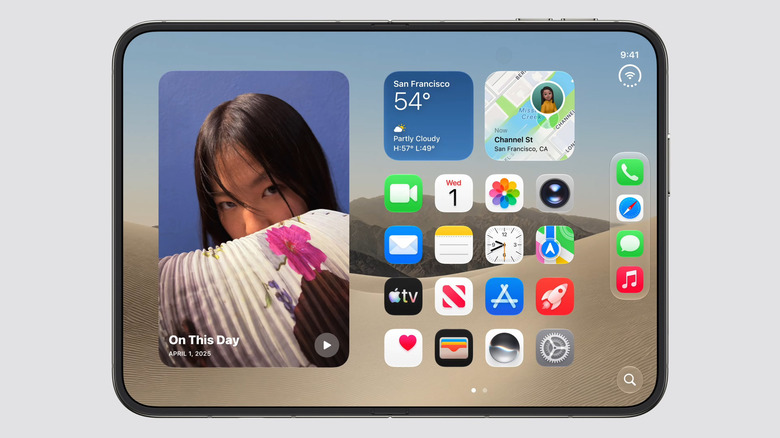
Since the iOS 27 beta program began, Apple has been pushing developers to update their apps with support for resizable, flexible layouts, and it seems that was for a good reason. The iPhone Duo still runs iOS rather than iPadOS, but it borrows plenty. Split View puts two apps side by side on an iPhone for the first time, and you can open two windows of the same app, save app pairs, and talk to Siri on one half of the screen while looking at something on the other. Lock Screen shortcut buttons, the Dock, and app navigation all move to the side to free up vertical space, and the Dynamic Island now runs vertically down the edge, which I wasn't expecting.
In Apple's launch keynote, the company mentioned that Netflix, Zoom, and Slack have already updated their apps to support the iPhone Duo's display. How useful all this ends up being depends on how many other developers follow, though I expect that most will. Apple Pencil support will arrive later this year, curiously, which will make the Duo the first iPhone you can write on.
What I don't like about the iPhone Ultra
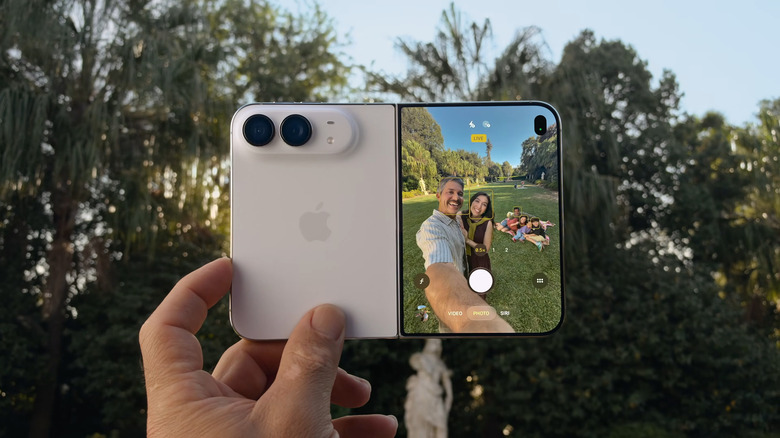
While I am pre-ordering the iPhone Duo, the device isn't perfect. The camera situation is what stings the most for me, as Apple included an ultrawide camera, which I rarely use, and left out the telephoto lens that I take photos with constantly. There's an optical 2x zoom built into the 48MP Fusion Main camera, which beats a straight digital crop, but 2x is a long way short of the reach I have on my iPhone 17 Pro Max. I shoot zoomed-in landscapes and city photos regularly, and that's the one thing this phone can't do for me.
Then there's the inner display, which will be softer than the glass on a normal phone because it has to bend. To be fair, that's inherent to foldable displays rather than a failing on Apple's part, and Apple has done more than most to mitigate it. Apple says the scratch-resistant coating and nano-texture cover layer make the bending display 40% stiffer than other foldable phones. Even so, a fingernail or a grain of grit in a pocket could still leave a permanent mark. Foldable phone threads on Reddit are full of exactly those kinds of stories.
The iPhone Duo starts at $1,999 for 256GB, which is exactly the configuration I'm ordering. Pre-orders open at 5 a.m. PT on Friday, October 16, with the phone arriving Friday, October 23. A CNET survey conducted by YouGov in August 2026 found 75% of U.S. adults have no interest in a foldable Apple device, and that the quarter who were interested would only pay an average of $781. The iPhone Duo is a lot of money for a shape most people have no use for. I would know as I've spent years as one of those people. As it turns out, the passport form factor and iOS together have changed my mind, and I'm happy to pay a premium for that convenience.