

Poco F9 Ultra Review: A Battery King
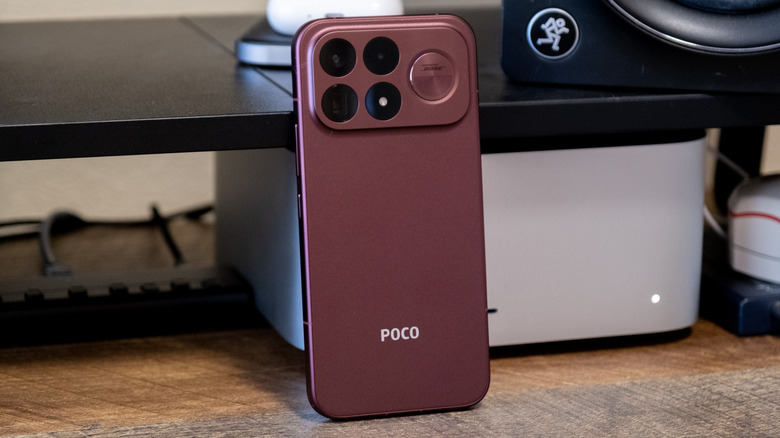
Poco's phones often undercut the flagship competition by offering the same or comparable specifications, just at a lower price point. The Poco F9 Ultra is no exception to that rule. It boasts a Snapdragon 8 Elite Gen 5 processor, a 6.9-inch OLED display that can hit 185Hz, a massive 8,050mAh battery, a 200-megapixel main camera, and a Bose-branded 2.1 speaker system with an actual subwoofer on the back of the phone. That's a strange and ambitious spec sheet for a phone that starts at $799 in some markets.
Like any device built to undercut the competition on price, there are some compromises. The chipset is the same Snapdragon 8 Elite Gen 5 that powered the F8 Ultra in 2025, so this is an accelerated refresh rather than a generational leap — though, to be fair, it's still Qualcomm's best silicon. The meaningful upgrades include the bigger battery, the brighter and faster display, and the new 200-megapixel main camera.
Essentially, the Poco F9 Ultra is built for gaming and media consumption, not necessarily for being lightweight or offering the lightest software experience. So, should you buy it? Ultimately, it depends what you're looking for from a phone. I've been using the Poco F9 Ultra to find out just how well it performs at this price point.
Design
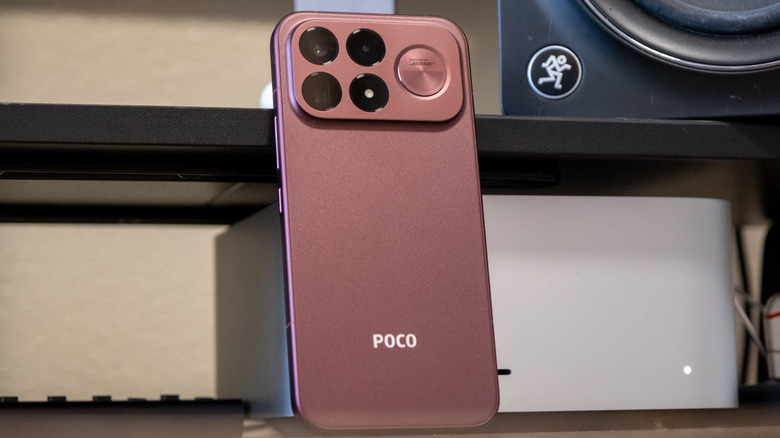
The F9 Ultra is a big phone. At 163.49 x 77.94 x 8.74mm and 235g, it's heavier and thicker than the likes of the Galaxy S26 Ultra and iPhone 17 Pro Max, and a hair narrower than both, so one-handed use is basically off the table for most people. That bulk is the cost of the 8,050mAh battery and the speaker hardware inside — but you'll feel it in your pocket either way.
The materials are a step down from the priciest flagships, at least on paper. You get aluminum side rails, a glass-fiber rear panel, and Corning Gorilla Glass 7i on the front, rather than the fancier glass you'll find on phones that cost hundreds more. In practice, though, it doesn't feel cheap. The textured back resists smudges well, and the device feels solid rather than plasticky.
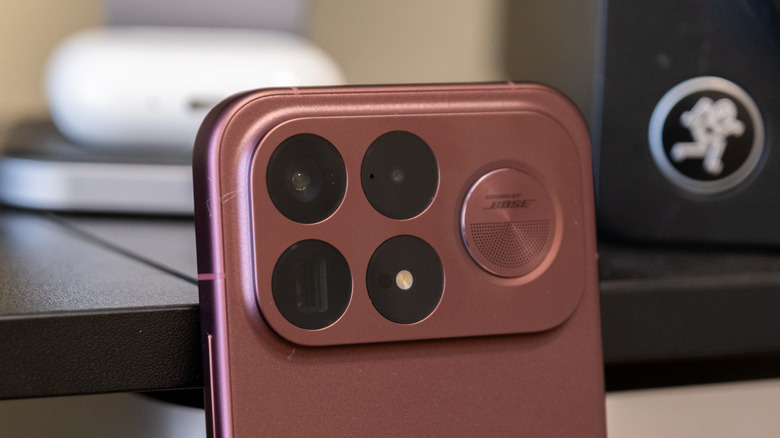
The back is where the design gets interesting...but also a bit derivative. A wide camera island spans the upper portion of the phone, which has the practical benefit of reducing desk wobble, but also makes the phone look unmistakably iPhone-inspired. It's a good-looking phone, though, and I actually quite like the camera island on the back.
The phone comes in two colors — black and dark cherry — the latter of which is the colorway for my review unit. I really like the look of it. It's sleek and stylish without being overly bright, though to be clear, I do like colorful tech.
On the right side of the camera island sits the circular Bose subwoofer, surrounded by a white LED that flashes for calls and notifications and can pulse along with music and some games. It's a flourish rather than a genuinely useful feature — though if you're the kind of person who leaves your phone face down on a desk, it might be handy as a notification light, but I've never really found those all that useful.
The phone is also reasonably durable. It has an IP68 water- and dust-resistance rating, which means that it should survive submersion in up to 1.5 meters of water for up to 30 minutes. That said, you'll still want to be careful with it — that rating is there as a fallback, and you shouldn't take the phone swimming on purpose.
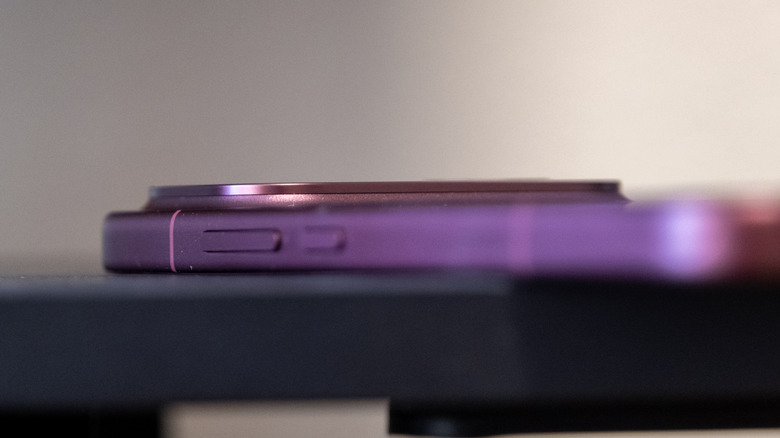
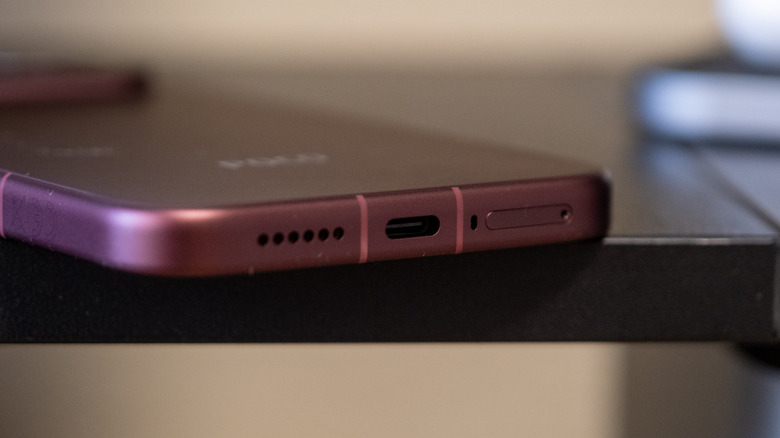
Beyond those design elements, the phone has a volume rocker and a power button on the right edge with a USB-C port on the bottom. The left side of the frame is empty. There are no extra buttons like the iPhone's Action button, which I'm kind of glad to see, as they're usually not very useful unless you can program them yourself.
Display
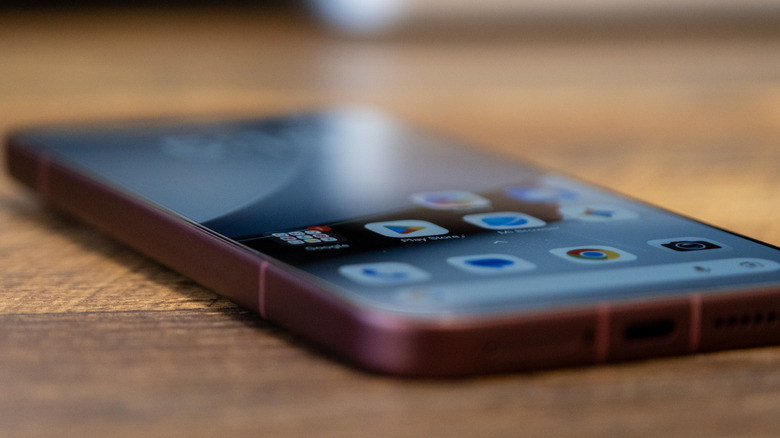
The Poco F9 Ultra has a 6.9-inch AMOLED display, and it's one of the phone's highlights. The display has a 2,608 x 1,200 resolution display with 12-bit color, DCI-P3 coverage, HDR10+ and Dolby Vision support, and an adaptive refresh rate that tops out at 185Hz. That said, the full 185Hz only applies to a select list of supported games — a little over 20 titles at launch, per Poco — and other popular games may cap at 165Hz or lower.
Day to day, you're getting a very good 120Hz-class experience with headroom for specific games. It's also worth noting that this is not an LTPO panel, which means that it cannot range all the way down to 1Hz when content on the display is static. That doesn't impact how the screen looks — it still looks as good as some of the best LTPO panels out there — but it does mean that the screen will use more energy whether there's fast-moving content on it or not.
Poco advertises the device as offering a massive 10,000 nits of brightness, but it's unlikely you'll reach that very often. That 10,000-nit figure only really applies to content taking up 1% of the screen in HDR. That said, the 4,500-nit figure you're more likely to hit, which covers 25% of the screen, is very bright — as is the 2,200-nit brightness you'll get in high brightness mode. Even in direct sunlight, you should be able to see content on the screen easily. There's also a 1-nit minimum and DC dimming for nighttime use.
For gamers, touch sampling reaches 480Hz with multiple fingers in select games, and Poco quotes a 4,800Hz instantaneous figure under its Game Turbo mode. Those are ideal-condition numbers, but the panel does feel responsive.
Speakers
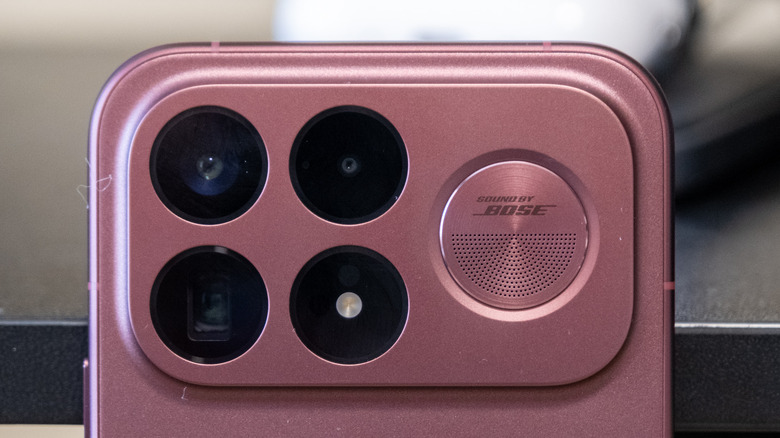
As you might have gathered by the Bose partnership, the phone is advertised as offering solid audio. The speaker setup on this phone is a successor to the one Poco used on the F8 Ultra, made up of a symmetrical pair of 1115D drivers at the top and bottom, plus an independent 1620 subwoofer on the back, which is what makes this a 2.1-channel system rather than just a loud stereo pair.
The 2.1 architecture and the 1620 subwoofer carry over from the F8 Ultra, but the main drivers themselves don't — that phone used 1115F units. The acoustic port has been redesigned, though, and the whole system retuned with Bose for less bass distortion and more clarity. There's also a Bose EQ in the settings, with Balanced and Dynamic profiles along with a 15-level tuning that recalibrates as you change the volume.
What separates this from every other phone that claims to have "great" speakers is what happens when you turn the volume up. Most phones get brighter and harsher as they get louder, because a pair of tiny drivers has nowhere to put the energy. The subwoofer does, so the F9 Ultra stays more full and balanced at volumes where other phones start to fall apart, and there's more low-end weight you can feel through the frame. Honestly, it sounds quite good for a phone speaker. It's obviously not going to replace a pair of headphones or a nice Bluetooth speaker, but you wouldn't expect it to.
Performance
Powering the phone is a Qualcomm Snapdragon 8 Elite Gen 5, paired with either 12GB or 16GB of RAM and between 256GB and 1TB of storage. This is still Qualcomm's best chip, so even though it's the same chip that was found in the last-generation Poco F8 Ultra, expect very good performance. On top of it, Poco adds its own VisionBoost D8 chip for super-resolution, smart frame rates, and Game HDR, though support varies by game and software version.
The phone fares well in benchmarks, too. In Geekbench 6, it hit 3,546 single-core and 10,605 multi-core, which is about what you'd expect from the Snapdragon 8 Elite Gen 5 and keeps it comfortably in flagship company. It did struggle a little with thermals, though, especially in some of the graphics-based stress tests. In 3DMark Wild Life Extreme, it peaked at 7,439 and fell to 5,274 on the last loop, holding 70.9% of its peak while the chip climbed to 54 degrees Celsius — which is very hot.
To be fair, that is a stress test, and it's unlikely to get that warm during normal gaming, but still, it's not as good at managing thermals as some other phones are. That's despite the fact that the device has Poco's LiquidCool technology. After 10 minutes of gaming, the phone will get warm — but after longer sessions, again, it will get pretty hot. Numbers aside, everyday performance is exactly what you'd expect. Multitasking is smooth, apps open instantly, and demanding games run perfectly well without issue. It'll handle anything you can throw at it in 2026.
Battery and charging
The Poco F9 Ultra has an absolutely massive 8,050mAh battery. As is the case for many phones in 2026, it's a silicon-carbon battery, which means that it's able to pack more juice into the same space as a traditional lithium-ion battery. It's dramatically larger than what you'll find in the Galaxy S26 Ultra, the iPhone 17 Pro Max, or even the Xiaomi 17T Pro. It's also one of the clearest upgrades over the F8 Ultra.
Two days of normal-to-heavy use is realistic, and more casual users could stretch it even further. In a video playback test at 200 nits brightness, the battery lasted almost 43 hours, which is still a little behind the OnePlus 15 and OnePlus 15R, but still among the best I've tested of dozens of phones over the last year or so.
Charging is fast, too, with the usual caveats. The phone supports 100W wired charging and 50W wireless charging, but although you'll get 100W wired charging via USB-PD, hitting the maximum wireless charging speeds requires a supported wireless charger. I got to a full charge in around 68 minutes with a wired connection, with 61% battery after 30 minutes. It took almost 100 minutes to hit a full battery over wireless charging, which is to be expected — and actually pretty impressive given the size of the battery.
Essentially, the Poco F9 Ultra is a stellar phone when it comes to battery and charging. It lasts an incredibly long time on a single charge, and when it does run out, you'll be able to charge it up again quickly.
Camera
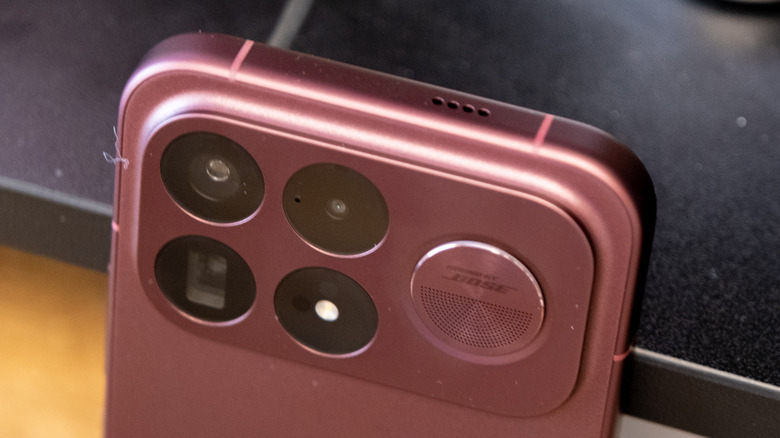
On the back of the phone is a triple camera system, which includes a 200-megapixel main camera with optical image stabilization, a 1/1.56-inch sensor, and 16-in-1 pixel binning — meaning it combines groups of 16 pixels into one for brighter, cleaner shots at a lower resolution. Alongside it sit a 50-megapixel f/3.0 periscope telephoto with 5x optical zoom and a 50-megapixel f/2.4 ultrawide camera. The front camera is 32 megapixels. That's a more complete setup than plenty of devices out there, and on paper, the device goes head-to-head with some of the best phones on the market, including some that cost a whole lot more.
The main camera mostly delivers. It's capable across a wide range of conditions, and the 200-megapixel sensor means that the device can apply a sensor crop to create "optical quality" shots at up to 2x, which will help bridge the gap between the main camera and the 5x telephoto camera. It also supports a 2x sensor crop on the telephoto, which allows for "optical quality" at up to 10x.
To be clear, while this is better than using a digital zoom, it's not the same as using actual glass to zoom. Without the sensor crop, the phone would still bin pixels for a higher quality image. In other words, at 2x and 10x zoom, you won't get images that are as high quality as those at 1x and 5x, but you'll still get solid photos overall. Speaking of zoom, the telephoto camera is quite impressive. At 5x, it produces sharp, detailed images, and those mostly hold at 10x. Beyond that, expect the quality to start falling off pretty quickly.
The ultrawide is the weak link — though not as weak as the 8-megapixel ultrawide camera on the Poco F9 Pro. It's not bad — it still captures mostly detailed and colorful images — but they don't hold up as well in low light as the other cameras, and they aren't as impressive in general. That's true of the front-facing camera, too.
The processing also isn't perfect, but it's far from a dealbreaker. You should expect images to look a little warm at times, and I found that, as a whole, images captured across lenses weren't necessarily the most consistent. Sometimes, images could look over-processed. It wasn't always noticeable, but those with a keen eye might find it easy to spot.
Software
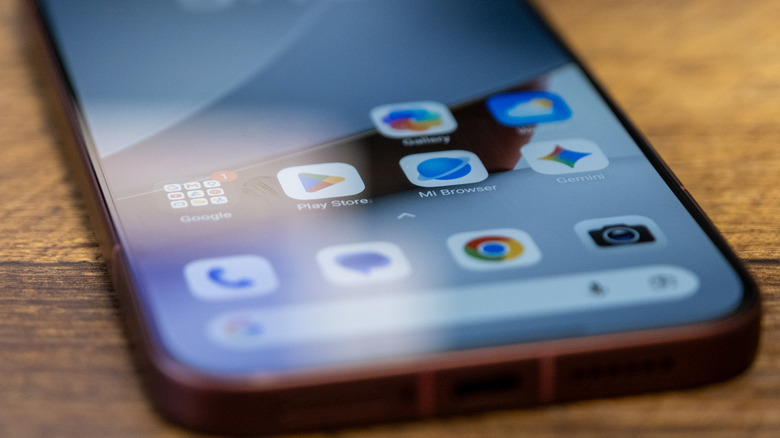
The F9 Ultra ships with Xiaomi's HyperOS 3, built on Android 16. Some flagships do ship with Android 17 at this point, but Android 16 still works well enough. Poco promises four major OS upgrades and six years of security updates. That's not bad — but also not incredible. The likes of Google and Samsung are routinely promising six to seven years of operating system updates.
HyperOS is fine, but it's not my favorite implementation of Android. It has plenty of features, but it can feel a bit cluttered, and at times, a little dated. If you're not used to how it looks and feels, you'll want to get acquainted with it the first time you set your new phone up, but after that, you should be able to figure it all out.
As you would expect, there are plenty of AI features built into the operating system, though your mileage will obviously vary depending on how into AI you are. There are features for AI translation, transcription, search, and so on, and they each sit alongside the AI tools that are already built into Android via Google.
Conclusions
The Poco F9 Ultra does plenty very well and nothing poorly. It's not perfect — the camera system can be beat by others, the software takes some getting used to, and for some, the phone will feel a little too big and heavy. But those are compromises the vast majority of users will get over pretty quickly, especially at this price.
It's not for everyone, though. The Galaxy S26 Ultra and iPhone 17 Pro Max cost more and give you more polished software, more consistent photos and video, and longer support — while the F9 Ultra counters with battery, charging speed, audio, and storage capacity. The Xiaomi 17T Pro is the closer competitor, and the better pick for photography-focused buyers thanks to its Leica modes, though it has a smaller battery and a less interesting audio setup.
All that said, if you do prioritize battery life, built-in audio, and a display built for gaming, the Poco F9 Ultra is absolutely worth considering. Just like its sibling, the Poco F9 Pro, it offers quite the value while other phone makers introduce $2,000 smartphones.