

Google Pixel 11 Pro Fold Review: It Won Me Over In The End
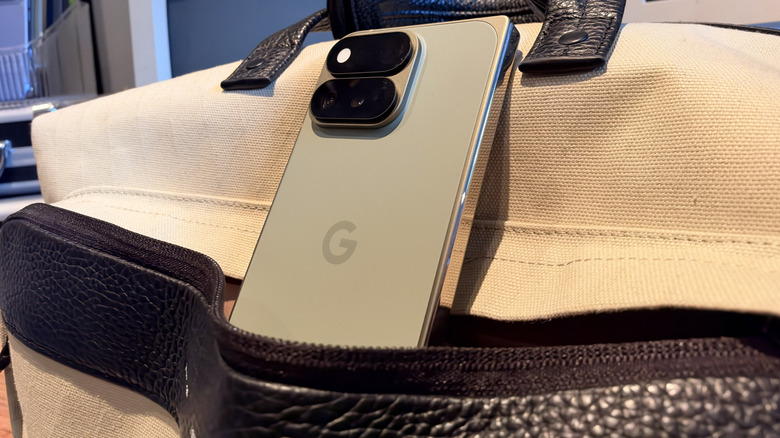
The Google Pixel 11 Pro Fold costs $1,899, which puts its price level with the Samsung Galaxy Z Fold 8 and just under Apple's new iPhone Duo. It's roughly where I'd expect a 2026 foldable to sit price-wise, but it's still a lot of money for a phone with a design that is almost identical to the one Google introduced with the Pixel 9 Pro Fold in 2024.
What you get is a 6.5-inch outer display, an 8-inch inner display, the new Tensor G6 chipset with 16 GB of RAM, a triple camera system with a new 48MP main sensor, and a 4,750 mAh battery. Google says the Pixel 11 Pro Fold is three times more durable than last year's 10 Pro Fold. There's a new gearless hinge, a glass fiber composite back that Google says is nearly impossible to crack, a ceramic outer display, and IP68 water and dust resistance that most rivals still can't match. Despite this, the new phone still cracked along both antenna lines in JerryRigEverything's durability test, just like the 10 Pro Fold.
I've used the 11 Pro Fold as my main phone for two weeks, across ordinary life and even a trip overseas. What won me over wasn't the spec sheet, but rather the fact that this is a foldable phone that behaves like a normal phone when it's shut, which I wasn't expecting. I went in preferring the passport-style form factor of the Galaxy Z Fold 8 and the iPhone Duo, and largely still do, but after using this phone, I understand exactly why the Pixel 11 Pro Fold is an excellent choice for many.
Design
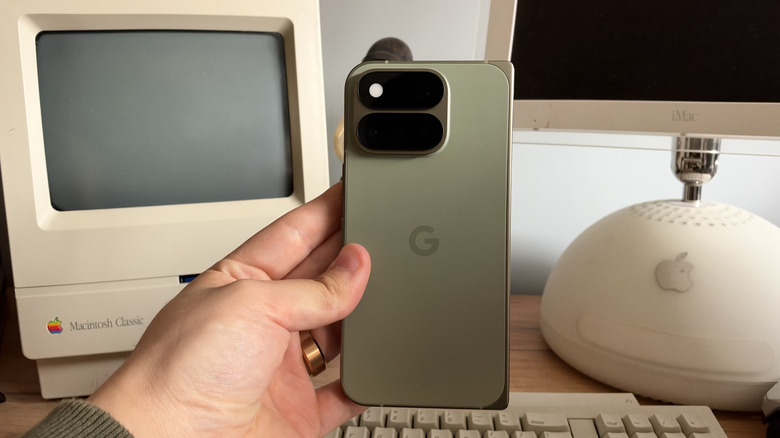
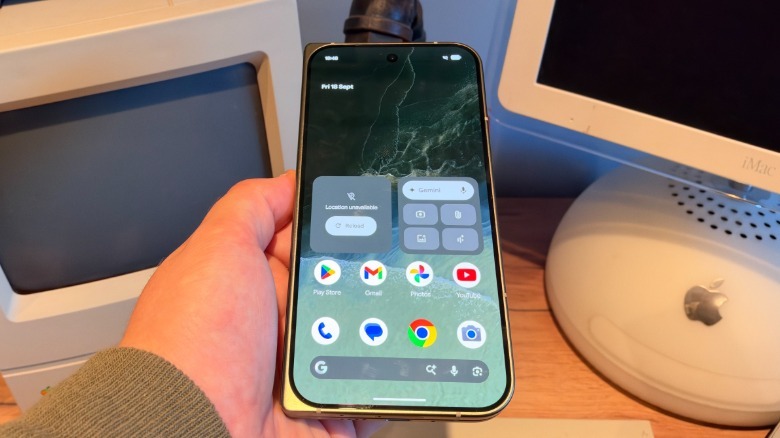
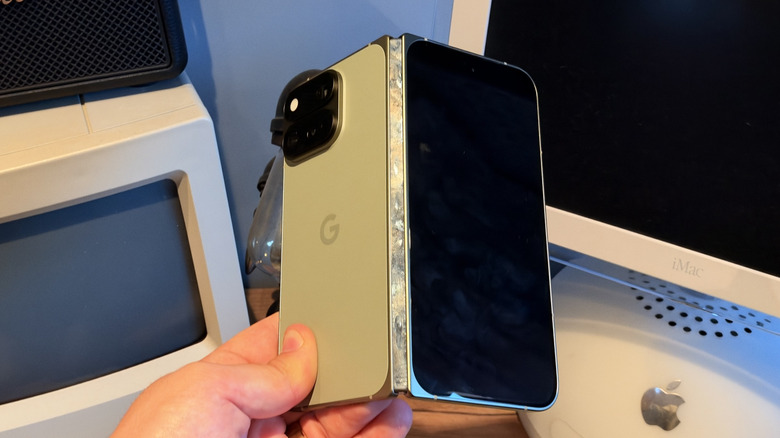
When closed, the Pixel 11 Pro Fold looks more or less like a conventional candy bar smartphone. The outer display carries normal smartphone proportions rather than the short, wide shape many of its rivals have moved toward in 2026. Everything you do before opening the fold feels pretty familiar. After two weeks of using the phone, it's one of the best things this handset has to offer. You can use this phone all day and never unfold it unless you truly need the larger display.
The build is better than last year's Pixel 10 Pro Fold. It's almost 10% lighter and about 1 mm thinner than its predecessor, clocking in at 239g and 10.1mm folded. Weirdly, Google has made one half of the phone slightly thinner than the other, which leaves a small ridge when the phone is open. I didn't notice it for the first day of use, and once I did, it didn't really matter. Overall, I think it's a pretty sensible trade to cut down on the overall thickness of this device.
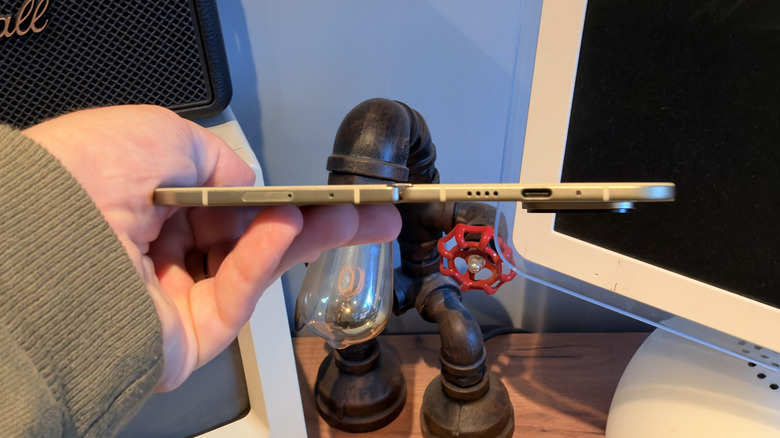
It feels lighter in the hand than the Pixel 10 Pro XL does. It's barely noticeable when it's sat in your pocket, and it doesn't feel much thicker than the regular Pixel 11 Pro, even though it certainly is. Mine came in the Olive finish, which is the same shade I had on the Pixel 11 Pro XL, and it's the better of the two options compared to Obsidian. The side-mounted fingerprint sensor is reliable and a little quicker than the under-display readers on the other Pixel 11 phones. Face unlock is usually still a little faster, though it doesn't work in the dark.
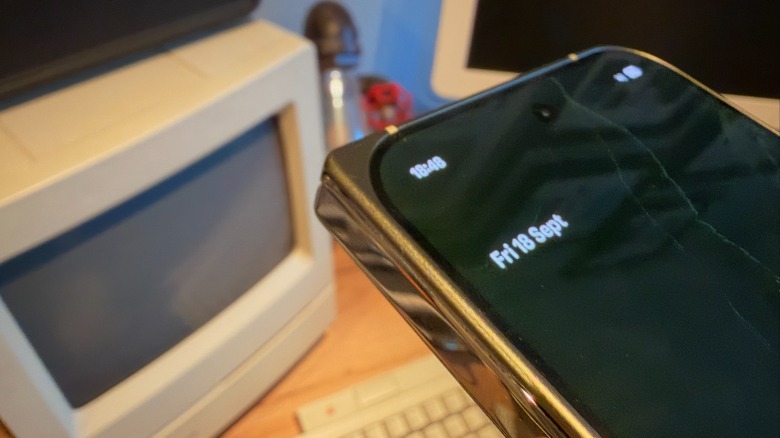
One part of the Pixel 11 Pro's design I don't really like is the squared metal corners set against a rounded display. That's an aesthetic objection rather than a practical one, to be fair, since nothing about it is actually uncomfortable to hold, but it's a detail that I can't help but notice.
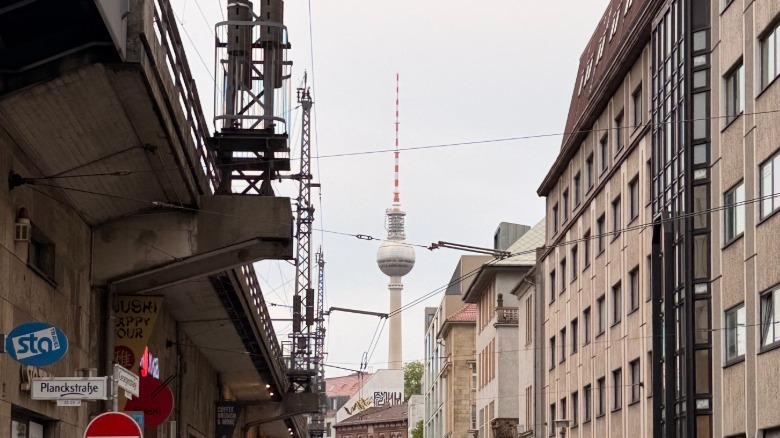
I used the phone without a case for the full two weeks, including a rainy few days in Berlin, and the ceramic outer display and composite back came through without any scratches or scuffs. The IP68 rating remains a pretty significant advantage over many foldables that still don't offer one.
Display
Both the internal and outer displays on the Pixel 11 Pro Fold are Super Actua panels rated at up to 3,600 nits at peak brightness, and Google says both are 20% brighter than those on last year's Pixel 10 Pro Fold. The 6.5-inch outer display is the one you'll probably use the most, and it's pretty good. It has thinner bezels than the previous generation, a 120 Hz refresh rate, and it's bright enough to stay readable while you're outdoors in direct sunlight without squinting. With 1,080 x 2,342 resolution and 399 PPI, it's noticeably short of the 11 Pro XL's 486 PPI display.
 Connor Jewiss/BGR
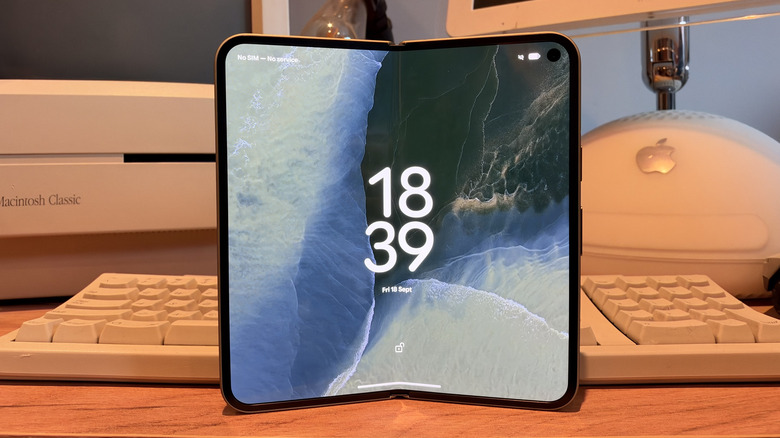
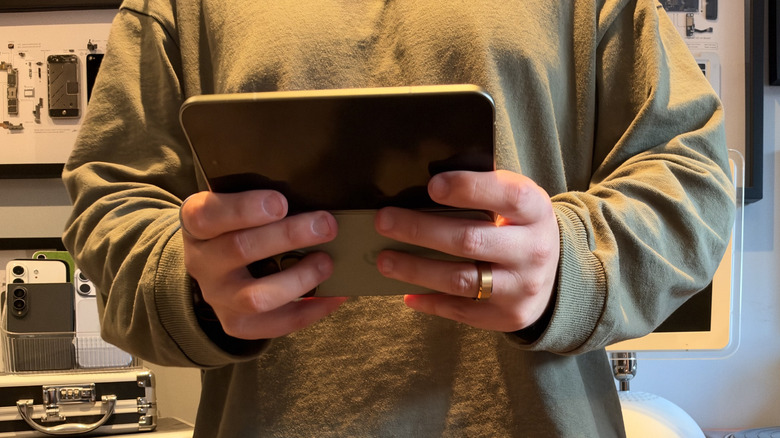
The 8-inch inner display compromises the Pixel 11 Pro Fold's experience a bit. It's a 2,076 x 2,152 panel, which is almost square, and it's well suited to scrolling social media, email, and having two full-size apps open next to each other — though it's noticeably less bright and less punchy than the outer display. I took a photo on my first day of using the device, viewed it on the inner display, and briefly thought something had gone wrong with the camera; that's how large the difference is. My guess is that it's a combination of panel brightness and the plastic layer on top, though color calibration may be part of it, too.
Then there's the crease. Google claims improved crease performance (whatever that means) from the new hinges, larger bend radius, and a thicker glass layer, but I can't notice many changes. The crease still runs down the middle of the inner screen. It's visible almost all of the time, and you can feel it under your finger as you swipe across the display. It's more noticeable than the crease on the Galaxy Z Fold 8, which is the most obvious comparison most buyers will be making for a foldable phone at this price.
The nearly square aspect ratio isn't a great fit for watching videos, as you lose a lot of the panel to letterboxing black bars when viewing widescreen content. You can zoom in to videos, and on YouTube, that works well enough that the resulting picture is still larger than what you get on the 11 Pro XL. It's a productivity display — a screen first and foremost that also has the ability to display media, rather than a screen designed for watching movies and shows. Which of those you use your phone for most will probably decide whether or not the 11 Pro Fold is right for you.
Performance
Google's homemade Tensor G6 processor is paired with 16 GB of RAM, and that's probably one of the biggest factors in deciding the phone's performance, especially in the wider Pixel 11 range. Both the Pixel 11 and the Pixel 11 Pro XL stumbled for me under heavy multitasking workloads, with dropped frames and the keyboard lagging behind my typing.
The 11 Pro Fold handles the same sort of multitasking noticeably better thanks to that extra RAM. Apps don't stumble, split-screen app use holds up, and moving between the two displays doesn't sacrifice any sort of performance, at least in terms of lag. Another thing I noticed is that while the 11 Pro XL got hot under heavy loads, the 11 Pro Fold stayed cool throughout extended use, even in warmer weather, which is not what I expected from a device with two screens.
Where you'll notice that the most is likely in the ordinary activities rather than in any benchmarks. Switching from a navigation app to the outer display or to split-screening a map and your emails on the inner display and then back out again, can happen without the phone having to rebuild anything, as they remain in memory. On the other two Pixels, I was often tempted to close some apps in order to keep others running smoothly. If you look at benchmarks, however, the Tensor G6 is still miles behind last year's Snapdragon 8 Elite Gen 5 chipset.
Because of this, gaming is still very much a weak spot for the 11 Pro XL. I only played "Subway Surfers," which any phone released in this decade will run, so I can't give you firsthand impressions of anything demanding. What I can tell you is that the Tensor G6 chip sits well behind Snapdragon rivals in graphics performance and still has no ray tracing support. If playing games matters to you, this isn't the phone to buy — there are plenty of phones more powerful than the Pixel 11 series.
Battery and charging
Battery life, unfortunately, is the Pixel 11 Pro Fold's most obvious weakness. The cell is a 4,750 mAh one, and Google rates the phone for over 24 hours of usage. In practice, I found that a standard day gave me between 5 and 6 hours of screen-on time, landing closer to 5 hours when I leaned on 5G and navigation, but closer to 6 on quieter days at home. That usually got me through to bedtime, but no further, and you probably couldn't use the 11 Pro Fold for 2 days of use, which is short of what several foldable rivals manage.
Sadly, charging doesn't save the day in this case. Google claims the Pixel 11 Pro Fold can reach up to 50% battery life after about 30 minutes of charging with a 30 W charger. I got to roughly 50% in just under 40 minutes, and a full charge took a bit under 2 hours. I didn't time either precisely, so treat those as rough figures rather than lab numbers, but the gap between Google's claims and my experience was consistent enough for me to mention.
For a phone at this price, 30W charging is rather slow, and many rivals have moved well past it. Extreme charging mode is Google's solution for faster charging, but it's an opt-in toggle rather than something the phone does for you. I didn't end up ever using it because of this. By Google's own explanation, this charging mode doesn't actually increase the wattage, but rather relaxes some of the thermal protection so the phone can take on charge faster, with the phone running hotter as a result. It's not quite the extreme charging that the feature name implies.
One redeeming feature is Qi 2.2 wireless charging at up to 25 W with Google's Pixelsnap magnets built in. My existing MagSafe accessories I use every day all snapped on easily and held well, and magnetic mounting is more useful on a foldable phone than on a slab phone, because propping the phone up is something you'll probably actually do on occasion.
Camera
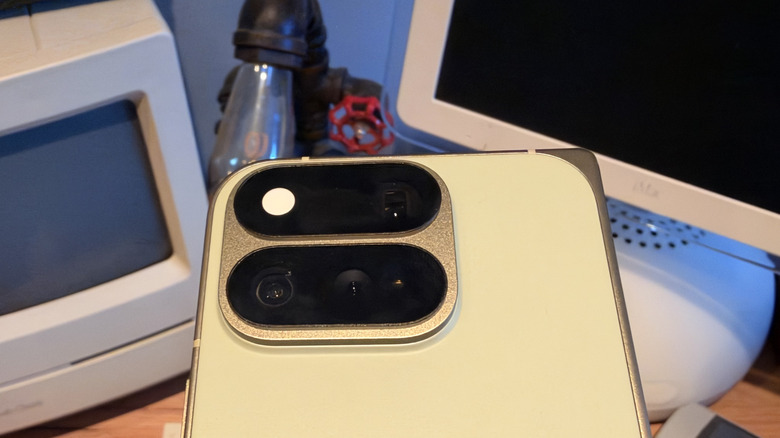
The camera is one of the main reasons to buy the Pixel 11 Pro Fold over other foldables. It's a 48 MP main camera on a 1/1.56-inch sensor, a 10.5 MP ultra-wide lens with autofocus and macro mode, and a 10.8 MP 5x telephoto camera, with Google's AI-assisted super zoom to 30x. That's roughly the same setup as the base Pixel 11, but with the extra telephoto camera that the 11 Pro XL offers, and the results are among the best you'll get from a foldable phone in 2026.
The main camera is consistent and detailed, and the larger sensor helps in low-light environments. The 5x telephoto is the lens I use the most, aside from the main camera, as I always do. Images still look sharp and detailed, even when you're zoomed in. Having real optical zoom capabilities on a phone is worth more to me than any ultra-wide camera, no matter how good it is. The ultra-wide is fine, but it comes with usual pitfalls of these sorts of lenses, and I barely touched it.
What defines a Pixel photo is Google's image processing, and the 11 Pro Fold is no exception. I wouldn't call Google's results any more consistent than Apple's or Samsung's, but I'd say they are more stylistic. If you show me a photo that a Pixel phone took, I can usually tell. If you view an image in the gallery before processing finishes, the difference between the raw capture and the finished shot is stark, which tells you how much of the look is actually down to software.
That being said, the 11 Pro Fold doesn't get everything the 11 Pro and Pro XL phones get. There's no 120x Pro zoom here, despite the Pro moniker, and video tops out at 4K rather than 8K. Given that Pro zoom stops being reliable past about 80x when I use the 11 Pro XL, losing the headline number isn't as big of a downgrade as it might sound like. The gap between 30x and 80x zoom is rather large, and you might notice it if you zoom into photos often. It's an exclusion rather than a deal breaker, but if the camera is your biggest priority, the conventional Pixel 11 Pro probably takes better photos for a lot less money.
 Connor Jewiss/BGR
Magic Capture, one of the Pixel 11 series' biggest features, remains a good idea, but one that I won't use. That's because it didn't really work well for me when using it on this foldable or the other Pixels. It pulls stills from a moving video sequence, and they come out at a visibly lower resolution. Camera Looks give you more control over processing than they first appear to, and I still prefer the idea of editing a photo after taking it rather than applying a filter to all the photos I take.
Made You Look, which animates the rear display when the device is folded open to get a child's attention to take photos of them, looks genuinely useful in Google's demos, though I don't have kids to test it with. Tabletop mode and dual-screen preview are the sort of features that justify foldables for many, but I never reached for either.
Software
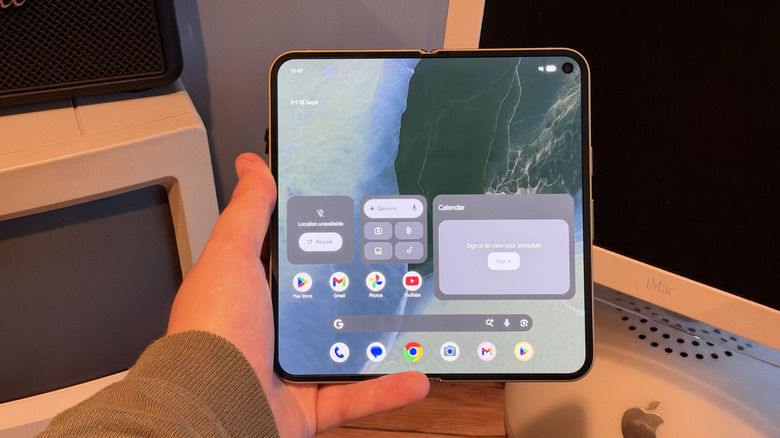
Android 17 on the Pixel 11 Pro Fold is clean, quick, and rather sensibly restrained. Google's approach to foldable software avoids much of the complexity Samsung piles on, for example, but that can backfire at times. There's a revamped bubble system that shrinks any app into a floating window alongside split screen, and it works well. Samsung's desktop-style window management is still more flexible for power users. I mostly use the big screen for reading and email rather than elaborate multitasking, which I suspect will be true for most people who buy one.
Some of the small details on the 11 Pro Fold are also pretty good. The default theme wallpaper animates as you open and close the interior display, which is the kind of thing that makes an expensive device feel more premium. It's not quite the same level as the iPhone Duo's animations, but it's a very nice touch for this handset. You also get 7 years of OS, security, and Pixel Drop updates, which will take support through to August 2033.
Gemini is a little intrusive on the device, replacing the old Google Search widget with one that uses either Gemini or Google's new AI mode, though the larger screen suits Circle Search and Magic Cue quite well. The Gboard Rambler dictation feature is the same here as it is on any of the other devices in the range, and it's the one AI feature I actually use with any regularity. Magic Cue, meanwhile, still hasn't surfaced anything useful for me, most likely due to my location.
HiLight is also on the Pixel 11 Pro Fold, which some of Google's marketing isn't particularly clear about. That said, it does just as little on the 11 Pro Fold as it does on the 11 Pro XL. It glows for calls from chosen contacts and also while Gemini is working, but that's the extent of it. It also costs you brightness in the flashlight, which is a poor trade-off for what could have been a genuinely useful feature.
Conclusions
The Pixel 11 Pro Fold is a well-rounded foldable with strong cameras, clean software, a reliable pair of displays, and durability credentials most foldable rivals can't match. The 16 GB of RAM makes it the best multitasker in the Pixel 11 range, and the conventional outer display makes it one of the easiest foldable phones on the market to live with day to day.
Battery life, charging speed, and the noticeable crease are the 11 Pro Fold's most notable weaknesses, and the design is increasingly conservative when compared to what other manufacturers are doing, which may irk some users. What you're buying is Pixel photography and Pixel software in a foldable body that works largely like a normal smartphone — until you need a tablet.
The Galaxy Z Fold 8 is one of the 11 Pro Fold's clearest competitors in terms of price, also at $1,899, though it takes the passport-shaped approach instead, with a shorter, wider body when closed and a less noticeable crease. I own one, and the two phones are aimed at different people rather than competing on providing the same experience. Apple's iPhone Duo, which launches in October, sits just above in terms of price at $1,999, and it obviously provides access to the Apple ecosystem.
Inside Google's Pixel 11 range, the 11 Pro and Pro XL offer sharper cameras and are a better value, starting at $1,099 and $1,299, respectively. They're the phones to consider if photography is your primary camera focus, with the difference between the Pro handsets simply coming down to display size. Last year's Pixel 10 Pro Fold is the cheaper way into the same foldable design, but it comes with a heavier body, slower wireless charging, and a weaker main camera sensor.
If you want a normal Pixel most of the time that can morph into a tablet on occasion, the Pixel 11 Pro Fold is a solid option with real upgrades over last year's model.