

iPhone 18 Pro Max Vs. Pixel 11 Pro XL: Which Flagship Should You Buy?
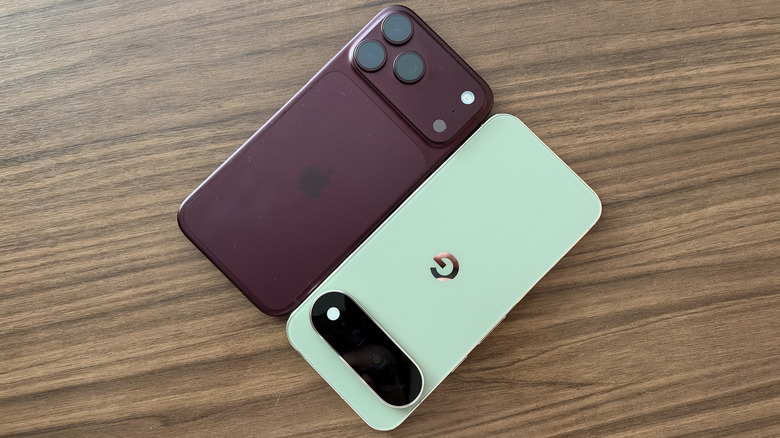
Apple and Google arrived at the same starting price for their large flagship smartphones this year. The iPhone 18 Pro Max starts at $1,299 with 256 GB of storage, and the Pixel 11 Pro XL also starts at $1,299 with 256 GB. They cost the same amount and come with the same base storage.
Over the past month, I've used both phones extensively. The Pixel 11 Pro XL was my phone for two weeks across Berlin, London, and New York, and I wrote a full Pixel 11 Pro XL review. The iPhone 18 Pro Max, which I have also reviewed, has been in my pocket for just over a week now, including coming with me on a trip to Maui. My daily phone before either of these models were released was an iPhone 17 Pro Max.
On paper, these two smartphones look more similar than they have been in years. Both are large phones with excellent OLED displays, three rear cameras, and magnetic wireless charging. But there are some rather large differences between the two from the chip, the zoom range, and their performance under heavy loads. Here's how the two flagship phones compare.
iPhone 18 Pro Max vs. Pixel 11 Pro XL: What's the same?
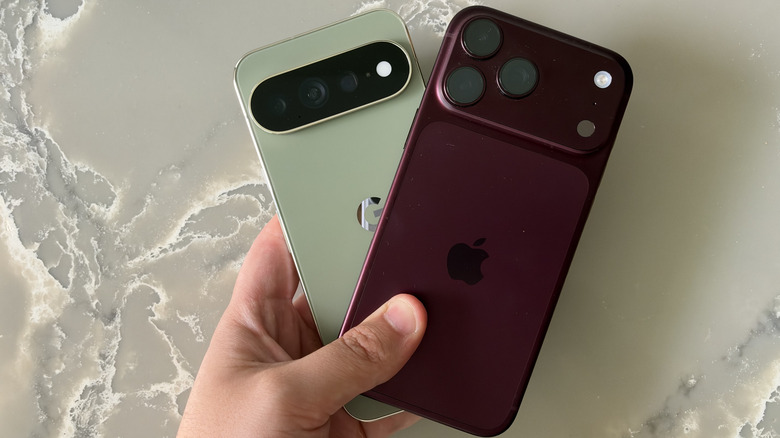
The iPhone 18 Pro Max has a 6.9-inch OLED panel with 2,868-by-1,320 resolution, while the Pixel 11 Pro XL has a slightly smaller 6.8-inch Super Actua OLED with a slightly sharper 2,992-by-1,344 resolution. Both offer an adaptive refresh rate up to 120 Hz and an always-on mode, and both are excellent screens. The Pixel peaks at 3,600 nits of brightness compared to Apple's 3,000 nits, but I could still see content clearly on either phone in direct sunlight, which is the only thing that matters to most users.
Each phone carries an IP68 water- and dust-resistance rating, Wi-Fi 7, Bluetooth 6, and an ultra-wideband chip. I used both without a case, and neither picked up a mark on the body or the glass screen. Each has an aluminum frame and stereo speakers that are loud enough to watch something in a hotel room without reaching for a pair of headphones.
These are large phones that will take up all of the room in your pocket and may require a second hand to use comfortably. I have fairly large hands and found that both are fine to use one-handed, though that will not be everyone's experience. Both the iPhone and the Pixel come with three rear cameras, including an ultrawide lens and a dedicated telephoto lens.
Apple offers MagSafe wireless charging at up to 25 W, while Google offers Pixelsnap, also at up to 25 W. Both phones have magnets around the wireless charging coil to easily attach accessories. Both phones come with a USB-C cable in the box but no power adapter, and both are eSIM-only in the U.S. with no SIM tray, so you'll need a carrier that supports eSIM if you're switching from an older handset.
iPhone 18 Pro Max vs. Pixel 11 Pro XL: What's different?
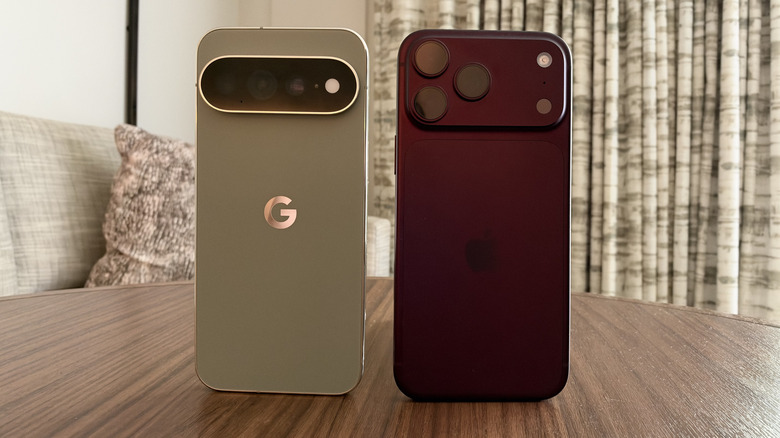
Apple's new A20 Pro is a 2 nm chipset with a six-core CPU and a seven-core GPU, and the iPhone 18 Pro scored 4,735 single-core and 12,545 multi-core in Geekbench 6. Third-party testing of the Tensor G6 in the Pixel 11 Pro XL returned 2,691 and 7,203 in the same benchmark. While benchmark numbers are only representative, they match up to my experience using the phones quite well. The iPhone never struggled with anything I could throw at it and never slowed down. Meanwhile, the Pixel struggled when I ran Google Maps, Google Photos, and email at once while listening to music.
Apple's 48 MP telephoto lens reaches 4x with 8x optical quality and maxes out at 40x digital, though details start to decline past 20x. Google's 48 MP telephoto lens, meanwhile, reaches 5x optically and stretches up to 120x with Pro Zoom. Google's AI-assisted Pro Zoom can read menu text across a room, though it also hallucinates details at times, so I stopped trusting it past about 80x. The Pixel also shipped with a camera bug I experienced several times a day, and HiLight, the colored LED ring around its flash, which offers little functionality beyond dimming the flashlight.
Apple quotes up to 30 hours of typical use and 45 hours of video for the 18 Pro Max, against Google's 30-plus hours on the 11 Pro XL. My Pro Max unit finished a 25-hour travel day with over eight hours of screen time at 12% with no top-ups. The Pixel managed around seven hours of screen time on a normal day, which is solid rather than remarkable. The Pixel charged faster over a cable, hitting 75% in about 30 minutes with a 45 W adapter.
iPhone 18 Pro Max vs. Pixel 11 Pro XL: Which flagship phone should you buy?
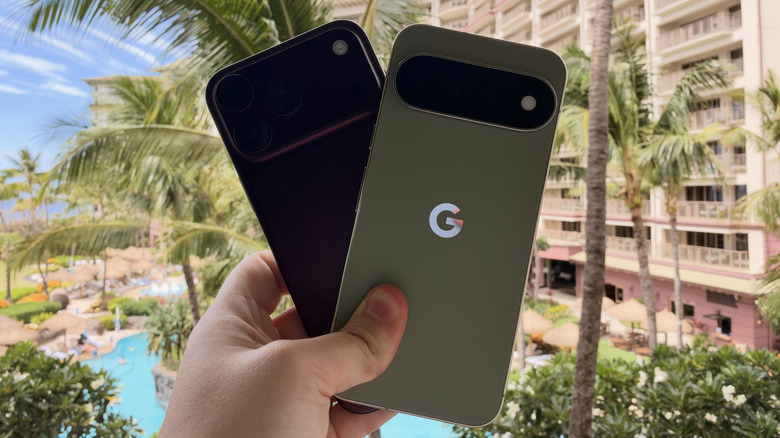
If you're seriously considering both devices, buy the iPhone 18 Pro Max. It gives you more performance headroom than you will ever need, the better battery of the two, and a camera that behaves predictably in every situation. The variable aperture on the main sensor makes a visible difference at night, and Pro controls for aperture, shutter speed, and white balance are worth having if you shoot more than snapshots. The Pixel 11 Pro XL has a faster night mode and is more consistent in dark environments with several light sources, such as a street lit by different streetlights, where the iPhone lags.
It's tough to compare these phones without mentioning their software. The iPhone runs iOS 27 while the Pixel runs Android 17. Both offer AI features thanks to Gemini and Siri AI, though you'll find slightly more on the Pixel. Gemini is also more in your face on the Pixel, inescapable at times, such as when trying to make a quick Google search. Both come with their own ecosystem benefits, though iOS wins out when it comes to polish and playing nice with other Apple products. I'm not going to try to settle the Android versus iOS debate; you likely already know which operating system you prefer.
If you're put off by the $1,299 price attached to both flagships, it's worth looking elsewhere in the Pixel and iPhone lineups. The $899 Pixel 11 covers most of what the Pro XL does for $400 less, save for some of the camera capabilities. On the Apple side, a discounted iPhone 17 Pro Max is still a sensible buy, and I've covered whether the iPhone 18 Pro is worth upgrading to from an iPhone 17 Pro separately.