

Google Pixel 11 Review: An Excellent Smartphone That Plays It Too Safe
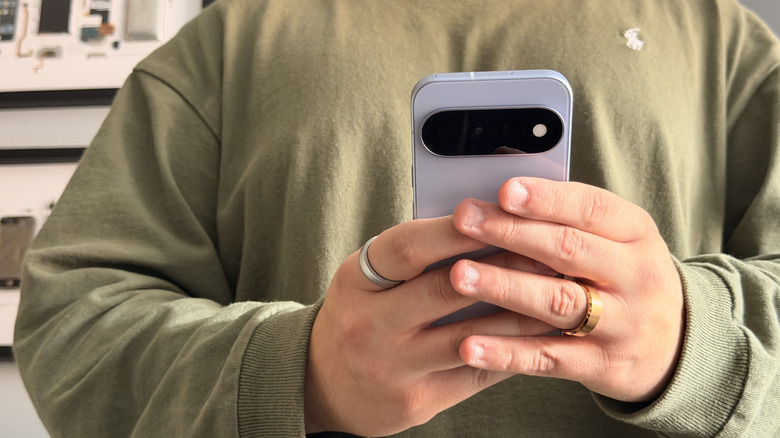
The Pixel 11 starts at $899, which is $100 more than the Pixel 10 retailed for last year. Every model in the Pixel 11 lineup increased in price by the same amount, so this isn't unique to the more affordable device, and every model now starts with 256GB of storage as standard, which takes some of the sting out of it. Whether that trade works for you depends on how much you value storage.
If you've used a Pixel 10, then the Pixel 11 experience will feel familiar. Very familiar. It offers a 6.3-inch Actua display, Google's own new Tensor G6 chip, 12GB of RAM, a triple camera system built around a larger 48MP main sensor, and a 4,985 mAh battery. Google claims you should see a 56% improvement in light sensitivity on that main sensor and adds its AI-assisted 30x Super Zoom to the 5x telephoto lens. As you'd expect from a Pixel, Google promises seven years of OS, security, and Pixel Drop updates as standard.
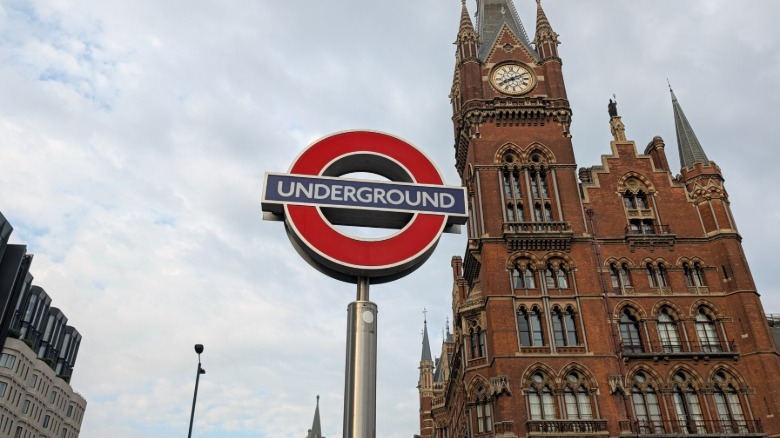
I've used the Pixel 11 as my main phone for two weeks, including a trip to Berlin for IFA 2026 and a few days in London, where I used it to take the majority of my photos. I've found that it's a phone that's very easy to recommend but one that's very hard to get excited about. It takes excellent photos with almost no effort, the battery lasts all day, and the software is clean. It's also close enough to last year's phone that a Pixel 10 owner can safely wait another year.
Design
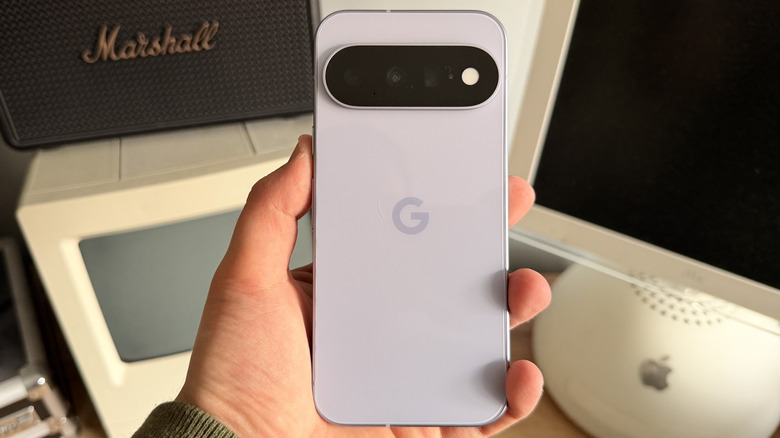
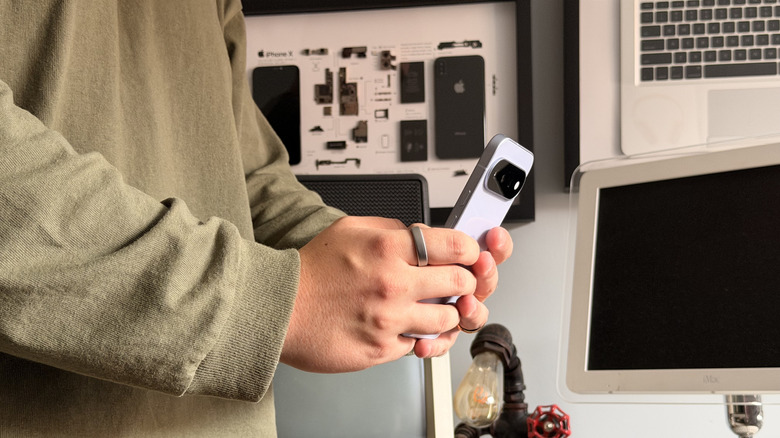
This year, the Pixel 11 comes in Frost, Pistachio, Hibiscus, and Obsidian. My Pixel 11 was the Frost option, which is sort of a pale, off-white with a faint shade of purple or light blue, depending on the light. Pistachio is probably the most interesting color this year, though Hibiscus seems to be the one people are using the most when I see the new phone out and about.
The polished Gorilla Glass Victus 2 rear panel doesn't hold fingerprints despite being glass, which surprised me on a finish that's this glossy. It is, however, extremely reflective, to the point that taking photos of this phone for this review took a little bit more effort than usual. Whether or not that bothers you depends on if you spend your evenings taking pictures of your gadgets, which most people, sensibly, probably don't do.
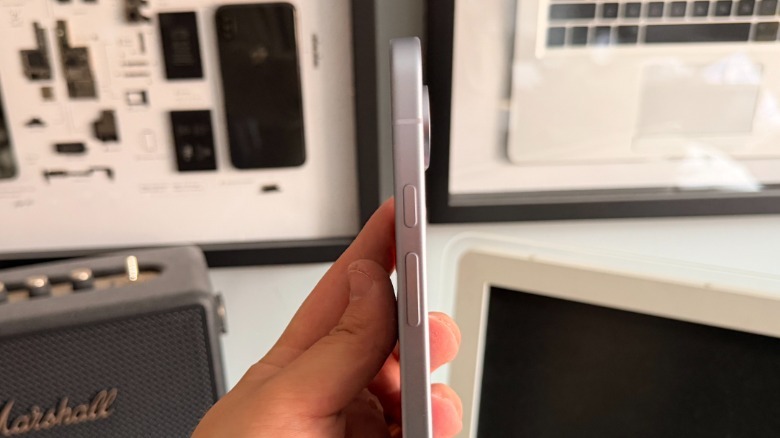
With the Pixel 11, Google has cut the camera bar's thickness by around 40%, so the phone sits slightly flatter on a table as a result. There's still a slight rock if you tap the top corner while it's face up, and Google's claim of a virtually bumpless phone is tied to using one of the tech giant's official Made by Google cases, which I haven't. Without one, there is a noticeable difference to the camera bar, but it's not a major overhaul by any means.
 Connor Jewiss/BGR
At 6.9 oz, the Pixel 11 is noticeably lighter than the Pixel 11 Pro and Pixel 11 Pro XL, though it doesn't feel any cheaper. The aluminum frame and the glass front and rear panels still feel premium, and after two weeks without a case on the phone, there are no scratches or marks anywhere on it. It's IP68 water- and dust-resistant, and it dealt with some decent showers in London without any problems. The 6.3-inch display is one of the best things about this phone, as it's a device you can use with one hand without adjusting your grip, which is increasingly rare in 2026.
Face Unlock is very quick, often beating my thumb to the fingerprint sensor. It doesn't work in the dark, which is the sort of thing you forget about until you're lying in bed, reaching for your phone. This isn't a huge problem, as the fingerprint sensor is still there to unlock the phone. And perhaps I'd rather it just didn't work than lighting up the whole display as some other Android phones do. It's more of an inconvenience than a problem, but it's worth knowing before you rely on Face Unlock.
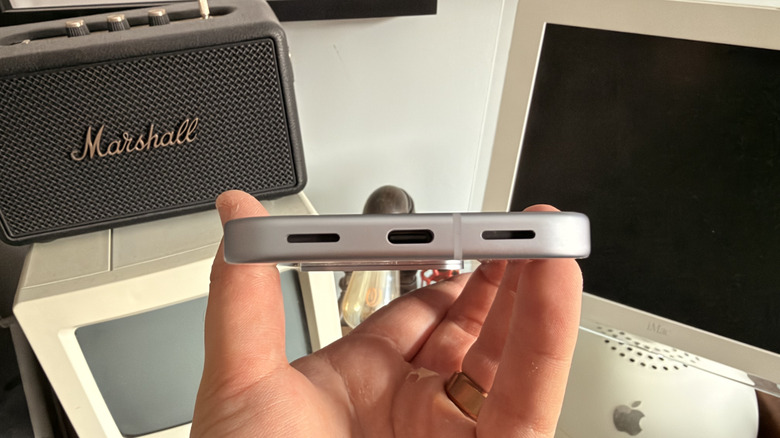
The speakers, however, are the one part of the hardware that I feel isn't worth the price of the Pixel 11. They're loud, and calls and music come through clearly, but push past roughly two-thirds of the volume slider, and the speakers turn tinny. That's a complaint I'd usually be making about a budget or mid-range phone, so I'm a bit disappointed to notice it on the Pixel 11.
Display
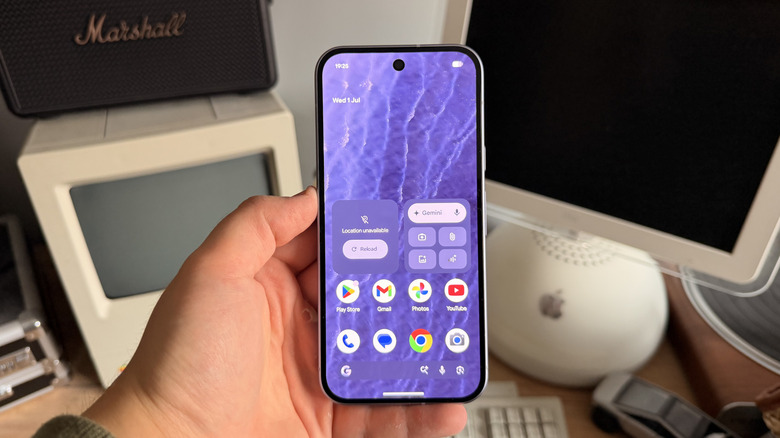
The Pixel 11's 6.3-inch Actua panel runs at 1080 x 2244 resolution and 422 pixels per inch. It's a 120 Hz display by default, with smooth display switched on out of the box, though it can go down to 60 Hz. It's also bright — up to 3,000 nits at its peak. It's bright enough to stay readable outdoors in direct sunlight, colors are accurate, and there's nothing here that will disappoint anyone.
But there's also nothing here that's new. This display is largely unchanged from the one on the Pixel 10, and next to the Pixel 11 Pro's Super Actua display, it's visibly less sharp and less sophisticated. The Pro gets LTPO, a higher resolution, and an anti-scratch coating. The Pixel 11, however, gets a screen that was already good enough last year, and it's still just good enough now.
The missing LTPO capability is probably the least important of those emissions. Both phones still run at 120 Hz, so unless you leave the always-on display switched on, the ability to drop down to 1 Hz probably isn't something you'll notice in daily use. Sharpness is one difference you'll actually see between this phone and the Pro XL, but that's only if you were to go looking for it by putting the two phones side by side.
Day to day, brightness matters more, and 3,000 nits of peak brightness is plenty. Berlin in early September gave me a week of hard, low sun bouncing off many glass buildings, and I never once had to shade the screen with my hand to read Google Maps. Indoors, auto brightness has been well-behaved, moving from well-lit exhibition halls to more darkly lit ones, which is worth mentioning because plenty of Android phones still struggle with this.
Performance
Google's in-house Tensor G6 chip in the Pixel 11 is the same chip that Google puts in the Pro and Pro XL, with the same 12 GB of RAM — though the Pixel 11 isn't configurable up to 16GB like the Pros are. In practice, that means there's no meaningful performance gap between the most affordable Pixel 11 and the base model of the most expensive one for anything most people do on their phones. Apps open quickly, animations are smooth, and the phone usually feels fast.
It doesn't always stay that way, though. With Google Maps navigating, music playing in the background, being connected to a personal hotspot, and having a few apps running in the background, the phone gets sluggish in a way that's hard for me not to notice. Frames drop, apps hang, typing on the keyboard starts to fall behind, and switching between apps stops feeling instant. It happened a few times while I was in Berlin, so often that I started closing apps so I could reliably keep using the phone.
Gaming still remains the Pixel's clear weakness, and it's a processor problem rather than a Pixel problem. While I don't game much myself, Android Authority found that the Tensor G6 hangs on to about 79% of its peak graphics performance across a 20-run stress test, which is better thermal behavior than most rivals manage, but the peak it's holding onto is well behind them to begin with. There's also still no ray tracing support. If you play demanding games, buy a device with a Snapdragon 8 Elite Gen 5 chip, and that advice hasn't changed throughout several Pixel generations. There are plenty of Android phones to pick from that are more powerful than the Pixel 11.
Connectivity has been solid throughout my time with the Pixel 11. I used the physical SIM card while I was at home in the U.K. and connected to a personal hotspot for most of my time in Berlin rather than picking up a local eSIM, and it never gave me any problems. Pixel 11 gets Wi-Fi 6e, while the Pro devices move up to Wi-Fi 7, and the Pixel 11 also lacks the ultra-wideband (UWB) chip, though neither of these were issues during my two weeks with the phone. If you're interested in the new Pixel Tag, however, you may notice the lack of UWB.
Battery and charging
Battery life is probably the Pixel 11's biggest advantage. Google says it houses a 4,985 mAh battery, which makes it the largest cell in the lineup outside of the 11 Pro XL and larger than the battery in the regular 11 Pro that costs $200 more. That's a bit of an odd thing to find in the cheapest phone in the smartphone range, but it makes the Pixel 11 even more compelling.
Across busy days with heavy camera use, hotspot running, navigation open, music playing, and the usual email sending, I was landing somewhere close to seven hours of screen-on time and still had charge left at the end of the night. It probably wouldn't stretch to a full second day — though maybe half of a second day — but I never actually tried, as I tend to charge my phone every night. What it will do is survive the kind of day where you're out of the house from morning until late without you having to worry about finding somewhere to plug it in, and that's what really matters.
Charging is rated at 30W over USB-C PPS, with Google claiming the battery will reach up to 55% after around 30 minutes of charging. In my experience, a half hour on the charger puts back a meaningful amount in the device and matches that claim closely enough that I wouldn't argue with it.
Pixelsnap is the same on this phone as it is on the Pro models; the magnets are built in, just like Apple's MagSafe, and wireless charging is Qi2.2-certified at up to 25W. Existing Pixelsnap accessories (and even MagSafe ones) will attach to the device and hold firmly. If you're coming from an iPhone and you're used to MagSafe accessories and have accumulated various stands, car mounts, wallets, or other accessories, none of them will go to waste.
Camera
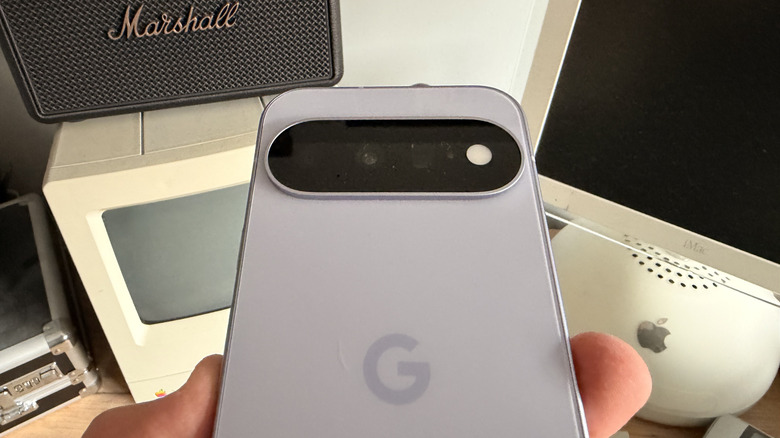
The camera remains the main reason to buy a Pixel in 2026, and the Pixel 11's camera is very good. It's a 48 MP main camera on a 1/1.56-inch sensor, a 13 MP ultra-wide lens, and a 10.8 MP 5x telephoto lens with Google's AI-assisted Super Zoom stretching to 30x. The company says that the main sensor pulls in 56% more light than the Pixel 10's camera, and in practice, it delivers a camera that's quicker to respond and more reliable in poor lighting conditions.
What it's best at is making photography easy, which is what many people want from a smartphone. Point it at a street at dusk, and you'll get a photo that's worth keeping in your library without thinking about tweaking any settings or crossing your fingers for good luck.
 Connor Jewiss/BGR
Most of that is down to Google's image processing, and it's the reason the gap between this phone and the more expensive 11 Pro XL isn't as big as you might expect. Put images from the two phones' cameras side by side, and the Pixel 11 might be a little softer and lose details once you start zooming in, which is what you'd expect from a smaller sensor and fewer megapixels. In day-to-day use, however, you'd probably never notice any difference.
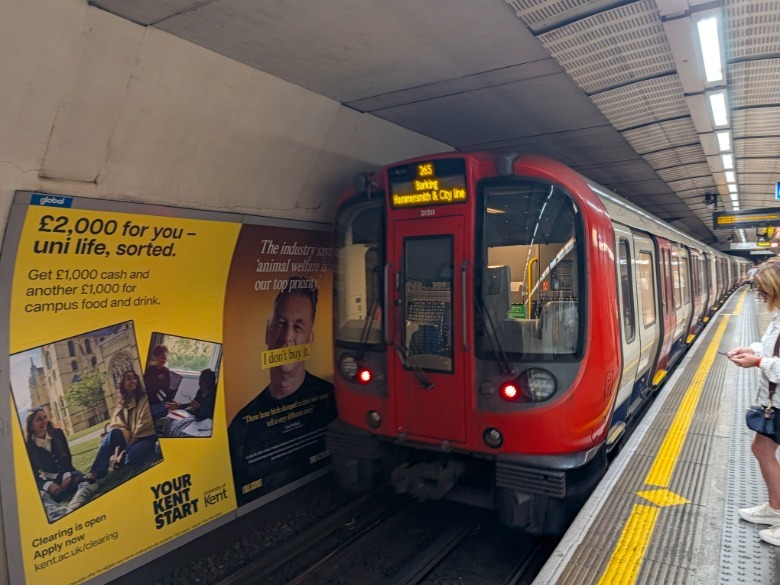 Connor Jewiss/BGR
Having a proper 5x telephoto lens on the standard Pixel 11 is the camera feature I appreciated the most. I reach for the telephoto mode constantly and almost never touch the ultrawide. Having optical zoom capabilities on a smartphone at this price beats most rivals. The AI-assisted Super Zoom is nice to have, with the ability to zoom up to 30x. Towards the high end of this, Google's image processing turns rather aggressive and leaves pretty obvious flaws in the image. This is to be expected, due to the AI powering the feature, but I'm glad Google stops at 30x rather than chasing the Pro XL's 120x Pro Zoom with a smaller sensor, as the results would not be good.
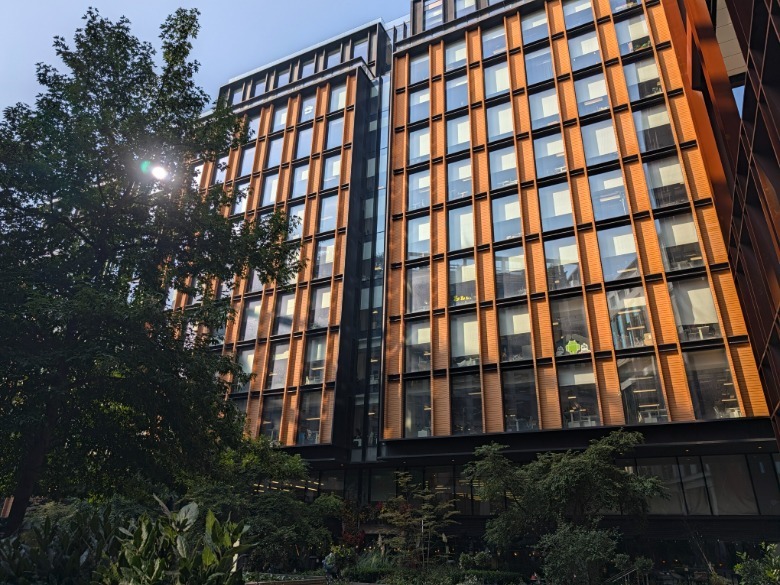 Connor Jewiss/BGR
Night Sight holds up despite the Pixel 11 having a smaller sensor than the Pro, which is the camera feature I most expected to struggle. The 13MP ultra-wide is the weak link, as it's fixed focus, so there's no macro ability. The 10.5 MP selfie camera is decent rather than great, as it's a noticeable step behind the Pro's, though I don't take many selfies, so it never bothered me.
Camera Looks essentially allow you to apply filters to every photo you take. They give you a decent level of control over the final image, though I prefer to edit photos after taking them. Magic Capture is the Pixel 11's flagship camera feature and, admittedly, a good idea. But it's a feature that I avoid, mostly because the stills it pulls out of videos are noticeably lower resolution than ones you'd take yourself.
Software
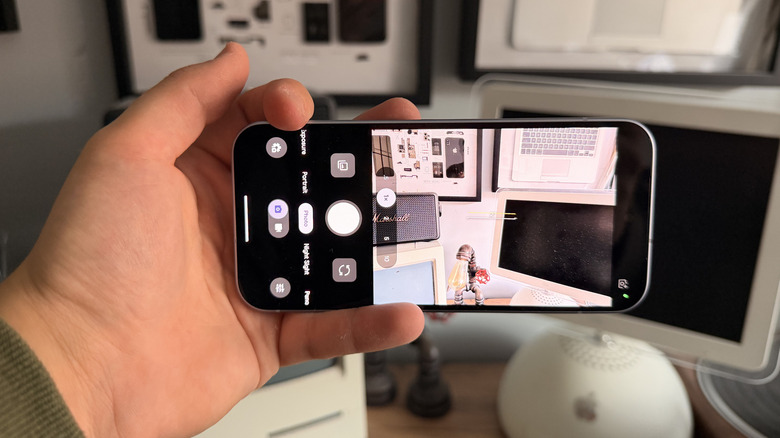
Android 17 on a Pixel remains the cleanest version of Android you can get. There's no bloatware, no ads — unless you consider the Discover feed swipe to the left an advertisement of sorts — and 7 years of software, security, and Pixel Drop updates, which is still one of the strongest support commitments in the industry. It's also rarer to see on an $899 phone than it is on a $1,299 flagship.
Rambler is one exclusive new feature, and it was really rather impressive. Essentially, it's Gemini-powered voice typing built into Gboard. It cleans up the way you actually speak, stripping filler words and turning rambling into a real message. Walking around a busy trade show in Berlin with my hands full, it was one of the features I used the most on the Pixel 11. It rarely got anything wrong. The formatting isn't always what I'd have chosen myself. There's also no live preview, so nothing appears until you finish talking and tap the check mark, which is a big change if you regularly use dictation and watch the words appear as you speak.
There's also a lot more Gemini integration shoved down your throat elsewhere on this device. If you try to use the Google home screen widgets, that now means being routed through Gemini or AI search mode rather than a standard Google search. While individual features can be switched off, there's no single toggle that removes Gemini from the phone. Magic Cue, which Google positions as surfacing calendar entries, directions, and restaurant details inside your messages, has never once surfaced for me. That might be due to a location issue or just the nature of my messages.
What the Pixel 11 doesn't get is HiLight, the Pixel 11 Pro's flagship new feature. It's a ring of LEDs around the flash that glows for calls and when you're speaking to Gemini. Its absence on the regular Pixel 11 really isn't noticeable, as it's a nearly useless feature on the Pro models. The flash on the Pixel 11 is actually brighter for not having HiLight built in, which is something I criticized the Pixel 11 Pro XL for.
Conclusions
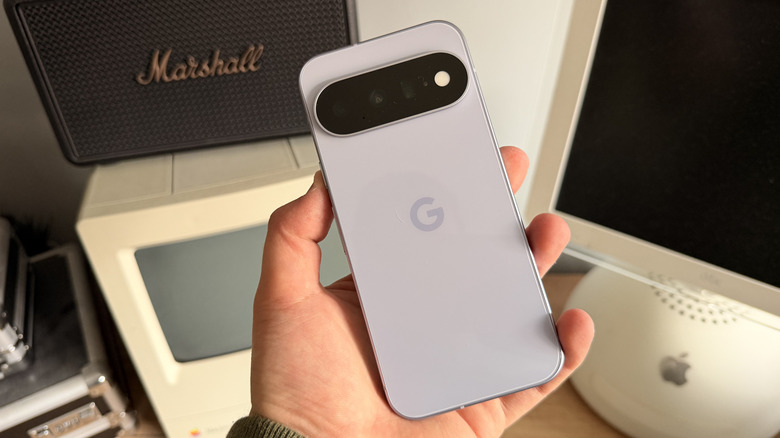
Almost everything that makes a Pixel worth owning is found here. The camera is superb for a phone of this price, the battery is the best in the lineup outside of the largest and most expensive model, software is clean, and the size is right. But almost nothing about it is new. The display carries over, the design is a refinement, and the chip is a modest step up that still can't handle heavy multitasking.
For anyone on an older Pixel or without a Pixel, this is probably the sweet spot in Google's 2026 phone lineup. You get the parts of the Pixel experience that matter most, and the case for spending up to $400 more on a Pro model phone comes down to zoom range, video features, and a sharper screen. Most people would probably opt for the more affordable phone and sacrifice those features.
The closest alternative is the Pixel 11 Pro, which costs $1,099 and gives you better cameras and a sharper display but a smaller battery than this phone, which is a strange sentence to write. The Pixel 11 Pro XL costs $1,299 and has a 6.8-inch screen, a larger battery cell, and faster charging. Although, last year's Pixel 10 is worth considering as well if you're looking to get the most bang for your buck. It's already being discounted now that the newer models are out.
Outside of Google's devices, the iPhone 17 now starts at $899 with 256GB of storage, mirroring Google's price hike. The Galaxy S26 matches the Pixel 11 at $899 with far stronger gaming performance from a better chipset, though it does have a weaker camera. Nothing's Phone (3) hasn't been superseded yet, so is still the company's flagship in 2026 at $799, and it's a more interesting phone, though not necessarily a better one. If you're wondering if you should buy the Google Pixel 11, the answer is probably yes, unless you already own a Pixel 11.