

Still Editing Photos On A Monitor? Here Are 5 Tablets To Consider Instead
We may receive a commission on purchases made from links.
Over the course of most of photography's history, the picture editing process was done in camera, with different color tones available through different film stocks. In the film days, some touchups and color manipulation could be done during film development, with computers enabling further editing once they came along. The takeover by digital cameras, however, opened the door to all kinds of things that can be done to a picture throughout the post-production process. It became a process that required the power of a desktop computer, with laptops eventually catching up.
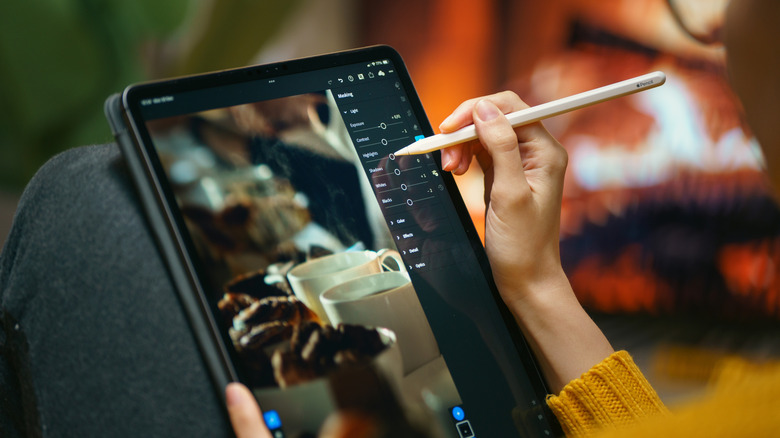
But today, even mobile devices can handle the photo editing process — there's certainly no shortage of essential apps for photographers. While smartphones make them pocketable, tablets can be more suitable for photographers because of the additional screen real estate and performance-minded hardware. Apple iPads, powerful Android tablets, and a number of other tablet options are available to photographers looking to make a move away from their desktop monitor. Photo editing can be done just about anywhere when a tablet is part of the workflow, and these devices can also chip in to expand a desktop setup or to provide touchscreen and stylus functionality, which many photographers find more comfortable than using a keyboard and mouse.
Apple iPad Pro M5
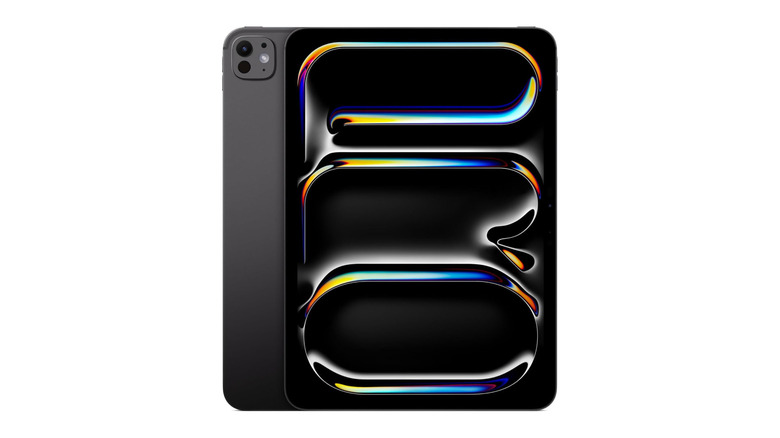
There are several models within the iPad lineup that would make a good choice for photo editing, as Apple has long catered to photographers and other creatives with its offerings. The iPad Pro M5 sits at the top of the lineup, with both 11-inch and 13-inch sizes available. We go into more hands-on details in our iPad Pro M5 review, but the larger iPad Pro is likely to best suit photographers and their various photo editing workflows, as it provides more room to split apps across the screen using native iPadOS features.
Being able to look at a photo editing app, a reference image, and anything else that may be a part of the workflow all at once can be helpful, but the quality of the iPad Pro's display is as beneficial as its size. Apple gives the iPad Pro an Ultra Retina XDR display with OLED technology and up to 1,600 nits of brightness attainable. It also includes ProMotion, Apple's marketing name for its variable refresh rate (VRR) feature that helps balance the efficiency between image quality and battery life.
As it tends to go with Apple products, the biggest drawback to the iPad Pro is pricing. The base 11-inch model starts at $1,199, and photographers may want to move up to the 13-inch model and upgrade the storage for enough space to house RAW image files. But the iPad Pro is incredibly friendly to the photo editing process, as external SSDs can be connected through the USB-C interface and accessories like the Apple Pencil Pro can be added to workflows.
Xiaomi Pad 8 Pro
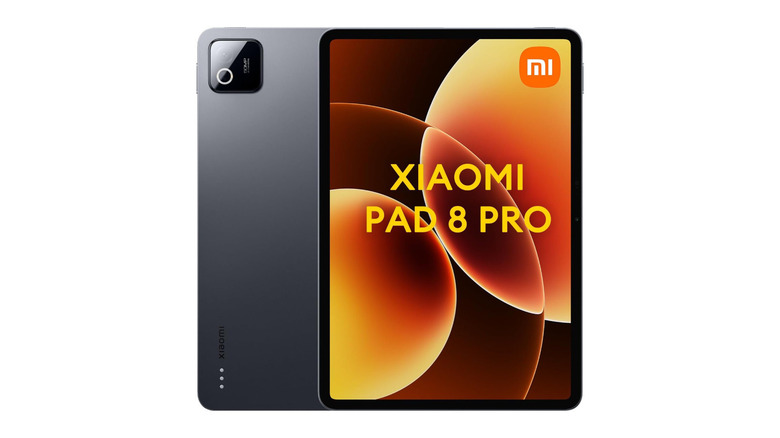
While Apple is often top-of-mind when it comes to creative work, one brand that closely resembles it in terms of aesthetics is Xiaomi. With the Xiaomi Pad 8 Pro, the company has made a tablet for photographers to consider adding to their editing workflow. It compares so well to the iPad Pro that we call it "the Android iPad" in our Xiaomi Pad 8 Pro review. For the right photographer, however, the Pad 8 Pro can add some value to the photo editing process, as it starts at just $600.
That base model's display comes in at 11.2 inches, and while that more closely resembles the smaller of the two iPad Pro models, the Pad 8 Pro includes 3.2K resolution paired with a 144 Hz refresh rate. It may be slightly lacking for the workflows of some photographers, as it comes with 256 GB of storage space and 8 GB of RAM. The Pad 8 Pro, however, costs just an additional $40 to upgrade to 512 GB of internal storage and 12 GB of RAM.
Paired with either of those combinations is a powerful Snapdragon 8 Elite processor. It features eight total cores that make the tablet efficient across a number of different kinds of apps. Xiaomi has built all of its tablets on a version of Android known as HyperOS, and while it may at first seem like its proprietary nature may be limiting, photo editing apps like Adobe Lightroom are available for the Pad 8 Pro.
Samsung Galaxy Tab S12 Ultra
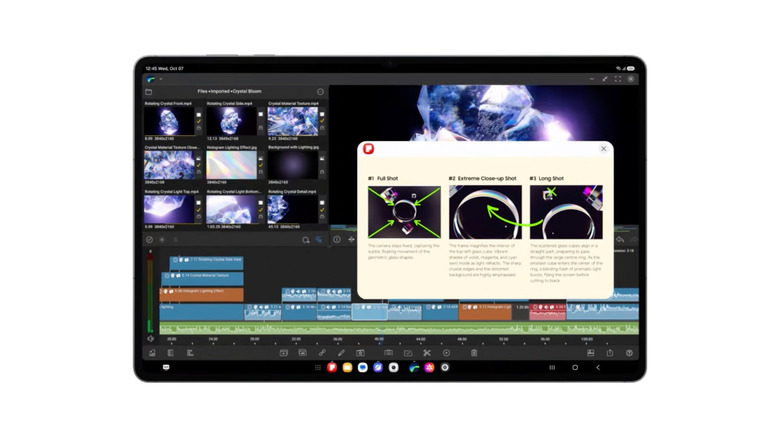
Samsung's latest tablet release is the Galaxy Tab S12, and in regard to photo editing, the best overall option is the top-of-lineup Samsung Galaxy Tab S12 Ultra. With a 14.6-inch screen, it's one of the largest tablets you'll come across — and its predecessor, the Galaxy Tab S11 Ultra, was one of the best big tablets you can buy for that very reason. The Galaxy Tab S12 Ultra improves upon the S11 Ultra in just about every way regarding performance, and it continues to offer S Pen support for those who prefer editing with the precision of a stylus.
The performance gains will likely even be noticeable to photographers working through long photo edits. Samsung claims a 19% gain in CPU performance and a 17% gain in GPU performance over the S11 Ultra, each of which are significant when it comes to intensive tasks like photo editing. The base model Tab S12 Ultra starts at $1,300 and includes 256 GB of storage and 12 GB of RAM. Options with more storage space come with 16 GB of RAM, which many photographers may want to splurge on.
The previous generation Galaxy S11 Ultra was essentially the Galaxy Tab equivalent to the iPad Pro, and now the Galaxy S12 Ultra gets that moniker. Unfortunately, that's true regarding pricing as well, with the 14.6-inch tablet offering plenty of screen real estate and room for some powerful hardware inside. While that adds up to a hefty starting price, the Galaxy Tab S12 Ultra should offer everything photographers working within the Android platform should need for their editing workflows.
Microsoft Surface Pro
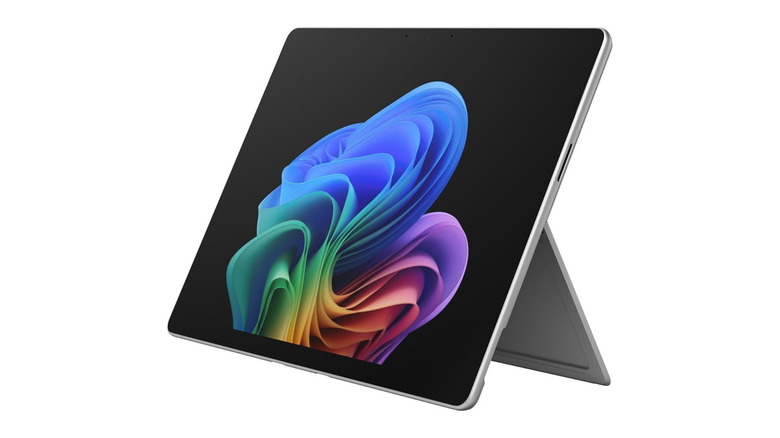
Photographers who edit their pictures through a PC-based setup may be relieved to hear they don't have to choose between Apple and Android platforms when it comes to moving the workflow to a tablet. The Microsoft Surface Pro runs Windows 11, and it has a 2-in-1 design that allows it to be used as a laptop or the lighter, more convenient form factor of a tablet. It comes in 12-inch and 13-inch options, with the base model priced at $1,150.
When it comes to straight-up photo editing, the larger model will likely be the most convenient. The display comes with an OLED option with a 120 Hz refresh rate. Photographers who have leaned into HDR technology can dive into the Surface Pro knowing it's supported. When it comes to processing RAW photos and running editing software, the Surface Pro is able to deliver performance capabilities of a laptop and includes AI integrations for additional features photographers can utilize.
With companies like Apple and Samsung dominating tablet release cycles, Microsoft's lineup has become somewhat forgotten among tablet shoppers. But the Surface Pro is a natural fit for those who like the Windows platform, and when it comes to performance, it's among several powerful tablets that can replace a work laptop. Several accessories are available, including the Surface Slim Pen that can make navigating photo editing software more precise, and the Surface Thunderbolt 4 Dock, which allows the tablet to connect to a larger, external display.
Apple iPad mini
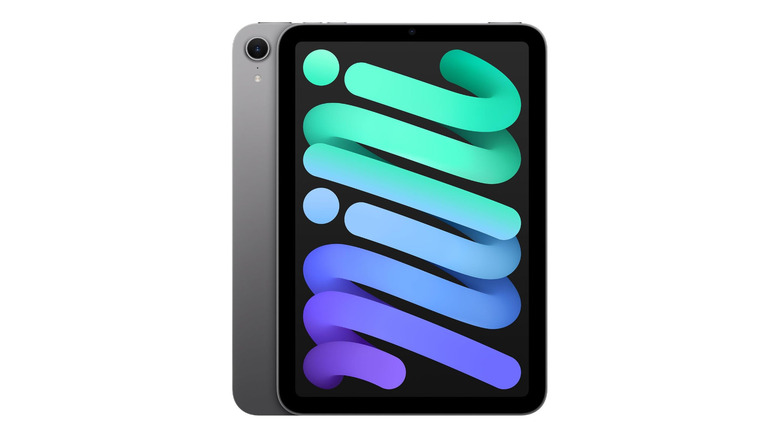
Photographers whose primary interest in a tablet is editing photos on the go can find ultimate portability in Apple's iPad mini. It runs the same iPadOS as larger models and offers much of what they can do from a performance standpoint, though on a smaller, 8.3-inch touchscreen. This tablet won't be as convenient when working across multiple apps at a time, but its super portable nature makes it the perfect pairing with cameras for frequent travelers.
Despite the fact that the screen is smaller than most tablets, Apple has still given the iPad mini a Liquid Retina display that covers the P3 wide color gamut and reaches 500 nits of brightness. Powering the mini is Apple's A17 Pro chip, which doesn't offer the processing power of its M-series processors, but can still work through some pretty heavy photo edits. While this tablet could be called a scaled down iPad Pro in spirit, it could also be looked at as a scaled up Pro-model iPhone, which has a lot for mobile photographers to love.
The iPad mini's size makes it a great mobile photography option, but it may not be best for photographers simply looking to integrate a touchscreen into their desktop setup. However, like all iPads, the mini can be used as a secondary display for a Mac through Apple's Sidecar feature. It's also compatible with Apple Pencil Pro. With a starting price of $599, it does make a solid option for Apple users who want to stay within the ecosystem and don't want to break the bank for the purchase of an iPad Pro or mid-level option like the iPad Air.
How we selected these tablets for photo editing
In narrowing down what we feel are some tablets most ideal for photographers looking to move away from a desktop editing setup, we leaned heavily on the writer's decades of experience as a professional photographer, as well as his hands-on experience with tablets as a photo editing device. We pinpointed hardware specs we know to be meaningful during the photo editing process and sought tablets that stood out in that regard. These specs included screen size and quality, touchscreen and OS features, and performance capabilities. We also looked at hardware ecosystems to ensure our selections had plenty of accessories available that can contribute to the photo editing process.