

5 Of The Tiniest Phones Ever Made
We may receive a commission on purchases made from links.
With smartphones trending toward becoming increasingly larger, some may forget or perhaps weren't around for when developing a tiny cellphone was all the rage. We've certainly explored our fair share of weird Android phones people may not have known about, but we also wanted to take a look at some devices throughout history that landed on the tinier side of tech. Though finding many of these cellphones today may be difficult, here are some of the smallest devices ever produced.
In terms of device capabilities, Unihertz makes a phone with a small footprint that still runs the Android operating system, whereas Amazon can also be home to plenty of dubious white-label devices that offer their own functionalities (even if that term may be used loosely). In the past, HP was able to include a full sliding keyboard despite low dimensional specs, while the company Pantech potentially changed the game for how compact a flip phone can be. Manufacturer Zanco also raised funds through a Kickstarter to bring users a device unique to 2017.
Going with devices far smaller than modern flagship offerings from companies like Apple, Google, and Samsung, we also tried to look at device variety, as well. If you're looking for something a little more modern, there are plenty of small phones you can buy in 2026, though don't expect them to hit the same size numbers as the ones found on this list. If you're tired of today's tech constantly trying to go larger, the devices below may help shrink your world view.
Zanco Tiny T1
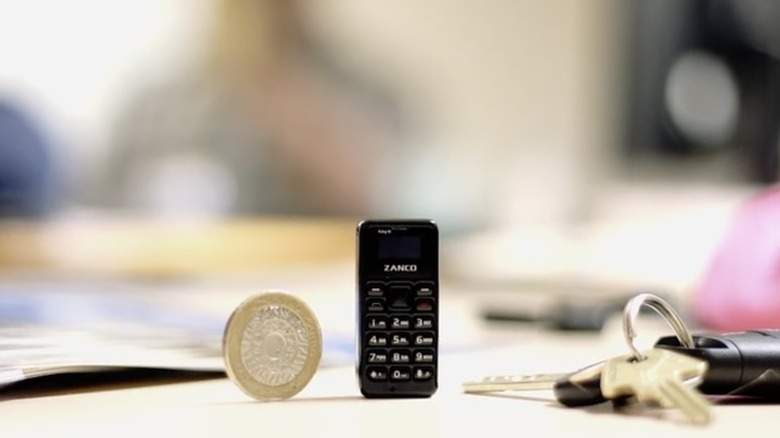
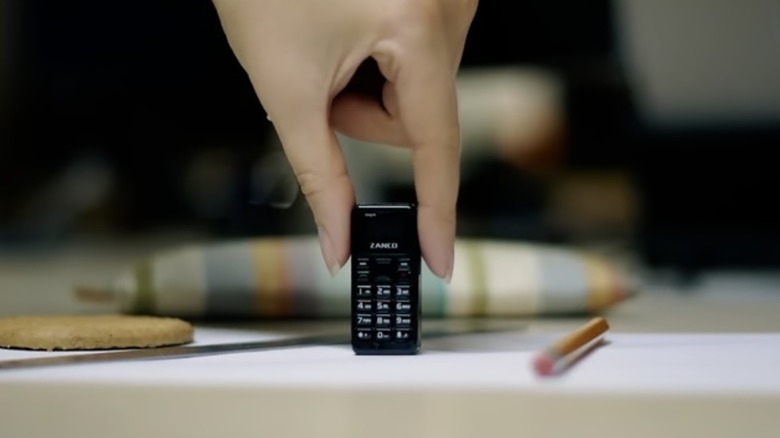
If we want to talk about devices that look like they've been zapped by a shrink ray, there are few places to start other than the Zanco Tiny T1 phone. Originally introduced to the world through a 2017 Kickstarter campaign where it raised £187,247 (approximately $248,000 USD) — well beyond its £25,000 (~$33,000 USD) goal — the phone did seem to have production issues after a dispute with another company. Meant to be available for £39 (roughly $50 USD), the device weighed about half an ounce and was 1.8 inches tall, 0.83 inches wide, and 0.42 inches thick.
Running on 2G cellular networks, the phone almost appeared comically small as reviewers took photos of the device resting in the middle of their palm — one critic noted the phone looked more like a key fob for a vehicle rather than a device with cellular capabilities. Since it ran its own UI rather than Android or iOS, it charged via micro USB and was capable of holding 50 SMS messages alongside 300 contacts in its phonebook.
Looking at a review from Digital Camera World, the reviewer found the included voice changing feature novel but "gimmicky." However, the review did note that the small size of the device could be good for photographers who needed an emergency device that was discreet for work (though they do mention texting on the device is "genuinely painful" and that the screen is incredibly difficult to use). The review complimented the overall build and call quality, though users today may want to look at some minimalist Android phones worth buying instead.
Unihertz Jelly Star
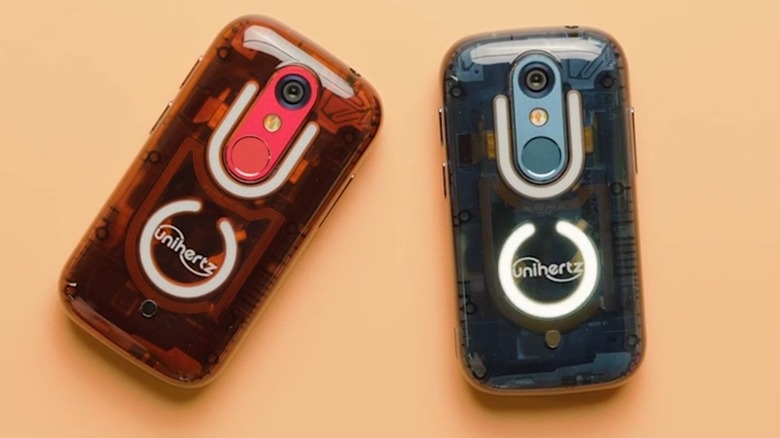
Coming in at 3.9 inches tall, 1.95 inches wide, and 0.74 inches thick, the Unihertz Jelly Star touts itself as the world's smallest 4G Android 13 smartphone. With a 3-inch display, an octa-core MediaTek Helio G99 processor, 8 GB of RAM, 256 GB of storage, and a 2,000 mAh battery, Unihertz was still able to fit quite a lot into a small footprint. Something else interesting about this device is that Unihertz claims the small size is meant to deter doomscrolling, which may be appealing to Gen Z as they ditch social media apps.
Unihertz is no stranger to small devices (the newer Jelly Max brags it's the smallest 5G smartphone), and the Jelly Star can be had for less than $250 through the company's official page. The device also comes with a 3.5 mm audio jack, which is rather amusing given that manufacturers often argue this jack is removed to help make a device slimmer. Nonetheless, it also features dual nano SIM card support, an infrared port, fingerprint unlocking, and even a 48 MP camera.
Unfortunately, if you want to try it in the U.S., it's only going to work with Verizon and T-Mobile. Looking at what Amazon customers have to say about this item, over 260 users rate this one 4.1 stars, complimenting its small design. However, one user notes that the battery doesn't last a day (but customers seem divided on this), and many have problems with the camera's picture quality. With that being said, it's definitely one of the smaller phones still available today.
HP Veer 4G
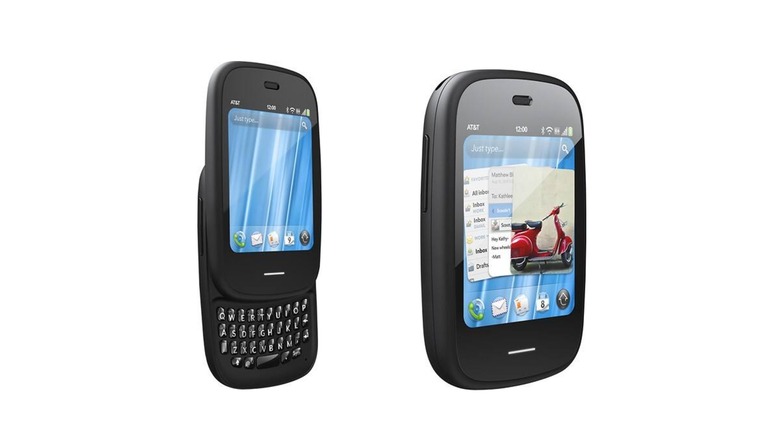
Released in 2011, the HP Veer 4G was certainly ambitious. Along with being 3.31 inches tall, 2.15 inches wide, and 0.59 inches thick, it also weighed only 3.63 ounces. However, it's not just the size that made the Veer eye-catching, as it also included webOS support as well as a sliding full QWERTY keyboard. Being from 2011, it also included a 2.6-inch touch screen with a 320-by-400 resolution. HP is no stranger to fitting big hardware into small packages, as the company also put an entire computer inside a keyboard in 2026.
Along with accessing email, calendars, and even third-party apps like YouTube and Skype thanks to webOS 2.1.2, users were even able to sync certain account information from sites like Google, Facebook, and Microsoft Exchange. At the time, some websites compared the device to the Palm Pre, and it included 8 GB of internal storage, an 800 MHz CPU, and was available through AT&T in the U.S. on a two-year contract for about $100.
A review from CNET gives the HP Veer credit for its small design, though the reviewer mentions the small size makes certain tasks like accessing the web incredibly difficult. This may not be as hard to imagine today, but the reviewer was also surprised that the device ditched the headphone jack and USB port for its own proprietary magnetic charger (which had its own issues, as well). However, it did have Touchstone charging capabilities, giving it wireless charging capabilities even in 2011.
Pantech C300
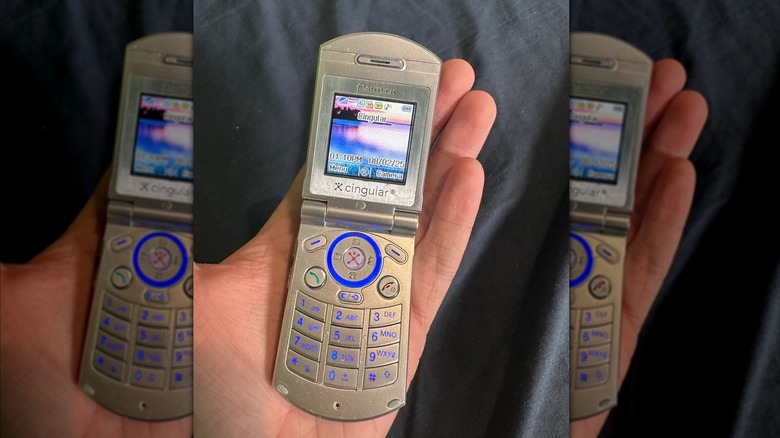
Way back in 2006, the Pantech C300 advertised itself as "the world's smallest clamshell GSM phone." Weighing just 2.5 ounces and measuring 2.72 inches tall, 1.69 inches wide, and 0.76 inches thick when closed, the C300 still possessed a 1.52-inch 256,000-color main display and a 1-inch 256,000-color secondary display. It also included 10 MB of internal storage alongside the ability to hold 800 contacts in its phonebook.
In terms of features, the C300 had options for instant messaging (including using services like Yahoo and AOL), a stopwatch, a calculator, and even a VGA camera with 4X zoom that was capable of capturing photos in 640-by-460 resolutions (or 128-by-128). The tiny device even included a single game and Java J2ME support, and users could potentially find more applications through the device's WAP 2.0 wireless web browser.
Initially offered by Cingular Wireless through its prepaid service GoPhone, it was also the first GSM-branded phone Pantech launched in the United States. Though it was indeed tiny, a 2006 review from CNET noted that the device had poor speakerphone quality and that some of the buttons were so small they were hard to operate. Though the review gave the device credit for its "decent performance," CNET also noted many would likely be turned off by the device's small size. They may not be as small, but fortunately, some of today's best foldable phones can offer far more than what was offered in 2006.
Honorable mention: Amazon slop phones
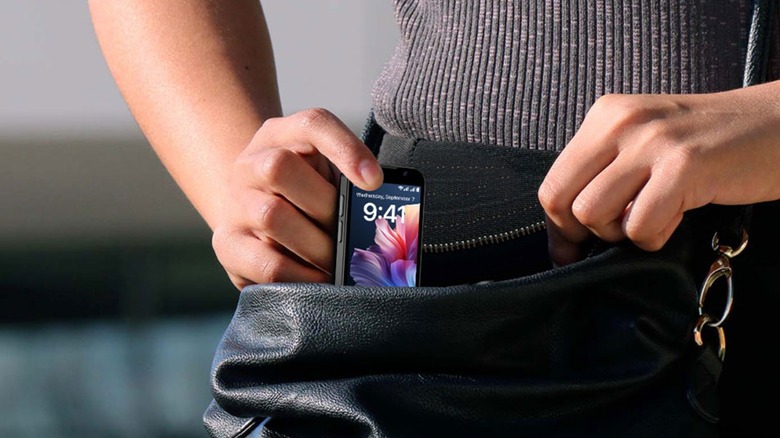
If we're compiling a list of the world's smallest phones, then the offerings one can find on Amazon are worth mentioning — owning may be a different matter, though. We don't have the space to cover all of them here, but even just typing "world's tiniest phone" into an Amazon search will yield you plenty of white-label products all touting incredibly small designs. You're not very likely to recognize many of the brands behind these devices, but they are indeed small and technically functioning.
With many of these running some flavor of the Android operating system, one of the smaller examples (Zylofy Mini Phone 3.0) features a 3-inch HD touchscreen despite only weighing 5 ounces. Rocking Android 8.1, the entire device is 3.7 inches tall, 1.8 inches wide, and just 0.5 inches thick. Even at this small size, the Mini Phone supports dual SIMs and up to 256 GB of expandable storage. It also supports the Google Play Store, WhatsApp, and Wi-Fi.
Small as the phones may be, these Amazon offerings may be more of a novelty than something you would want to carry around all day. Most of them have prices under $100 (with many under $50), yet many of them also hold 3-star user ratings with less than 100 user reviews. Going back to the Zylofy example, it holds a 3.8-star rating based on 46 reviews, but plenty of users warn of low battery life and incompatibility with U.S. carriers. These phones may be fun for a lark, but there are definitely other palm-sized gadgets worth considering.
Methodology
Technically speaking, size can be relative in the world of smartphones. What's small for some may be large to others. Keeping that in mind, we set a hard limit of 4 inches in height and 2.3 inches in width while also trying to keep other dimensions on the small side, as well. Essentially, we were going for sizes well beyond what you may find today.
Weight also played an important factor when choosing sizes. When determining this list, we did our best to give users a bit of cellphone history while also looking at some smaller cellphones that are still in production today. When applicable, we also looked at user reviews and star-ratings to determine the items on this list that are still available for purchase.