

Xiaomi 18 Fold Review: Best-In-Class Hardware You (Probably) Can't Buy
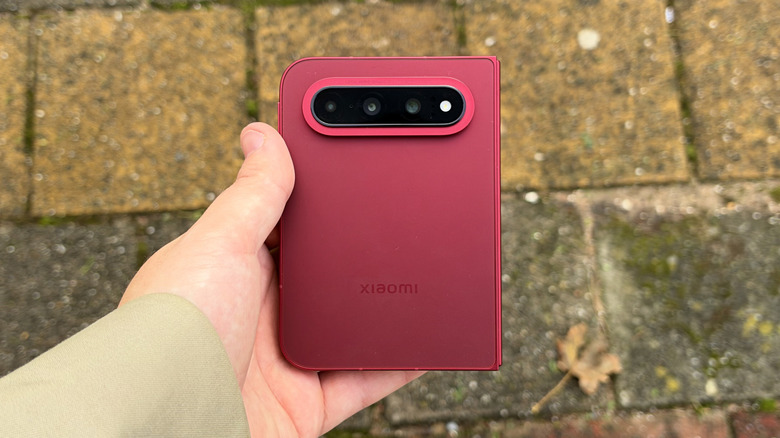
The Xiaomi 18 Fold starts at 10,999 yuan in China, which is around $1,640. That means it's a few hundred dollars cheaper than both the $1,899 Galaxy Z Fold 8 and the $1,999 iPhone Duo. However, Xiaomi is only selling the 18 Fold in mainland China, with no global launch planned for now. That's a shame, because the hardware might be some of the most impressive in a passport-style foldable since they became popular this year.
It offers a 7.58-inch inner display and a 5.38-inch cover screen, Xiaomi's own 3nm XRing O3 processor, a 6,000 mAh silicon-carbon battery, and a Leica triple camera system with a 200MP main sensor. All of that comes in a body that weighs only 219g. I spent a little over a week with the 18 Fold, comparing it to the iPhone Duo that recently became my daily phone, and against the Galaxy Fold 8 that convinced me passport-style foldables were the better form factor in the first place.
BGR's José Adorno went hands-on with the Xiaomi 18 Fold at IFA 2026 before it launched, and my time using the device mostly confirms many of those early impressions. There's no doubt that the 18 Fold offers some of the best passport-style foldable hardware you can buy in 2026 — if you can get your hands on it.
Design
The Xiaomi 18 Fold comes in a striking red finish, which is one of my favorite phone colors in years. The matte glass back sits against a darker metal frame, so the contrast gives the phone a rather distinct look. The handset also comes in black and white, plus a limited ceramic edition with a scratch-resistant silicon nitride back is still in the works.
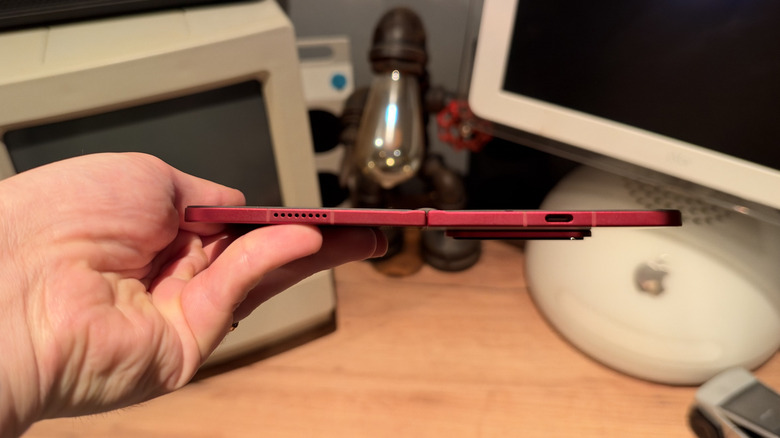
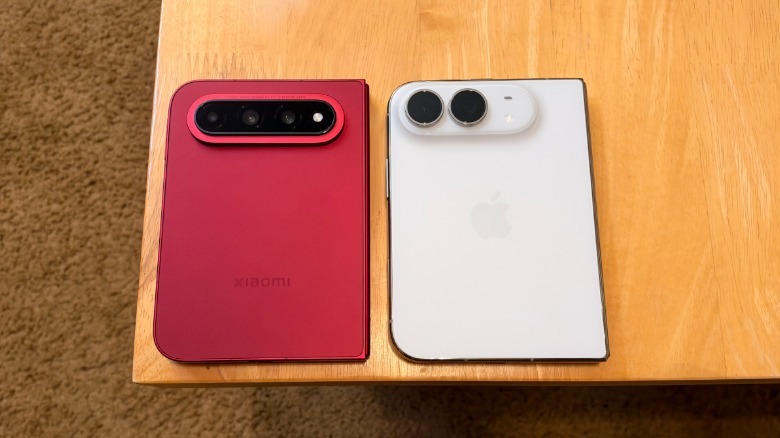
When folded, the 18 Fold is exactly as tall as the iPhone Duo at 117.8 mm. It's 0.5 mm narrower and 0.6 mm thinner when folded, and 35g lighter overall. It's 18g heavier than the Galaxy Fold 8, however. This form factor is wider and stockier than a book-style foldable, but ends up being more practical. I thought the passport-style foldable was the right option since I compared the Fold 8 and Duo head-to-head, and this only reinforces my opinion.
 Connor Jewiss/BGR
The aluminum frame feels expensive, and the hinge is one of the sturdiest I've felt on a foldable. It's not as polished as the iPhone Duo's, without the satisfying clap or as many positions to put the phone in, but it feels more robust than the Fold 8's. The fingerprint sensor in the power button is quick and reliable, and the haptics are precise. Unlike the Duo, Face Unlock is present on the 18 Fold, though it's not as secure as Face ID.
The camera bar is wider than the Duo's, with three lenses instead of two, so I often found it in the way when I was trying to hold the phone unfolded in portrait orientation. The speakers are also pretty poor compared to other phones at this price. They get loud enough, but bass is almost absent, and the balance definitely favors treble, which you notice immediately when watching video. The IP58 rating favors water-resistance over dust-resistance, which may prove a problem over the course of owning a folding phone.
Cover display
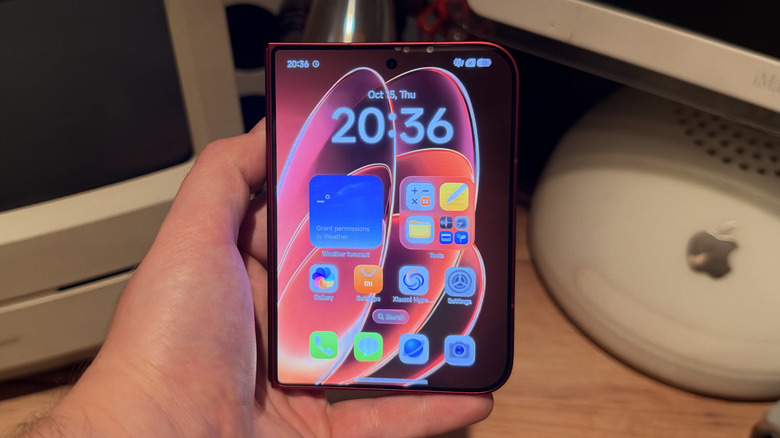
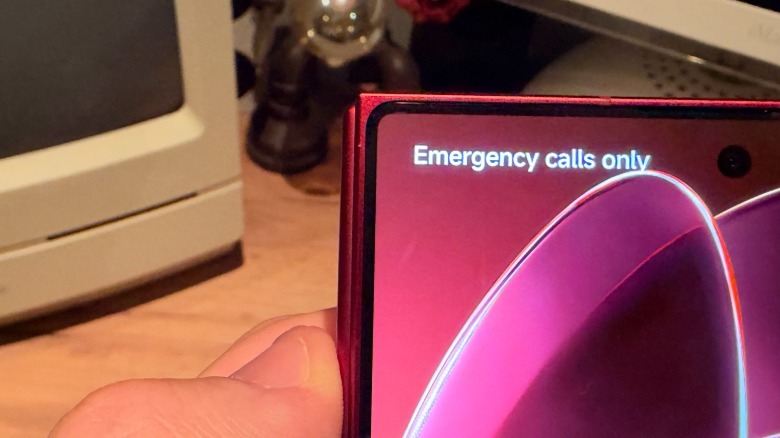
Both displays on the Xiaomi 18 Fold are excellent. The 5.38-inch cover screen is the one I probably spent most of my time using. It works better one-handed than you might expect at first: For example, typing is easier than I expected, partly because the extra width gives the keyboard more room to spread out. The panel is as bright as the inner display, which means scrolling, messaging, camera framing, and most other tasks can all be done on the cover display without unfolding the 18 Fold — which is the whole point of a passport-shaped folding phone.
 Connor Jewiss/BGR
However, my biggest problem with the cover display is the curved corner on one side. Like the iPhone Duo, the 18 Fold is asymmetric, with rounded corners on the outer edge and squared-off corners near the hinge. That curved corner eats slightly into the usable area of the cover display, whereas Apple's straight corners on the Duo give you slightly more screen in the same footprint.
Inner display
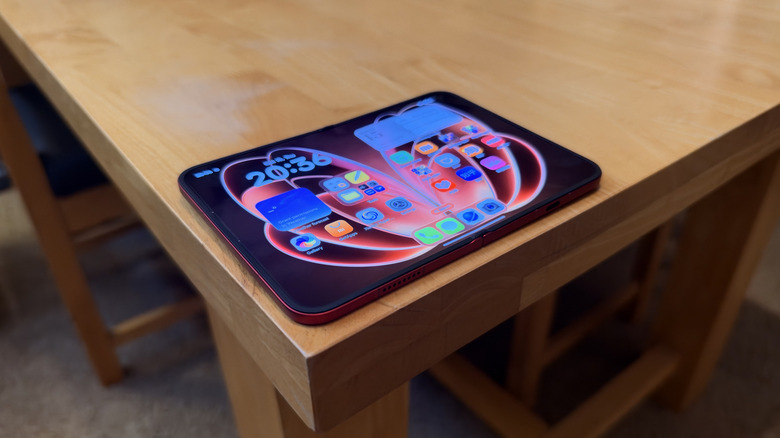
The Xiaomi 18 Fold's inner display is just as impressive. Xiaomi claims 4,000 nits of peak brightness, which is brighter than the Galaxy Fold 8. Outdoors in direct sunlight, the screen remained readable without me having to shade it, though it's not quite as readable as the nano-texture display on the iPhone Duo.
At 7.58 inches with 2364x1672 resolution, the panel is wider than it is tall. That means video fills it with far less letterboxing than a squarer foldable, and side-by-side multitasking feels natural rather than cramped for space. Colors are accurate, the LTPO refresh rate scales smoothly up to 120Hz, and the crease isn't too noticeable in daily use. I can feel a slight indentation running my finger across it, and it doesn't handle the crease as convincingly as the Duo's nano-texture panel.
Viewing the panel at an angle dims it noticeably and pushes colors towards the cooler end of the spectrum. You're unlikely to notice this much yourself, but if you're trying to show somebody else something on the screen, they may not see exactly the same thing you do. Conventional widescreen movies will still need cropping or zooming to fill the entire panel, which means the aspect ratio isn't always ideal. Coming from the iPhone Duo, I also missed stylus support on a screen this size, as the 18 Fold doesn't register stylus input whatsoever.
Performance
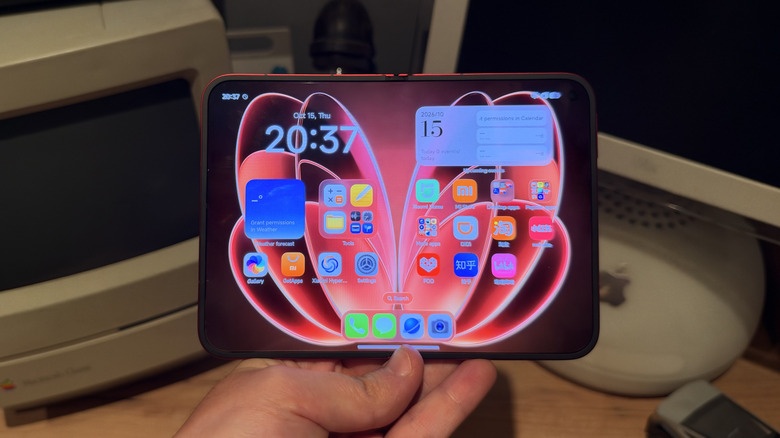
Using the Xiaomi 18 Fold, everyday performance is never a problem. Apps open immediately, animations look smooth, and switching between multiple apps never causes any stutters. The Xring O3 is Xiaomi's in-house 3nm chipset with a 10-core CPU, a 16-core Arm GPU, and LPDDR6 memory, paired with 12GB/16GB. In normal use, it behaves exactly like a 2026 flagship should.
The Xring O3 posts strong AnTuTu and raw GPU scores, beating the Galaxy Z Fold 8 by roughly a third in AnTuTu v11, while falling behind last year's Snapdragon chips in Geekbench single-core, and trailing badly in Geekbench's AI tests. Notebookcheck found the chip loses a lot of performance during a 3DMark stress run, finishing slightly slower than the Galaxy Z Fold 8 by the end of it. That matches my own experience with this handset. The 18 Fold gets noticeably warm along the chassis after 20 minutes of running more demanding apps, and performance begins to tail off with it.
Connectivity is better than I expected from a device that is made only for China. The 18 Fold comes with ultra-wideband (UWB), along with an IR blaster and USB 3.2 with wired display output. I can't say I used either of those two features, but I know many Android users will be glad to see them. Wi-Fi 7 is supported on the 18 Fold, but on the 5 GHz band only; curiously with no support for the 6 GHz band. GPS and cellular connectivity worked, but not as well as they have done on many other smartphones I've tested in 2026, drifting around buildings and on sharp changes of direction. If I had to guess, I'd say this comes down to a modem tuned for Chinese networks rather than international ones.
Battery and charging
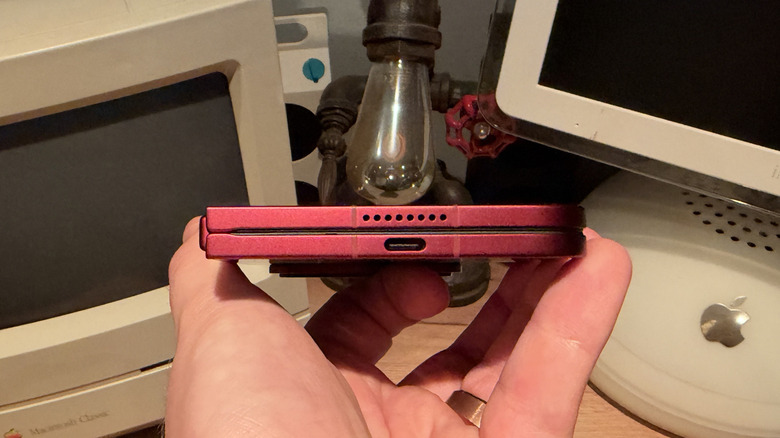
The Xiaomi 18 Fold offers the best battery life I've had from any foldable phone, by a pretty wide margin. It easily lasted a day and a half between charges, during normal activities such as messaging, scrolling Twitter, some light camera use, and an hour or two of video. Even during heavier usage, such as on a travel day with a lot more video watching, the device still managed to get through to the end of the day with ease.
The reason the battery life from the 18 Fold is so good is because it packs a 6,000 mAh silicon-carbon battery split into two cells, one in each half of the phone. That's 1,200 mAh more than Samsung manages to pack into the Fold 8, and 1,117 mAh more than the iPhone Duo. Better yet, Xiaomi manages to achieve this without making the phone heavy. As I mentioned, the 18 Fold is just 219g and around 5mm thick when unfolded. With these dimensions, I did not expect the handset to last nearly as long as it did, so was thoroughly impressed.
The 18 Fold supports 67W wired charging and 50W wireless charging, with reverse wired charging as well. Xiaomi includes the 67W charging brick, a cable, and a plastic case in the box. Another time to charge myself, but it got to around 50% charge in approximately 20 minutes, and a full charge in less than an hour. Suffice to say, you won't have to plan around juicing up this device.
Cameras
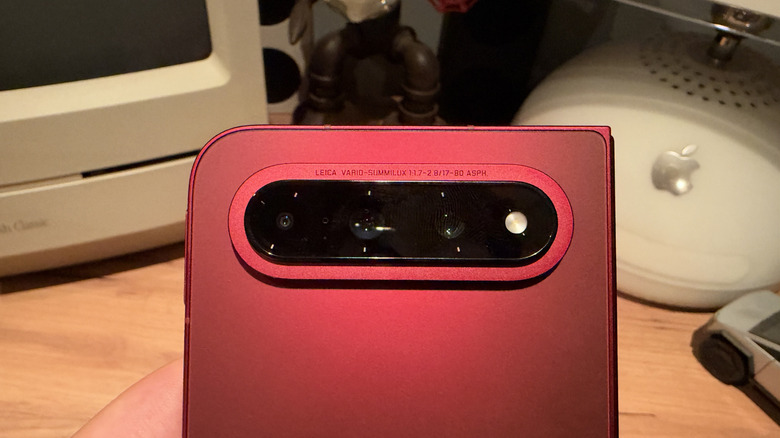
The Xiaomi 18 Fold's Leica triple camera system is one of the most capable setups I've used on a foldable in 2026. The 200MP main sensor produces detailed daylight shots with good dynamic range and minimal grain. The 50MP periscope lens preserves details at its 3.5x zoom, and photos stay looking sharp even at 5x zoom. Neither the Galaxy Fold 8, nor the iPhone Duo have a telephoto lens at all, so this is the only passport-style foldable that does. The 50MP ultrawide lens handles dynamic range well also.
 Connor Jewiss/BGR
Like the Pixel 11 series, Xiaomi's image processing is an area where I'd push back slightly. Colors are too saturated on the main camera for my liking, and the software applies heavy sharpening that makes fine texture look artificial. Selfies from either 16MP front-facing camera have noticeable skin smoothing and exaggerated red tones, which I couldn't figure out how to switch off.
 Connor Jewiss/BGR
In low light, the 18 Fold is good, rather than great. Shots look fine, but shadow detail disappears, and the ultrawide loses most of its sharpness. The bigger annoyance is the viewfinder, which is nearly unusable in the dark, so you'll have to frame photos by guesswork and check the results afterwards. Shooting at the full 200MP resolution takes several seconds for each shot, which rules it out for anything moving.
 Connor Jewiss/BGR
I particularly liked how Xiaomi laid out the camera app on the inner display, putting the viewfinder in the center with the controls arranged around it, rather than stretching a phone-sized app layout across the wider display. Video tops out at 8K at 24 fps, or 4K at 60 fps with Dolby Vision. I shot mostly 4K at 60 fps, and stabilization was solid while walking around.
Software
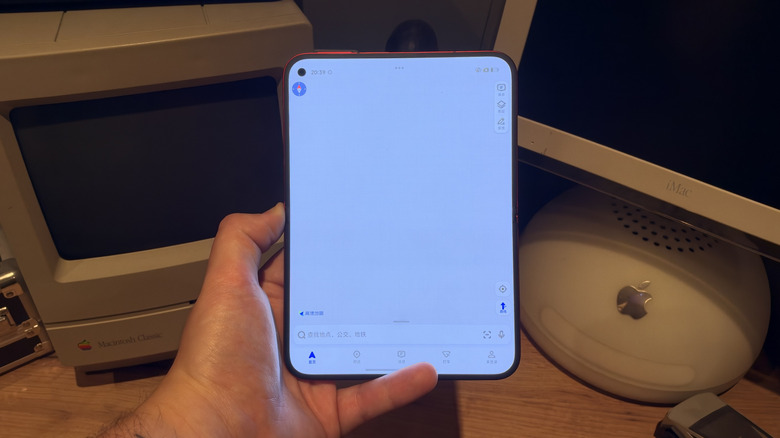
Since the Xiaomi 18 Fold wasn't made to be used outside of China, you're going to run into problems with the software. It runs Xiaomi's own HyperOS 4 operating system on top of Android 17, and Google services work reliably once you install the Play Store. The device also carries Play Protect certification, and Xiaomi has widened language support on its Chinese software version considerably compared to previous devices. If you are importing this device, your experience will be better than it used to be. That being said, you'll probably still run into some serious problems. Android Auto didn't work for me at all, Wear OS smartwatch pairing is limited, and there's no eSIM support.
HyperOS 4 also ships with third-party apps you probably don't want, and there's some advertising inside Xiaomi's own system apps. You can disable the preinstalled apps, and the ads are less aggressive than on cheaper Xiaomi phones, but it's still something I hate to see.
Multitasking is a standout on the 18 Fold, with proper two-way and three-way split views that suit the wider screen, and a window manager that makes it easy to resize things. Xiaomi hasn't committed to a specific number of Android versions or years of security patches for the 18 Fold, whereas Samsung gives the Galaxy Fold 8 seven years for both. It makes the long-term viability of the 18 Fold look a little dubious, especially given the device will likely be an import.
Conclusions
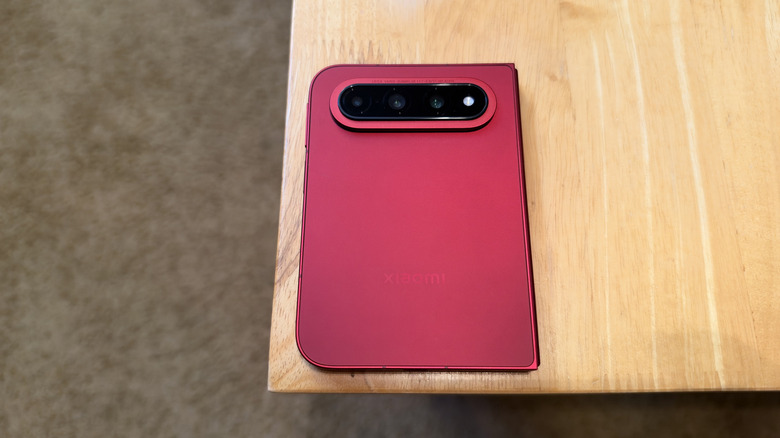
The Xiaomi 18 Fold is one of the best passport-style foldables on the global market. Its displays are brighter than Samsung or Apple, the battery life is well above the competition, and it's the only passport-style foldable with a telephoto lens. Xiaomi built all of that into a 219g phone that's thinner than the iPhone Duo when folded. However, the device is only available in China, so you'd need to import it. That means no local warranty, no easy repair options, and no support if something goes wrong with the hinge or the folding display. The missing software features likely won't be improved with software updates either.
If you've imported a Chinese phone before, and want the best passport-style foldable display on the market, the 18 Fold is a great pick. But I just can't recommend it to anyone else who would likely be using this as their only phone, that needs to rely on Android, GPS, and cellular connectivity. With international availability, this would be an easy recommendation, which is the most frustrating part.
The iPhone Duo at $1,999 is the closest device to the 18 Fold. It comes with a tougher IP68 water- and dust-resistance rating, Apple Pencil support, and a nano-texture inner display that handles the crease better, though it has no telephoto lens and a smaller battery. The Galaxy Fold 8 at $1,899 is the alternative that most Android users should actually buy, since it's lighter, globally available, and backed by seven years of updates. The Galaxy Fold 8 Ultra costs around $200 more and takes the passport shape for a larger book-style device. But, it offers a 200MP camera and a telephoto lens that probably beat the 18 Fold. The Pixel 11 Pro Fold, also $1,899, has the best camera software of any Android foldable and a 5x telephoto lens, which is why I picked it over the Fold 8, even though it's the slowest phone here with Google's Tensor G6 chipset inside.
Should you buy the Xiaomi 18 Fold? Unfortunately, probably not, because of its unoptimized software and difficulty to get. Otherwise, it'd be an easy yes.