

5 Budget Android Phones For A Teenager's First Smartphone
We may receive a commission on purchases made from links.
Your teenager's first smartphone is something they'll remember for a long time. Everything about it, from unboxing the package to turning it on for the first time, can be a special moment. But when buying your teenager their first Android smartphone, more expensive doesn't necessarily mean better. Usually, parents give teenagers their first phone so they can stay in touch during the day, talk to their friends, or perform basic tasks like sharing notes, making video calls, and using social media.
As such, getting a budget Android phone for your teenager's first smartphone could be an excellent choice. That said, the budget Android segment is the most crowded, making it tough to identify the best phones. While affordability is a major criterion, your teenager would also want excellent durability, adequate storage, and solid performance. This means having a bright and smooth display, at least a full day's battery life, decent cameras, good gaming performance, and excellent software support.
We've made the selection easier by combing the market and identifying the five best budget Android smartphones to serve as your teenager's first. Our picks are all from reputable brands, are relatively recent releases, and, most importantly, are easily available for purchase in the United States.
Samsung Galaxy A17 5G
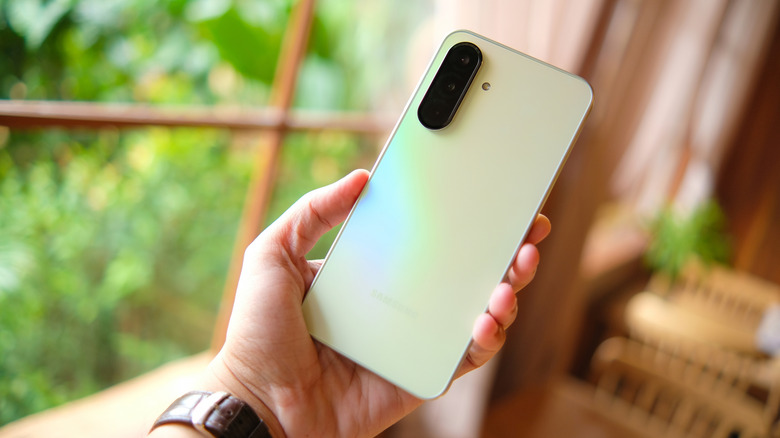
The Samsung Galaxy A17 5G was priced at $200 until earlier this year, when Samsung bumped its price by $50. Still, at $244.99 on Amazon, it's a top-tier budget Android option, especially if you want to give your teenager a phone that will last them a long time. That's because the Galaxy A17 comes with one of the longest software support guarantees, providing six years of OS and regular security updates until 2031. Combined with a bright 6.7-inch AMOLED screen and a fingerprint scanner built into the power button, it's no wonder Android Central calls it the "best cheap Android phone for your kids' first phone."
While it only comes with 4 GB of RAM and 128 GB of storage, there's a microSD slot and the option to use some of your storage as RAM. The Galaxy A17 is no performance beast, but it "manages to push through everyday tasks without issue," according to PCMag. Like other Samsung Galaxy phones, it also comes with built-in parental controls. Parents can use Google Family Link to remotely monitor a child's screen time, set app usage limits, restrict access to certain apps, etc.
The cameras are also more than decent for the price. The Galaxy A17 features a triple-camera setup (50 MP, 5 MP, 2 MP) at the back, which CNET found could "capture all the action without too much blurring," while Phone Arena noted an "overall pleasing look." It also rocks a large 5,000 mAh battery that can easily last your teen a full day. Unfortunately, there's no wireless charging, unlike the Moto G phones on this list. It also doesn't get the Galaxy AI features, though Gemini and Circle to Search with Google are available.
Moto G Stylus 2026
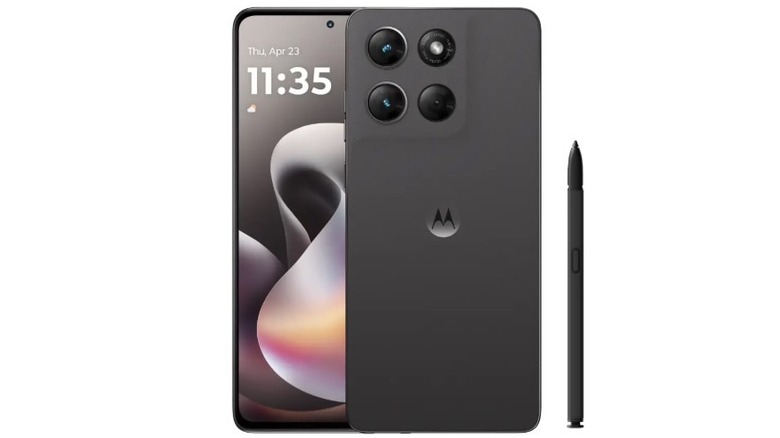
Priced at $499.99 for the 8 GB RAM / 128 GB storage version, the Moto G Stylus 2026 is one of the very few budget smartphones to come with a built-in stylus. That makes it a great choice for teenagers who'd like greater precision when doing creative work, such as editing videos, or playing games. There's also a 256 GB variant for $100 more, but you can skip it and expand the phone's storage using the microSD slot, which, along with its 3.5 mm audio jack, is another rarity these days.
The phone features a large 6.7-inch AMOLED display with a 120 Hz refresh rate and 5,000 nits of peak brightness, making it better for outdoor use than the likes of the Google Pixel 10a and the iPhone 17e. While its benchmark scores are not up to par, Phone Arena says it still "boasts enough oomph to get you through a full day of everyday tasks like browsing the web, web streaming, and light gaming." Moreover, it comes with Gemini, Copilot, and Perplexity pre-installed, and your kids will also appreciate its AI features, such as the handwriting calculator and Sketch to Image.
Battery life is a particularly strong aspect of the Moto G Stylus 2026. It features a large 5,200 mAh battery and lasted "nearly two days on a full battery with regular use" in PCMag's testing. Furthermore, it supports fast charging at 68 W wired and 15 W wireless. As for your kid's security, the phone includes an on-screen fingerprint reader and face unlock, but it only promises two major Android OS updates. That's underwhelming when rival budget Android phones that can last up to five years.
Samsung Galaxy A36
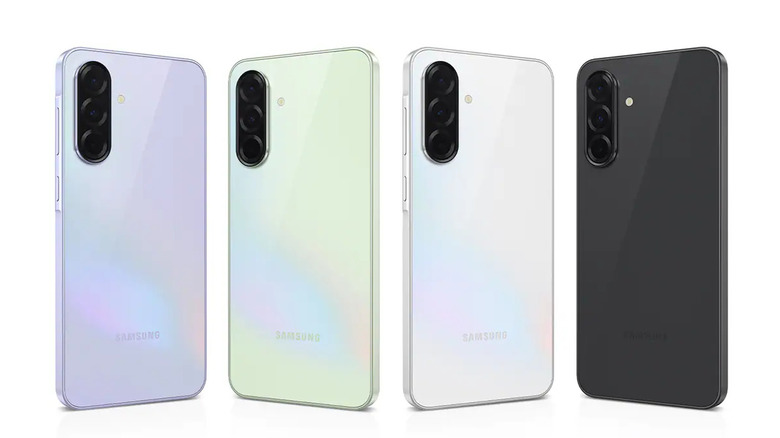
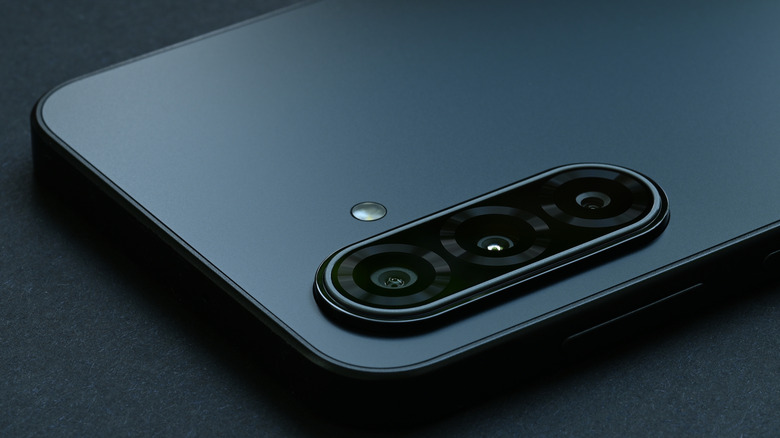
Launched in 2025, the Samsung Galaxy A36 remains a solid budget Android pick thanks to its well-rounded package and an above-par six years of OS and security updates, which further increases its value for money. In fact, the Galaxy A36 was the first A-series smartphone to get such a long upgrade window, up from four years previously. It's available on Amazon for $339.98. For the price, you get 8 GB of RAM and 256 GB of storage, along with a large 6.7-inch display that's both smooth and bright.
It can run just about any app your kid wants to install from the Google Play Store, and Tom's Guide had "no trouble at all" running everyday tasks and even playing games like Modern Combat. GSMArena called it "a solid performer in its price range," remarking that it does a good job with "most day-to-day tasks and light games." Although PCMag experts recommend using wireless earbuds when listening to music on the A36, its call quality is excellent. Its cameras are the same as last year's A35, but they still deliver the "classic Samsung look" and support 4K / 30fps video recording.
It comes with a 5,000 mAh battery that PCMag found lasted more than 16 hours when continuously streaming a 1,080p video. Plus, it charges at 45 W, which is the same as the flagship Galaxy S26+. It's also a great choice if your teenager likes AI features. The A36 was the first A-series phone to get Circle to Search, and it also rocks an Object Eraser in the Gallery app and an AI Select tool that lets you interact with text, images, and videos on the screen.
Nothing Phone (4a) Pro
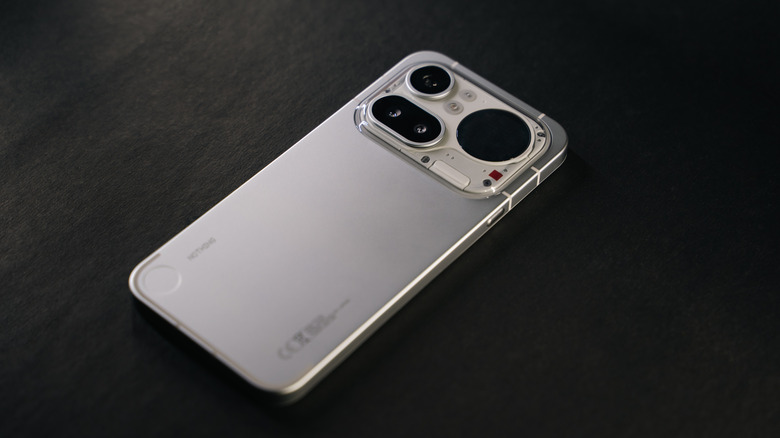
The Nothing Phone (4a) Pro is our top recommendation if you want to give your teenager a mid-range Android phone with flagship-level performance and features, plus a design style so unique it's bound to stand out in your kid's hands, should they like that kind of attention. It doesn't feature a fully transparent back like its smaller siblings, the Phone (4a) and Phone (4b), and swaps out the Phone (3a) Pro's surrounding Glyph LEDs for a dedicated circular Glyph interface dial. At the time of writing, the 8 GB / 128 GB version is available for $499 on Amazon, while the 12 GB / 256 GB variant is priced at $599.
PCMag calls it a "midrange heavy-hitter." Its Snapdragon 7 Gen 4 processor makes it significantly more powerful than the similarly priced Moto G Stylus 2026, Samsung Galaxy A56, and Google Pixel 9a. According to TechRadar, it "didn't seem to break much of a sweat," and its gaming performance is "pretty unimpeachable." You get a super-large 6.83-inch AMOLED display with a 144 Hz refresh rate, along with a near-stock Android experience, Google's built-in parental controls, and a dedicated physical AI key.
As for the camera, its 50 MP telephoto lens is a rarity at this price, and the overall picture quality is among the best in this segment. Tom's Guide found it equal or superior to the flagship Google Pixel 10. Moreover, its 5,080 mAh battery will easily last your teenager an entire day, while 50 W wired charging means they can top it up quickly. Lastly, the (4a) Pro comes with Android 16 and promises up to three major OS updates. Other security features include an on-screen fingerprint sensor and the option to require a lock screen password before shutting down the phone.
Moto G Power 2025
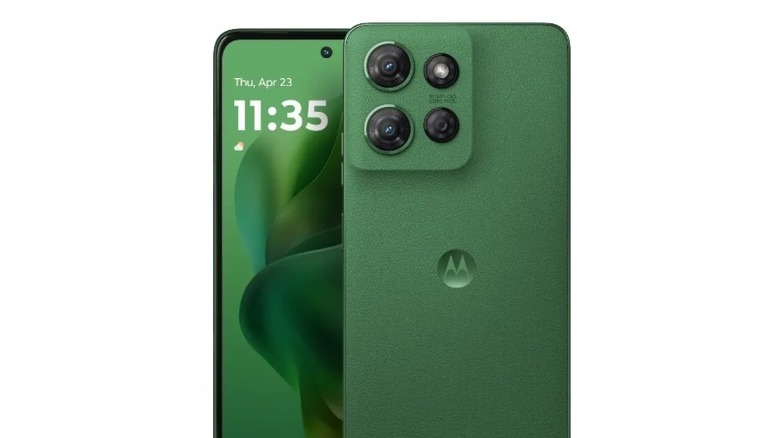
The Moto G Power 2025 costs just $199.99 and is therefore the best option if you're after a super-cheap yet modern and capable Android phone for your teenager. Despite its low price, its rounded corners, thin bezels, and vegan leather back make it "look like a premium phone," according to PCMag. With a 6.8-inch Full HD+ LCD display panel and a 120 Hz refresh rate, the Moto G Power 2025 is also a solid choice for users looking for a snappy and responsive big-screen phone on a budget.
CNET had "no trouble watching YouTube, browsing websites, and taking video calls." Moreover, its 5,000 mAh battery will get your child "through a full day of regular use without issue," per Android Central. It also supports 30 W wired and 15 W wireless charging. Combined with an IP68/IP69 water and dust resistance rating, it's ideal for teenagers who want a phone that can support them through their long university days.
Moto G Power's cameras are about what you'd expect from a phone this cheap. Its two rear lenses, a 50 MP main camera and an 8 MP ultrawide camera, along with a 16 MP selfie camera, produce photos that look "passable during the day" and in good lighting, according to Phone Arena. It comes with Android 15 out of the box and includes built-in parental controls powered by Google Family Link. However, it only promises two OS updates. Lastly, while there's only 128 GB of storage, like the Moto G Stylus phones, you can expand the storage by up to 1 TB using a microSD card.
How we selected these budget Android phones
Our top priority while selecting phones for this guide was budget-friendly Android smartphones. As such, we first had to decide on a price range. All the phones on this list are under $500, with options under $350, $250, and even $200, so there's something for all price segments within the budget category. Next, we only picked phones from reputable Android brands, including Samsung, Motorola, and Nothing.
We also made sure not to sacrifice performance for affordability. We considered the features teenagers would typically want from their first smartphone. That included looking into the phones' screen quality, storage, chipset and real-world performance, camera, battery life, and more. We also went beyond the spec sheets and looked at what expert independent tech outlets, such as PCMag, Android Central, CNET, TechRadar, Phone Arena, and Tom's Guide, had to say about them after extensive hands-on testing.
You'll also see that all our picks are either the latest launches in their respective series or no more than one generation old. This adds more value to their software support guarantees, as you'll be upgrading from a relatively recent Android version. Lastly, we made sure our smartphone picks are easy to purchase, with availability through either Amazon or the companies' official websites.