

5 Budget And Midrange Android Phones That Can Last Five Years
We may receive a commission on purchases made from links.
Picking an Android smartphone that offers long software and security update guarantees — ideally a minimum of five years — is becoming more crucial than ever. The ever-increasing memory prices make it more reasonable to hold on to your phone longer than you would previously. Moreover, frequent updates ensure that you continue enjoying the latest optimizations and features in the Android OS. They also protect you from security vulnerabilities that, if left unpatched, bad actors could exploit to steal your personal data.
And the good thing about picking an Android smartphone with a long software support guarantee is that you don't have to shell out extra for its longevity. There are several smartphone manufacturers that offer the same 5-7-year guarantees on their budget and mid-range models too. However, that criterion alone leaves you with a myriad of options, so it can get confusing to pick a phone that ticks all your boxes.
To help you out, we've scoured the market and picked five of the best budget and mid-range Android smartphones that will last you at least five years. These include the Samsung Galaxy S25 FE, Galaxy A56 and A37, OnePlus Nord 6, and Fairphone Gen 6+. We've covered phones in different price ranges, but you can rest assured that they're all capable devices, with great performance, battery, screen, and features that complement their long support guarantees to make sure you can actually enjoy using them for longer.
Samsung Galaxy S25 FE
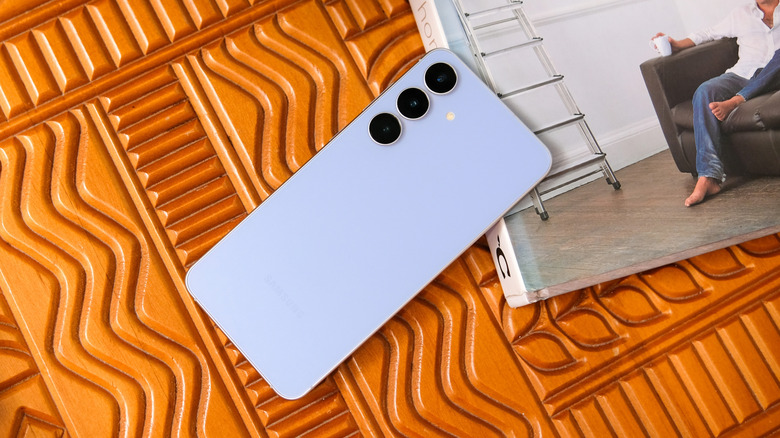
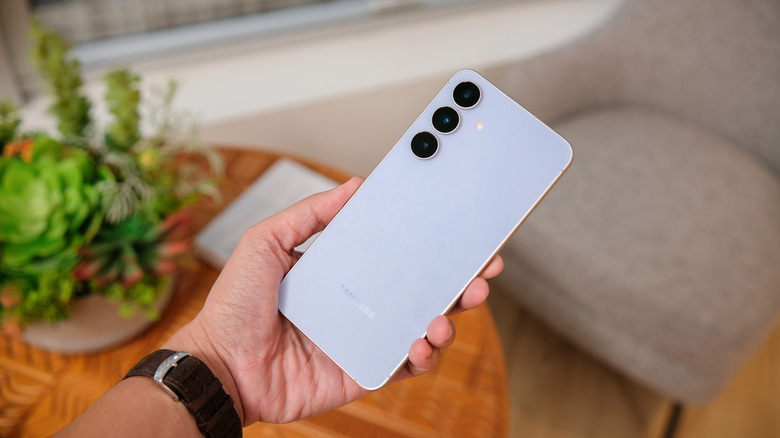
The Samsung Galaxy S25 FE launched in September 2025 and comes with seven years of both Android OS upgrades and security support, meaning Samsung will keep it updated through roughly 2032. At the time of writing, the base 128 GB storage version, which has 8 GB of RAM, is available for $650 on Amazon, while the 256 GB variant, which also has 8 GB of RAM, is priced at $729.16. Although the Galaxy S26 FE is the latest one, the S25 FE delivers better mid-range value given Samsung's lengthy support and just how similar both phones are.
They look and weigh nearly the same, share the same 6.7-inch Dynamic AMOLED screen with support for a 120Hz refresh rate and HDR10+ and a peak brightness of 1,900 nits, as well as the same camera setup: one 50 MP wide lens, a 12 MP ultrawide lens, and an 8 MP telephoto lens with 3x optical zoom, along with a 12 MP front camera. The S25 FE also has the same 4,900 mAh battery that TechAdvisor found can "last through a heavy-duty day without any worry." In fact, the S25 FE has faster wired charging (45 W) as compared to the Galaxy S25 (25 W), along with 15 W wireless charging.
The only main point of difference is the chipset, with the Galaxy S25 FE rocking the older Exynos 2400 (4nm) chip. But it's still a capable chip. It scored 2,153 and 6,948 in GSM Arena's Geekbench 6 single-core and multi-core tests, respectively, surpassing its closest rivals like the Nothing Phone (3), Google Pixel 9a, and the Galaxy S24 FE. We also like that, despite being a budget-friendly phone, the S25 FE gets all the AI features as its more expensive S25 siblings.
Samsung Galaxy A56

The Samsung Galaxy A56 launched in March 2025 and initially offered six years of Android OS releases and security updates, but Samsung later bumped it up to seven years, up until 2032. For $383, you get 8 GB of RAM, 256 GB of storage (double that of the base S25 FE), a triple rear camera setup (50 MP, 12 MP, 5 MP), and a large 5,000 mAh battery that supports fast 45 W wired charging.
The Galaxy A56 rocks a 6.7-inch Super AMOLED display with a 120Hz refresh rate and HDR10+ support. TechRadar called it "one of the best viewing experiences on a budget smartphone," saying that everything from watching video content to gaming to video calls holds up very well. The A56 is also considerably brighter (peak of 1,900 nits vs 1,000 nits) and lighter (6.98 oz vs 7.51 oz) than the previous-gen Galaxy A55.
Under the hood, it's powered by the then-new Exynos 1580 chip, which outscored the Galaxy A55 and the more expensive Nothing Phone (3a) Pro and Motorola Edge 50 Pro models in both Geekbench 6 CPU tests and 3DMark Wild Life Extreme GPU tests, via GSM Arena. Simply put, the Galaxy A56 should be able to handle everyday tasks without much issue. The Galaxy A56 also gets what Samsung calls "Awesome Intelligence," which is a toned-down version of Galaxy AI but still includes a bunch of useful AI features, including Circle to Search, Object Eraser, Best Face, Auto Trim, and more.
OnePlus Nord 6
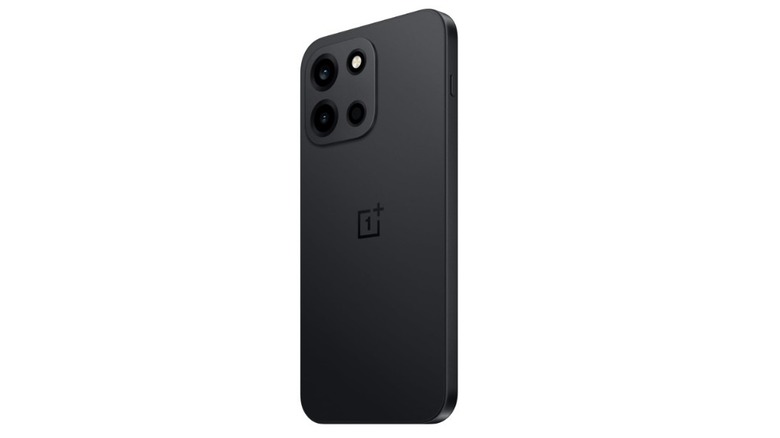
Launched in April 2026, the OnePlus Nord 6 will receive four years of Android OS upgrades and six years of security updates, so you should be able to comfortably use the phone up until 2030-2031. Just note that it's currently officially only available in India, after OnePlus pulled out of the US, Canada, and Europe earlier this year. Priced at around $490 for 8 GB of RAM and 256 GB of storage — and around $550 for 12 GB of RAM — the Nord 6 is one of the most powerful mid-range phones available right now.
It comes with a 6.78-inch 2,772 x 1,272 resolution AMOLED display with support for one billion colors, HDR10+, a peak brightness of 3,600 nits, and a 165Hz refresh rate. The higher refresh rate should eliminate frame drops, thermal throttling and lag spikes when playing compatible games such as BGMI and CODM. This is the same screen as on the OnePlus 15, which is among the best phones OnePlus has ever made but costs more than twice the Nord 6.
Another massive selling point is Nord 6's battery capacity. It rocks a 9,000mAh silicon carbon battery, alongside support for fast 80 W wired charging. Even better, it comes with an 80 W SuperVOOC charger in the box, which further cranks up its value for money. It's powered by a Qualcomm Snapdragon 8s Gen 4 chip, which is "easily the most powerful chip available in this price range and by a country mile," as GSM Arena put it. As for the cameras, it features a dual camera setup at the back, with a 50 MP main lens and an 8 MP ultrawide one. The selfie camera is 32 MP, the same one as seen on the OnePlus 15R.
Samsung Galaxy A37
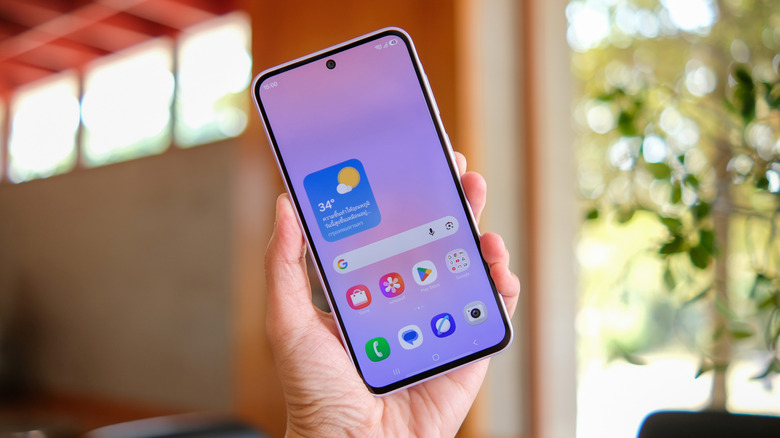
The Samsung Galaxy A37 is part of Samsung's latest A-series launches in 2026 and is a solid budget Android phone that punches above its price tag. This is thanks to its robust specs but also the future-proofing that Samsung has provided, with six years of Android OS and security updates, meaning it'll be up to date until 2032. It starts at just $436 for 6 GB of RAM and 128 GB of storage, while the 256 GB version costs $520.
The A37 is the slightly lower-end sibling of the Galaxy A57, another mid-range Galaxy phone. They look similar and are very close in the specs and performance they offer, but TechRadar points out that the A37 is the better deal. The A37 comes with a 6.7-inch 1,080 x 2,340 resolution Super AMOLED display with the same 120Hz refresh rate and 1,900 nits of peak brightness we've come to expect from the latest A-series smartphones. You also get a 50 MP main rear camera with a larger lens than the older A36. PCMag's testing concluded that it delivers "more natural, true-to-life images." There's also an 8 MP ultrawide lens and a 5 MP "macro" lens at the back, alongside a 12 MP selfie camera.
The phone is powered by Samsung's Exynos 1480 chipset, which delivered 1,149 and 3,415 on PCMag's Geekbench 6 single-core and multi-core tests, respectively, ahead of the A36. "The A37 certainly won't stutter during everyday tasks like streaming or scrolling," according to TechRadar, though it may not be the best option for those after a budget gaming phone. Lastly, a 5,000mAh battery with 45 W wired charging is once again a serious offering at this price.
Fairphone Gen 6+

The Fairphone Gen 6+ is the Dutch company's first official entry in the U.S. It's a slightly updated version of last year's Gen 6 and offers the same longevity and repairability that have become the main draws of this series. This includes a total of six Android OS updates until 2032 and a commitment to make the 12 user-replaceable spare parts available till 2033. These spare parts include the screen, all three cameras, battery, rear panel, SIM tray, and even microphones.
But modularity and sustainability aren't the only reasons why the Fairphone Gen6+ costs $649; it's a genuinely stacked Android smartphone with robust internals and a sharp display. For the price, you get 12 GB of RAM (an extra 4 GB from the base Gen6), 256 GB of storage (expandable to 2 TB via microSD), and a 6.31-inch LTPO AMOLED panel with support for a 10-120Hz variable refresh rate and 1,400 nits of brightness. Powering all that is a Snapdragon 7s Gen 4 chipset, which scores around 1,223 and 3,168 in Geekbench 6 single-core and multi-core tests, putting it alongside the Galaxy A37's Exynos 1480 chipset.
According to Android Police, "the mid-range processor handles everyday tasks with ease, [without] any performance issues." Elsewhere, the Fairphone Gen6+ features a decent 4,415 mAh battery with support for up to 30 W wired charging, but there's no support for wireless charging. It also comes with a dual camera setup at the back, with a 50 MP Sony main lens and a 13 MP ultrawide lens, which together deliver photos that are "pleasant enough, with good dynamic range and decently punchy colors," as Trusted Reviews put it. At the front, you get a 32 MP camera.
How we selected these long-lasting budget Android phones
The first and most important thing we looked at while picking cheap Android phones with top-of-the-class longevity was their software support and security update guarantees. We only picked phones that offer at least five years of Android OS and security updates, with the only exception being the Nord 6, which offers four years of Android OS upgrades. However, given its six years of security updates, it still has nearly the same shelf life as the rest of them.
Beyond that, we didn't just pick the cheapest options but compared the phones with their closest rivals and only selected those that offer the best value for money in their price segment. We've also covered various price ranges, including phones under $650, under $500, as well as under $400. We've also provided options for both U.S. and international markets, as there are some very compelling budget and mid-range phones outside North America.
We also only selected smartphones that are holistic in nature, meaning they offer a good combination of not just longevity, but also powerful specs, decent storage, a smooth and bright display, and a large battery that can run for at least a full day of usage. For our reviews, we not only looked at the official spec sheets, but also what independent third-party reviewers have said about them. These include expert reviews and firsthand benchmark testing by the likes of PCMag, TechRadar, and GSM Arena. Lastly, none of our picks are sponsored inclusions; they have only been included on merit.