

5 Of The Best Phones OnePlus Ever Made
We may receive a commission on purchases made from links.
Since the launch of the OnePlus One back in 2014, everyone in the tech community was thrilled to see the rise of the brand that coined the term "flagship killer." OnePlus emerged as a worthy rival to the Apple-Samsung duopoly, offering the smartphone industry, especially Android users, a wide variety of top-notch phones. Not to mention, it also pushed the likes of Apple, Samsung, and Google to be better.
But over a decade later, OnePlus has decided to shutter its smartphone business in North America and Europe. Unfortunately, that means we won't be seeing any new OnePlus gadgets in those regions, be they smartphones, earbuds, tablets, or smartwatches. That said, the company has clarified that existing OnePlus phones are still safe to use, as they'll continue receiving software and security updates. OnePlus will continue operating as usual in markets like China and India.
Seeing as this is the perfect time to reflect on the company's legacy, we decided to look back at the smartphones that defined OnePlus over the years. We evaluated each OnePlus smartphone in the context of its launch, judging it primarily by the impact it had on the smartphone industry. Our selection includes phones from throughout the company's history: the OnePlus One, OnePlus 3, OnePlus 7 Pro, OnePlus Open, and the more recent OnePlus 13.
OnePlus One
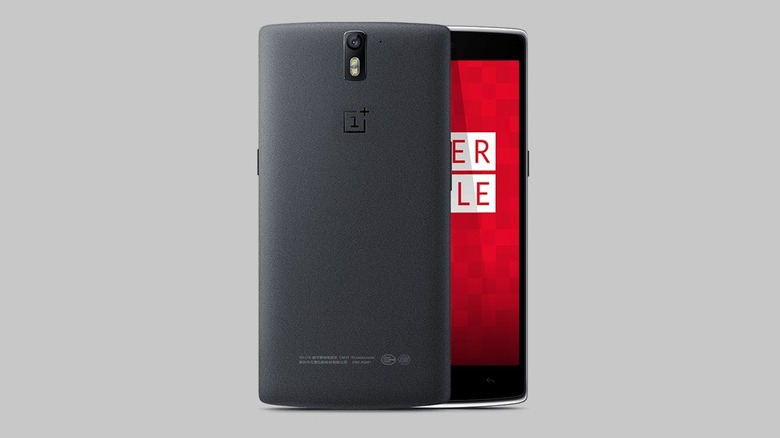
Released in 2014, the OnePlus One was the company's first phone, combining high-end specs and budget-friendly pricing in a never-before-seen manner. Not only did it severely undercut some of the best Android smartphones of the time, including its closest rival, the Samsung Galaxy S5, but it also birthed the term "flagship killer." At just $299 for the base 16 GB model, the OnePlus One offered a crisp 5.5-inch 1080p display along with a very capable Snapdragon 801 processor, a 13 MP rear camera, and a 3,100 mAh battery. PhoneArena described it as a "true specs monster." For context, the Samsung Galaxy S5 launched at around $600.
It even undercut Apple when it came to storage, offering a 64 GB version for just $50 more than the 16 GB model, whereas Apple charged around $100 for a similar storage upgrade. While the company initially expected to sell around 50,000 units, it ended up selling over 1 million OnePlus One devices. Another reason for its appeal was that it shipped with Cyanogen OS, a version of CyanogenMod. This was a very popular custom ROM (a community-built version of Android that could replace a phone's stock firmware) at the time, and it offered not only a bloat-free Android experience, but also several features that were virtually unheard of.
Unique functionality included the ability to launch apps with gestures on the lock screen, separate volume controls for media, alarms, and ringtones, and a tool called Privacy Guard, which gave users more granular control over app permissions. However, the OnePlus One wasn't easy to get. The company employed an unheard-of invite system, wherein only existing OnePlus One owners and a select few forum posters and contest winners could send an invite code to another user, who could then buy the phone.
OnePlus 3
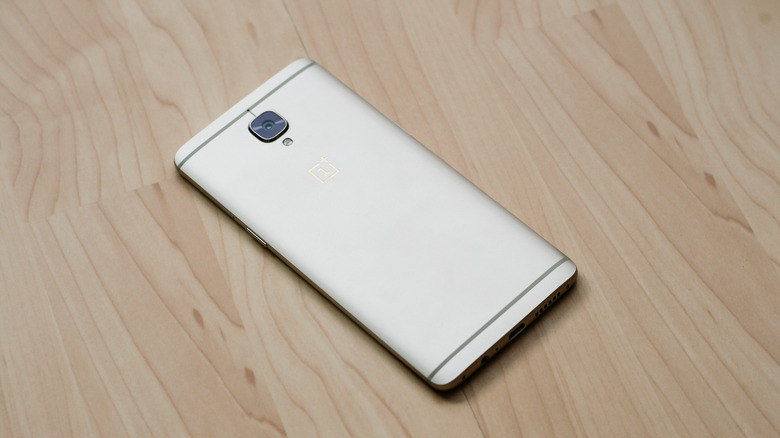
Released in June 2016, the OnePlus 3 marked a major return to form for the company. It was OnePlus' first shift to a full-metal unibody design, moving away from the plasticky build of its first two phones. According to Android Central, this design shift allowed OnePlus to "target mainstream buyers." Combined with a speedy Snapdragon 820 chipset, a massive 6 GB of RAM — when even more expensive smartphones typically offered just 3 GB or 4 GB — 64 GB of internal storage, a 3,000 mAh battery, a 5.5-inch FHD display, and an above-par 16 MP rear camera, the OnePlus 3 was "the best budget Android phone you can buy," according to CNET.
Priced at just $400, it continued its "flagship killer" stature by undercutting the Galaxy S7 by $300. It also comfortably outperformed Samsung's flagship in all of CNET's benchmark tests. The OnePlus 3 was also the company's first phone to ditch the invite-only purchasing system, allowing anyone to buy it like any other smartphone. Moreover, after controversially excluding NFC from the OnePlus 2, the OnePlus 3 brought it back.
It also introduced Dash Charge technology, which could charge the OnePlus 3 from 0% to 65% in just 30 minutes and deliver a full charge in just over an hour. That was roughly 20% to 60% faster than the more prevalent Qualcomm Quick Charge 3.0 standard at the time. Six months later came the OnePlus 3T, which improved upon the OnePlus 3 with a faster chipset and a larger battery, all for just $40 more. It launched in November 2016 and marked the company's first biannual refresh. That set in motion a trend of two flagship releases a year that OnePlus would continue for years.
OnePlus 7 Pro
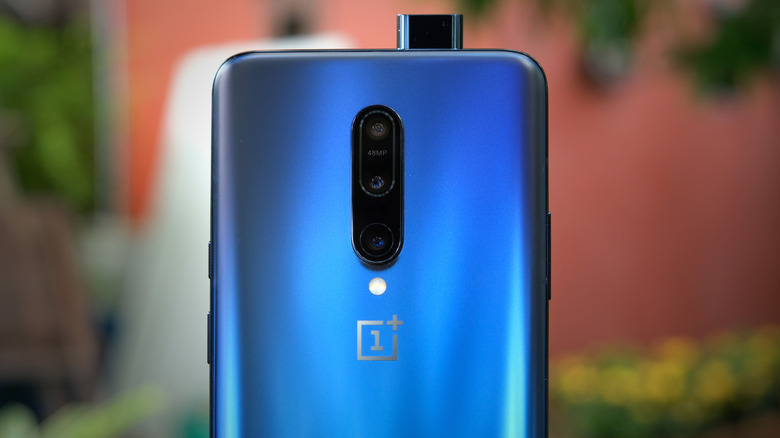
The OnePlus 7 Pro released in 2019 alongside the OnePlus 7, OnePlus 7T, and OnePlus 7T Pro. Granted, it was a confusing year to be a OnePlus buyer, but the OnePlus 7 Pro was easily the most iconic of the lot, introducing a wide range of unique features not only for the OnePlus lineup but also for the smartphone industry in general. Most strikingly, the 7 Pro was one of the first smartphones with a 90 Hz display, which PhoneArena described as setting "a new standard for smartphones." It was a massive 6.67-inch QHD+ curved AMOLED display, which was even larger than the Samsung Galaxy Note 9.
Moreover, because it employed a pop-up selfie camera, it had a true edge-to-edge display with no camera cutout whatsoever. Android Central described it as "the best all-screen design to date." The OnePlus 7 Pro was also the first smartphone to employ UFS 3.0 storage technology, which, according to the company, delivered read and write speeds 79% faster than the older UFS 2.1 standard. This made the OnePlus 7 Pro the fastest phone at the time, with quicker file transfers and app launches, shorter boot times, and better gaming performance.
Priced at $669 at launch, the OnePlus 7 Pro was indeed a flagship, but still cheaper than the likes of the Galaxy S10 ($899) and Galaxy S10 Plus ($999), despite featuring the same Snapdragon 855, along with 6 GB of RAM and 128 GB of storage in its base model. According to TechRadar, it was the fastest-charging phone the publication had tested, thanks to the included Warp Charge 30 adapter, which fully charged its 4,000 mAh battery in just one hour and 23 minutes. Lastly, it was also the first OnePlus phone to include a full triple-camera setup with a telephoto lens.
OnePlus Open
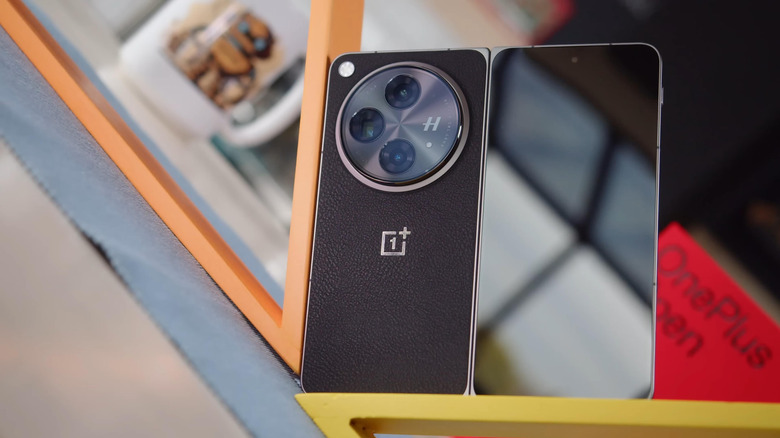
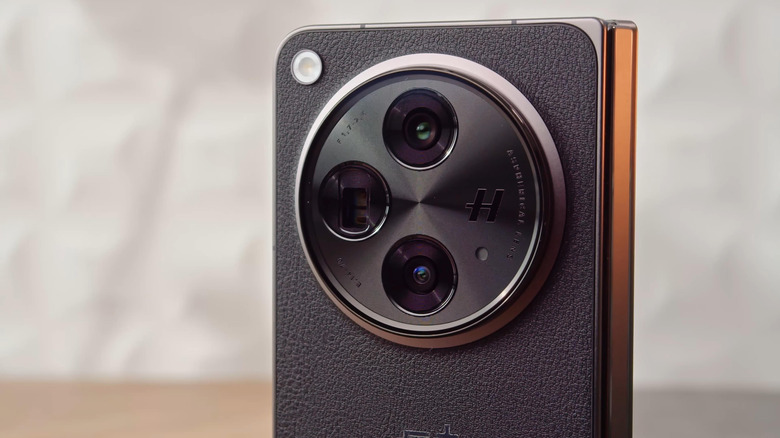
Agreed, the OnePlus Open was essentially a repackaged Oppo Find N3 — but as TechRadar put it, it was "the only big foldable phone that didn't feel like a compromise." Despite being OnePlus' only foldable, the company managed to create a product that rivaled the very best in the category. Priced at $1,700, it was definitely not cheap, but it still undercut the Galaxy Z Fold 5 by a handy $100, all while offering double the base storage at 512 GB, a larger 4,800 mAh battery, 16 GB of RAM, five cameras, and the same Qualcomm Snapdragon 8 Gen 2 chipset.
Moreover, it supported 67 W wired charging, compared to just 25 W on the Galaxy Z Fold 5. Better yet, unlike many smartphones today, which no longer come with chargers in the box, the OnePlus Open included one in the package. With a 6.31-inch cover display and a 7.82-inch internal display, it was also larger than both the Galaxy Z Fold 5 and the Google Pixel Fold. One of the OnePlus Open's defining characteristics, though, was its remarkable form factor. Despite packing flagship hardware, it was thinner than both Samsung's and Google's competing foldables.
According to CNET, OnePlus "almost completely minimized the larger display's crease," yet the device measured just 0.46 inches thick when closed and only 0.23 inches when fully open. At 8.43 ounces, it was also lighter than the competition. Yes, there were a few downsides, most notably the lack of wireless charging and proper water resistance. But with such an incredible overall package, it was disappointing to see OnePlus discontinue its foldable lineup. The company shelved plans for the OnePlus Open 2, with NotebookCheck suggesting that this was likely due to Oppo's plans to release the Find N6 globally.
OnePlus 13
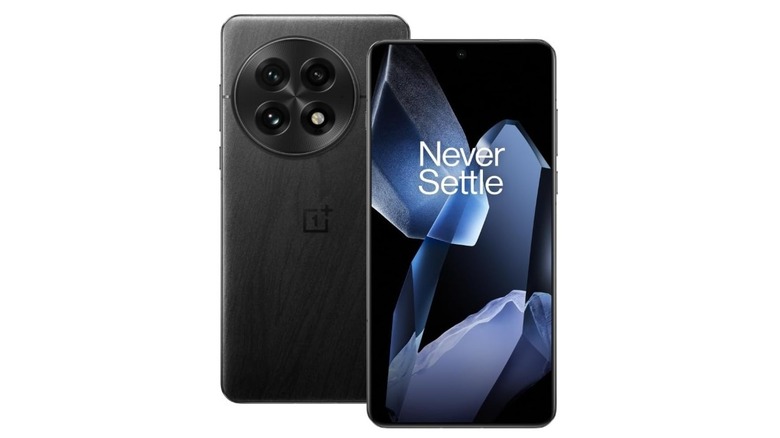
The OnePlus 13 launched in January 2025 and excelled in just about every area, as Android Central called it "the best Android phone ever." It addressed two of the company's biggest long-standing complaints: its cameras and IP rating. With three 50 MP rear sensors and a 32 MP selfie camera, it finally rivaled the top-of-the-line Google Pixel and Samsung Galaxy phones. The OnePlus 13 was also the first phone in the company's lineup to feature a dual IP68 and IP69 rating, making it resistant to both water and dust, compared to the IP65-rated OnePlus 12.
It also featured the first smartphone display to receive DisplayMate's coveted A++ rating, and for good reason. It rocked a crisp 6.82-inch LTPO AMOLED panel with a 3,168 by 1,440 resolution, a dynamic refresh rate ranging from 1 Hz to 120 Hz, a peak brightness of 4,500 nits, and a pixel density of 510 PPI. Combined with the Snapdragon 8 Elite chipset, 12 GB of RAM, and 256 GB of storage in its base model, it was also a performance beast. In fact, Trusted Reviews found that it outperformed the likes of the iPhone 16 Pro Max and the Samsung Galaxy S25 Ultra in benchmark testing.
Battery life was remarkable as well. The OnePlus 13 came with a massive 6,000 mAh battery that could last nearly two days on a single charge. And as is the hallmark of OnePlus phones, it also supported fast charging, both wired (80 W) and wireless (50 W). Despite now being a previous-generation flagship, many experts, including Android Authority, believe the OnePlus 13 is arguably a better buy than the newer OnePlus 15, especially since it's currently cheaper (around $627 vs $899) in China and India, where both phones are still available.
How we selected these OnePlus phones
It's important to note that we set out to pick the best phones OnePlus has ever made, not simply the best OnePlus phones in today's market. As such, we evaluated every model the company has launched over the last decade in the context of its release. This included assessing how each phone compared against the competition at the time, most notably similarly priced Samsung Galaxy and Google Pixel phones.
We took into account not only the phone's price, but also its specs and performance, how well it was received by users and tech experts alike, and, most importantly for this guide, whether it introduced features that were, at the time, new for OnePlus or even the entire smartphone industry. For example, the OnePlus 7 Pro was one of the first smartphones to feature a 90 Hz display.
Moreover, whether the phone is available today wasn't a consideration. We also wanted to cover the entirety of OnePlus' smartphone journey, though this wasn't a deciding factor in our selection. However, our picks naturally spanned different generations, starting with the OnePlus One and concluding with the OnePlus 13. This allowed us to highlight the smartphone that made the biggest impact in every era of the company's lineup.