

The 9 Best Unlocked Phones You Can Find At Best Buy
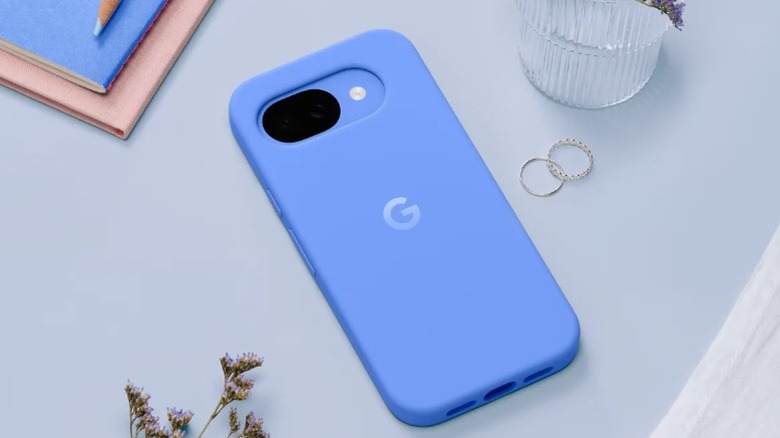
We may receive a commission on purchases made from links.
Many people buy their phones directly from carriers like AT&T, Verizon, or T-Mobile because of the convenience. You're able to spread the cost over monthly payments, often upgrade to the newest flagship with ease, and walk away with service already set up. This simplicity is great, but it does come with the trade-off of less flexibility. When you're tied to a specific network, you have to jump through more hoops to cancel your plan or switch providers. You also have to pay for expensive roaming charges when traveling.
By buying an unlocked phone, you'll have an easier transition between carriers, the ability to use local SIM cards abroad, and more control over when you want to upgrade. Retailers like Best Buy make this route more accessible by offering financing options on unlocked phones, so you can still spread out the payments without signing up for carrier service. Best Buy regularly stocks a solid range of unlocked models across different budget levels, and they're often on sale during the holiday season. In this roundup, we run down the best unlocked phones that Best Buy has to offer across various form factors and budgets.
Samsung Galaxy S26 Ultra
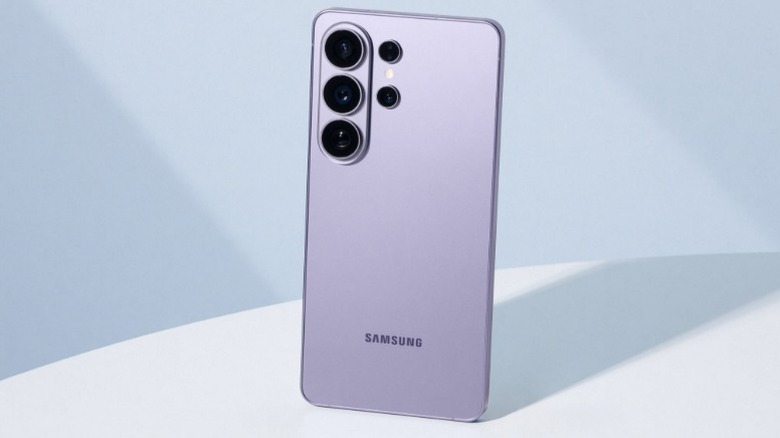
The Samsung Galaxy S26 Ultra is the top-of-the-line Android to buy if you want a phone that's dependable in all aspects, though it also checks in at a pricey $1,600 on Best Buy. With the Snapdragon 8 Elite Gen 5 chip and 12 gigabytes (GB) of RAM, it's one of the most powerful smartphones at the time of writing, and performance isn't an issue even if you run demanding games. The 120-hertz (Hz) AMOLED display is sharp, responsive, and plenty bright for outdoor use. Privacy Display is a new hardware feature here, and it makes the screen hard to see for anyone trying to peep at your phone at an angle.
You can enable Privacy Display to be always on, only for notifications, or just while you're using specific apps. While this feature does reduce brightness, it can be well worth the trade-off for protecting sensitive information, and you can always just disable it. Alongside a top-notch screen, the S26 Ultra also provides great battery life, as it reliably delivers more than a day's use. It also charges faster than many other phones, thanks to the 60-watt wired charging speed. In our testing, wireless charging (25-watt) was also quick, as it charged faster than the iPhone 17 Pro and the S25 Ultra.
The 200-megapixel (MP) main camera takes excellent photos and videos, while the additional ultrawide and telephoto cameras help you cover specific situations. Best Buy offers unlocked versions of the S26 Ultra with various levels of storage, ranging from 256 GB to a full terabyte (TB) and memory configurations up to 16 GB.
Nothing Phone (4a) Pro
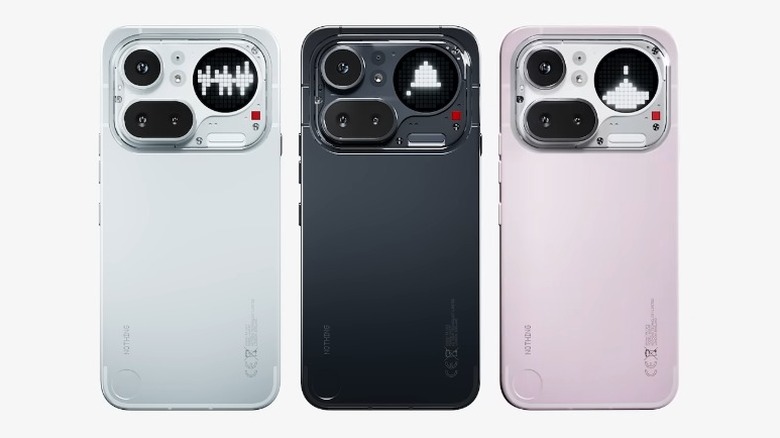
The Nothing Phone (4a) Pro is a phone that's bound to turn some heads. Next to the camera array, it features a Glyph Matrix — a set of LED pixels on the back that light up for notifications, charging status, timers, and other alerts. Just below this Glyph Matrix is a red recording light that blinks when you're capturing video. The industrial design is completed by the unibody aluminum construction, which has an IP65 water-resistance rating and a robust feel. This phone uses a unique skin of the Android operating system called Nothing OS, featuring dot matrix typography, a clean and stylized notification tray, and an optional monochrome icon pack.
Other than just the unique look, the (4a) Pro offers a lot of value for a midrange phone. Everyday performance is reliable thanks to the Snapdragon 7 Gen 4 processor, and it doesn't thermal throttle or get uncomfortably hot. The base 128 GB version features eight GB of RAM ($500 retail price), but Best Buy also offers the 256 GB version with 12 GB of RAM ($600). As for the display, the OLED panel gets incredibly bright for outdoor use, while the 144 Hz refresh rate is higher than most 120 Hz flagships.
The triple-camera system does a good job of capturing detail, and the nighttime results are also decent for a midrange phone. Finally, battery life is good for more than a day's use, and 50-watt fast charging means you can quickly charge up when you need to go. Unfortunately, the (4a) Pro doesn't support wireless charging.
Samsung Galaxy Z Fold 8
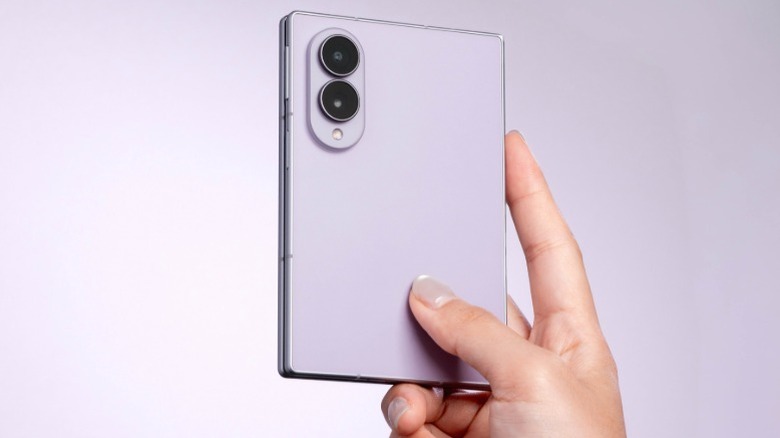
The Samsung Galaxy Z Fold 8 is a unique foldable phone because of the shorter, passport-like form factor. It's much more pocketable than Samsung's traditional foldables like the Z Fold 7 or Z Fold 8 Ultra. When unfolded, you're greeted with a 7.6-inch 120 Hz AMOLED display with a 4:3 aspect ratio. Samsung's other Z Folds have a 10:9 aspect ratio for the inner screen, which adds black bars to 16:9 content. This is less of a problem with the Fold 8, as the letterboxing is less aggressive and 4:3 content fits end-to-end on the screen.
Due to the form factor, the cover screen is also shorter and wider, which makes typing more comfortable. Both displays are bright and offer good contrast. This new design is powered by the Snapdragon 8 Elite Gen 5 and 12 GB of RAM, which allows the phone to handle split-screen multitasking and demanding apps. The base model comes with 256 GB of storage, but Best Buy also sells 512 GB and one-terabyte (with 16 GB RAM) versions. Despite the more compact frame, the Z Fold 8 still delivers reliable all-day battery life alongside 45-watt wired and 20-watt wireless charging.
Both the 50-megapixel main and ultrawide cameras take sharp photos, but there's no dedicated telephoto lens here. Overall, the Z Fold 8 offers some great competition to the newer iPhone Duo, and Samsung might be the one to get if you prefer Android — and can stomach the $1,900 price tag.
Google Pixel 11 Pro/11 Pro XL
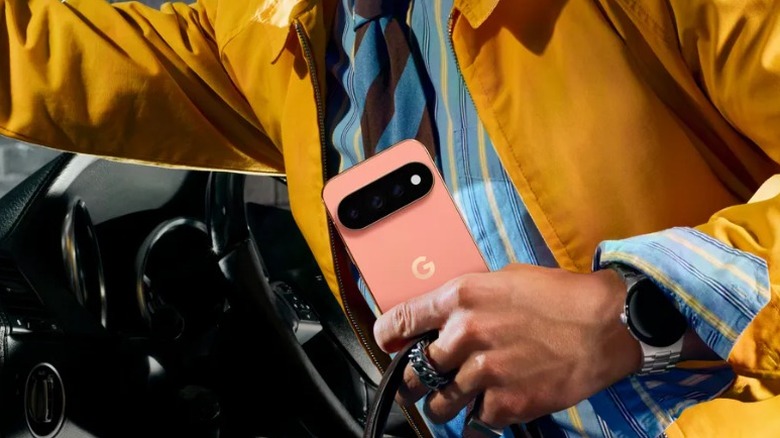
Google's Pixel 11 Pro ($1,099 on Best Buy) and Pro XL ($1,299) flagships share nearly identical hardware, so the main difference lies in physical size and battery capacity. The standard Pro features a 6.3-inch display, while the Pro XL has a larger 6.8-inch panel, with both 120 Hz OLED screens hitting an impressive peak brightness of 3,600 nits. Google's Pro series for 2026 is powered by the custom Tensor G6 processor paired with 12 GB of RAM. Best Buy also stocks 512 GB and one-terabyte versions of the 11 Pro and Pro XL, and these versions feature 16 GB of RAM.
Photography is a major highlight for these phones. The zoom quality is better than the Pixel 10 Pro/Pro XL, and the camera array provides detailed images with pleasing colors. Compared to the standard Pixel 11, the Pro phones shoot better, more impressive videos, as the phones feature Night Sight Video and 8K support. One problem with these models, though, is that they're a bit underpowered compared to the Galaxy S26 line. Everyday performance and even gaming won't be an issue, but it's something to consider when you're paying flagship prices.
The battery endurance is solid on both phones, providing more than a day's worth of use on a full charge. There's also a new Extreme Charging Mode, which can charge the Pixel 11 Pro XL from 0% to 100% in around an hour. The XL version will always charge a bit faster, as it supports 45-watt charging instead of the 30-watt charging of the 11 Pro. Both models support 25-watt wireless charging, though.
Motorola Razr 2026
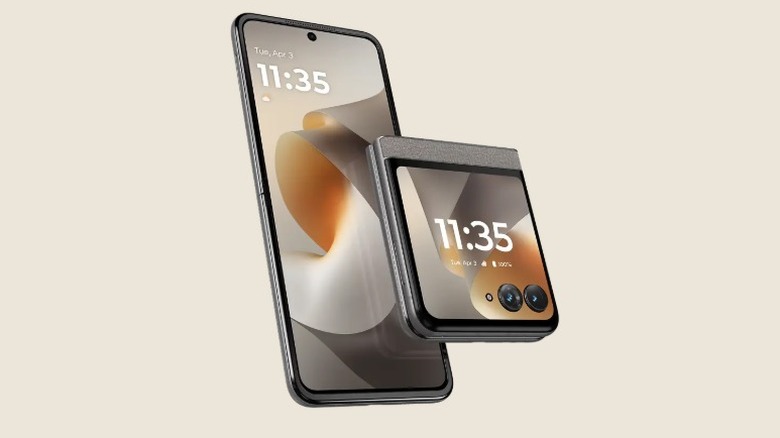
Motorola was ahead of its time with the Motorola Razr V3 back in 2004, and the Razr 2026 helps you relive that nostalgia. This modern Razr runs on Android, but it still has some of that classic Motorola charm: You can twist the phone to launch the camera and do a chopping motion to turn on the flashlight, for example. The cover screen is a 3.6-inch AMOLED with a 90 Hz refresh rate. It's great for checking notifications, controlling music playback, or taking high-quality selfies with the main camera that sits right alongside the screen.
Flipping the Razr open reveals a vibrant and colorful 6.9-inch AMOLED screen with a 120 Hz refresh rate. You only get the option for 256 GB of storage, with eight GB of RAM and the MediaTek Dimensity 7450X chip, somewhat limiting what you can do with this device. It does manage everyday tasks with ease but is admittedly slower than other flip phones like the Galaxy Z Flip 8, especially during highly intensive games. Fortunately, you still get all-day battery life and 30-watt fast charging.
The dual cameras take great photos when lighting is good, but they don't excel at capturing moving objects. However, software updates are the main drawback here, as Motorola only promises three years of Android updates — Samsung promises seven years for the Z Flip 8. Keep in mind that the Motorola Razr ($800) is $400 cheaper than the Z Flip 8 ($1200). The Motorola model does have its drawbacks, but it's the best affordable flip phone at the time of writing.
Samsung Galaxy A37 5G
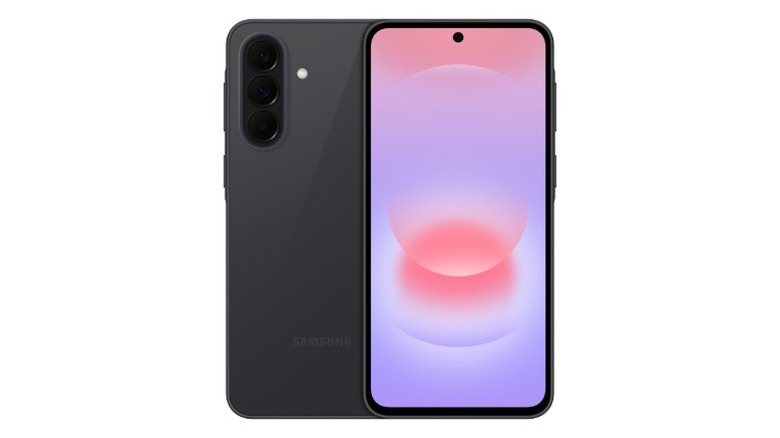
For under $500, the Samsung Galaxy A37 5G is a compelling option if you need a midrange Android phone. Despite being much cheaper, it has similar looks to the Galaxy S26. However, the plastic back with a glossy finish can be a fingerprint magnet. The 6.7-inch 120 Hz AMOLED display looks great, and it performs well outdoors. Under the hood, you have six GB of RAM, 128 GB of storage, and Samsung's own Exynos 1480 chip. Best Buy also has a 256 GB version with eight GB of RAM for $610. The phone handles everyday tasks and most games at medium settings, but it can struggle with intensive gaming.
Battery life is surprisingly comparable to most flagships, as the A37 can easily power through a day and recharge quickly since it's equipped with 45-watt wired charging. The triple cameras take great pictures in almost all situations, and the 50-megapixel main camera particularly does well in producing natural photos. Samsung will provide six years of security updates for the A37, which is better than competitors like the Nothing Phone 4(a) Pro (three years) and Moto G Stylus 2026 (two years).
The Galaxy A37 also holds its own against the similarly priced Pixel 10a. Samsung's phone has a bigger display, faster charging, and a thinner design, while the Pixel 10a has a great emergency satellite feature and a more compact footprint. However, the 256 GB, eight GB RAM version of the Galaxy A37 ($610) is cheaper than the base version of the Pixel 10a with the same configuration ($700).
Pixel 11 Pro Fold
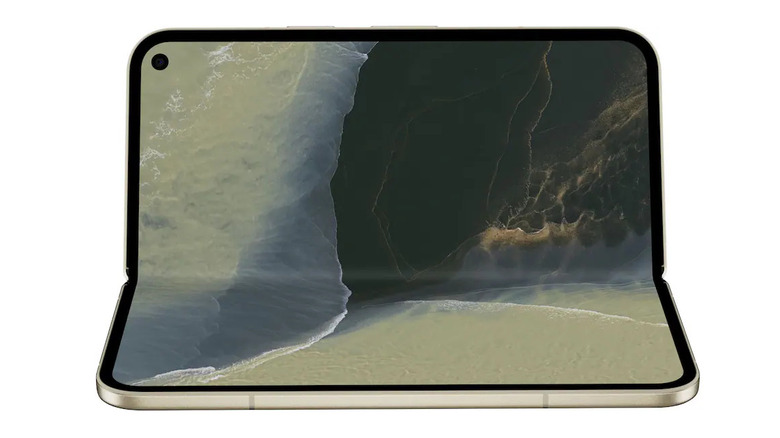
The Pixel 11 Pro Fold ($1,899 on Best Buy), Google's latest foldable phone, combines a spacious inner 8-inch 120 Hz OLED display and a comfortable 6.5-inch OLED 120 Hz display as the cover screen. Both of these screens are responsive and impressively bright for outdoor use. The camera bump is less intrusive than on the Pixel 10 Pro Fold, and the bezels are thinner all-around. Compared to flip phones, notebook-style foldables such as this one have the advantage of multitasking with three app windows and the obviously bigger screen real estate for watching content.
Hardware-wise, the cameras are identical to those on the Pixel 10 Pro Fold. Despite this, the Pixel 11 Pro Fold takes excellent photos in all situations, but it's worth noting that the latest iPhones and Samsung Galaxy Z Fold 8 Ultra can often deliver even better colors and detail. The Pixel 11 Pr 'Fold delivers rock-solid performance for both gaming and everyday use, though, as this foldable sports 16 GB of RAM and Google's custom Tensor G6 chip.
Internal battery capacity is smaller than its predecessor (4,806-milliampere-hours versus 5,000-milliampere-hours), but battery life is still improved because of the more efficient chip. All-day battery life is still not an issue, and you get 30-watt wired charging alongside 25-watt wireless charging. The 11 Pro Fold faces some tough competition from the iPhone Duo and Galaxy Z Fold 8, but the Pixel Fold is still worth considering if you prefer a more traditional aspect ratio on the cover screen rather than the squarish cover displays seen on both alternatives.
Samsung Galaxy A17 5G
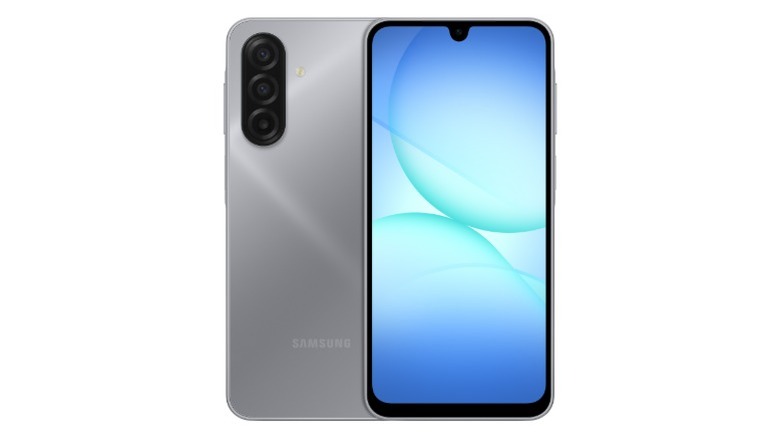
The Samsung Galaxy A17 is by far the cheapest option on this list, but it gets a lot of things right for a $270 price tag. It features a 6.7-inch 90 Hz AMOLED display, which looks and feels quite good for the price. Outdoor brightness isn't the best here, but that's not a surprise considering the budget level. The phone features a plastic construction, but it does not necessarily feel cheap. However, if you have used flagships in the past, the teardrop cutout for the camera and the thicker bezels will stand out as drawbacks.
Battery life is surprisingly quite impressive here. The 5,200-milliampere-hour battery can easily last a whole day, and depending on usage, you might even have some charge left over for the next day. The 25-watt wired charging is slower than some midrange phones and nearly all flagships, but that's to be expected for the money involved. The lack of wireless charging should not be a major dealbreaker at this price either. While the cameras won't blow you away, the 50-megapixel main camera takes clean and detailed photos with good colors. Unsurprisingly, nighttime image quality is subpar.
The performance from the Exynos 1330 chip is serviceable for browsing the web, using social media, and taking pictures. But if you're a power user, the meager four GB of RAM will bog you down at some point. Still, if your phone use is mundane and doesn't involve intensive tasks, this is one of the best cheap Android phones out there.
Google Pixel 10a
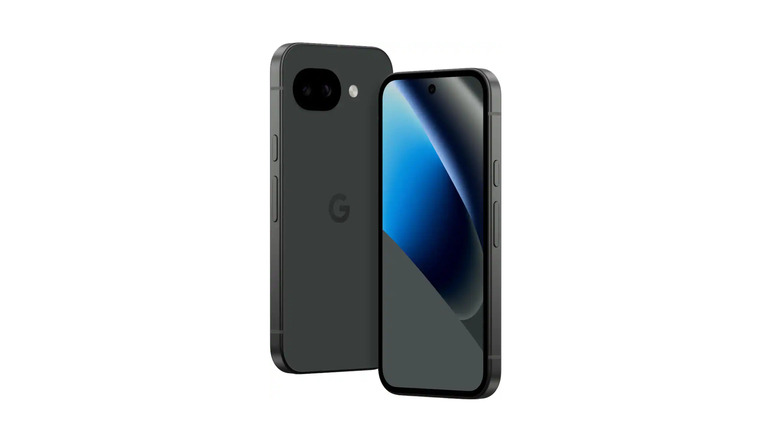
The Google Pixel 10a has a similar design to the Pixel 9a, features the same Tensor G4 chip and eight GB of RAM, and has the same battery capacity as the Pixel 9a. As such, it's not exactly an exciting phone in terms of upgrades, but it still delivers solid value for $600. There's no camera bump on this phone, meaning it can sit completely flat on a table without wobbling. Satellite SOS is the big new feature here, and it can come in handy in a pinch if you're out on an adventure and find yourself without service.
The 6.3-inch 120 Hz OLED display is unchanged from the 9a, but it's still responsive and bright for outdoor use. Charging speeds are slightly improved over the Pixel 9a, as you get 30-watt wired and 10-watt wireless charging — the Pixel 9a checked in at 23 watts and 7.5 watts, respectively. As for battery life, the Pixel 10a easily lasts all day. It ships with Android 16 out of the box, and Google promises seven years of software updates.
Both the main and ultrawide cameras produce pleasing images with great colors, and portrait shots are particularly impressive considering the price. The Pixel 10a also does a great job in everyday performance and some light gaming. While the iPhone 17e is faster, it also starts at $700 ($100 more than the Pixel 10a) and has a disappointing 60 Hz refresh rate.
How we chose these unlocked phones

For this roundup of the best unlocked phones from Best Buy, we selected devices across various price ranges and form factors to present a wide range of options. Battery life is one of the key metrics when buying any new phone, and all of our selections (even the budget ones) deliver on the promise of all-day endurance. We also looked for a minimum of 128 gigabytes (GB) of storage, though many of our midrange and flagship selections offer 256 GB or more.
As the phones fall across a spectrum of categories, we considered separate criteria before finalizing each. Flagship models, for example, need stout enough memory and processing specs to support demanding multitasking and great cameras for consistently good photos, as well as a premium design to justify higher price points. As for our budget and midrange picks, they handle everyday tasks such as streaming, social media, photography, and web browsing with ease, and some still have great cameras. There's no place for 60-hertz refresh rates on a modern phone, so most of our selections have a 120-hertz screen — the exception being the 90-hertz Galaxy A17 5G. To round out our opinions, we cross-referenced expert testing from review outlets like PhoneArena, PCMag, Android Authority, and CNET.