

The 5 Most Powerful Smartphones Released In 2026
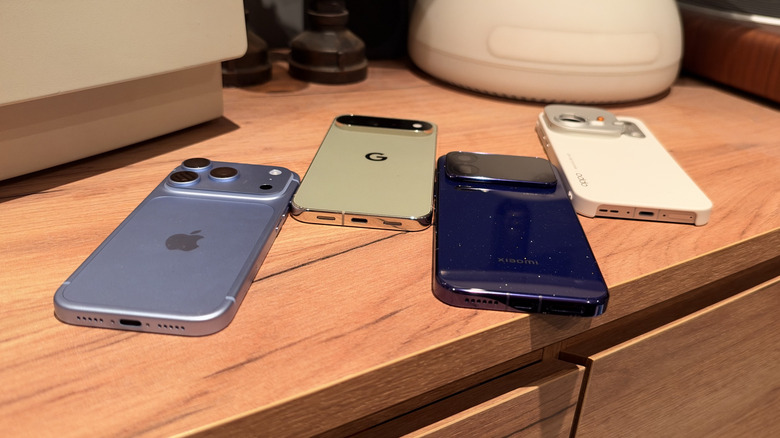
Apple's A20 Pro processor is the fastest phone chip of 2026, and Qualcomm's latest processors follow extremely close behind (pun absolutely intended). When I benchmarked the Snapdragon 8 Elite Extreme Gen 6 at Snapdragon Summit in September, it returned 4,155 single-core and 12,455 multi-core in Geekbench 7, against 4,735 and 12,545 from the A20 Pro in the iPhone 18 Pro Max.
But benchmark results don't tell the full story about how powerful a smartphone is. Rather, you need to consider how it performs across a full day in regular use. That usually comes down to how long it holds its performance over longer sessions, how much memory it has to work with, how quickly it can recharge, and whether its cameras are any good.
To that end, I've whittled down all of the smartphones that were released in 2026 to find the most powerful devices. I've used every one of them, so I've have compiled this list based on both benchmarking scores and my own experience using the handsets.
Apple iPhone 18 Pro Max
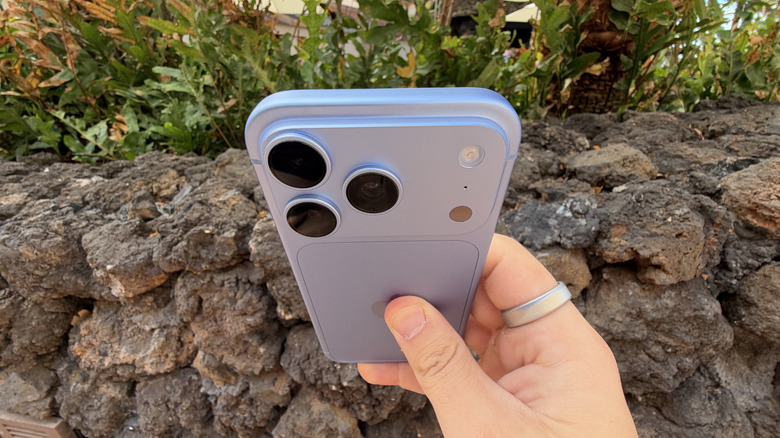
The iPhone 18 Pro Max packs Apple's new A20 Pro chip, which is built on a 2nm process. It's composed of a 6-core CPU — split into two super cores and four efficiency cores — a 7-core GPU that Apple says is up to 40% faster than the A19 Pro in the iPhone 17 Pro, and a dual 16-core neural engine. My Geekbench 7 test returned 4,735 single-core and 12,545 multi-core, which is the highest of any phone this year on both figures.
The 18 Pro Max also has a larger vapor chamber than its predecessor, which is why it ran cooler than I expected in daily use. The 6.9-inch OLED panel runs at 2,868 x 1,320 resolution and 460 ppi with ProMotion and up to 3,000 nits outdoors. Apple rates the battery for up to 45 hours of video playback and 30 hours of typical use. At the end of a long, 25-hour travel day, I still had around 12% charge remaining.
The three 48MP cameras are the reason I dubbed this the best camera phone in my review, with a variable aperture running from f/1.48 to f/4.0 and a 4x telephoto. However, the Camera Control can't adjust the new aperture, night mode trails the Pixel in scenarios with multiple light sources, and the aluminum frame easily dings from drops. I've also covered whether the iPhone 18 Pro Max or the Pixel 11 Pro XL makes more sense as your next flagship.
Xiaomi 18 Pro Max
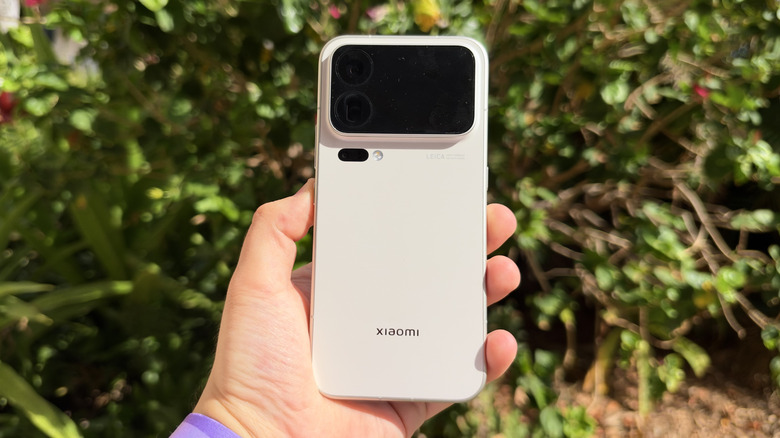
The Xiaomi 18 Pro Max is the first smartphone to offer Qualcomm's new Snapdragon 8 Elite Extreme Gen 6 processor. It's a 2nm chip with prime cores clocked to 5.01 GHz and an Adreno 850 GPU, paired with 12GB or 16GB of RAM. It sits above the standard Snapdragon 8 Elite Gen 6 — which marks the first time Qualcomm has split its chip lineup — and it offers 50% more shared memory across the chip. BGR's full benchmark testing of the Snapdragon 8 Elite Gen 6 found it scored around 26% higher than the Galaxy S26 Ultra in 3DMark Wild Life Extreme.
The main 6.9-inch LTPO AMOLED display runs at 1208 x 2624 resolution and 4,000 nits of brightness. Like Samsung's S26 Ultra, it offers a Privacy Display that can hide certain parts of the screen to shield sensitive content. It has a sub-pixel layer to enable this without affecting the display quality. Like last year's 17 Pro Max, the newer device also has a 2.9-inch AMOLED display on the back for quick widgets and a camera review. The 8,500 mAh silicon-carbon battery supports 100W wired, 50W wireless, and 27W reverse wireless charging.
On the back, you'll find a triple camera system. Two 200MP sensors handle the main camera and the 3.2x telephoto lens, with a 50MP ultrawide alongside them, and video reaches 8K at 30 fps. The phone runs Android 17 and Xiaomi's own HyperOS 4 skin. At the moment, the device is only available in China (for approximately $1,045 after currency conversion), but it will be available globally before the end of 2026. However, Xiaomi still doesn't sell its devices in the U.S., so you may have to import it from overseas.
Samsung Galaxy S26 Ultra
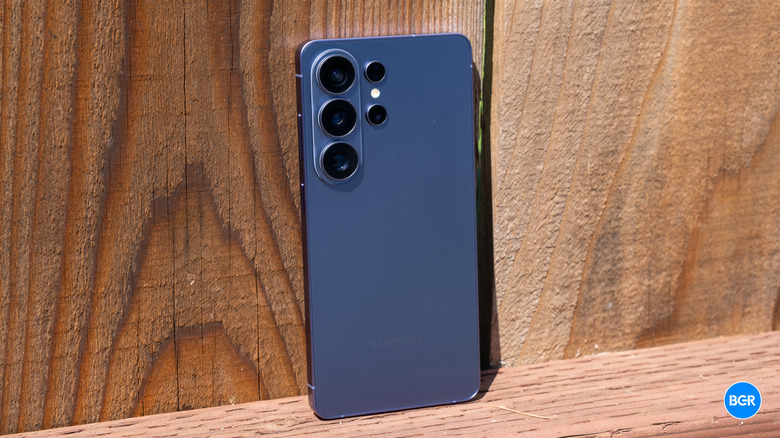
Samsung's flagship Galaxy S26 Ultra launched in February. It packs the Snapdragon 8 Elite Gen 5 for Galaxy chip, paired with 12GB or 16GB of RAM. BGR's testing found it scored 3,685 single-core and 11,198 multi-core in Geekbench 6, and 7,802 in 3DMark Wild Life Extreme. Samsung claims gains of 19% on CPU and 24% on GPU over the S25 Ultra. Since this device is the oldest on this list, it's unfair to compare it directly to the newer phones with faster chips. But our review found its sustained graphics performance is roughly level with last year's model, so it doesn't offer much improvement.
The quad-camera system is one of the strongest features of the Galaxy S26 Ultra. It offers a 200MP main sensor, a 50MP ultrawide lens, a 10MP 3x telephoto lens, and a 50MP 5x periscope lens, making this the most comprehensive camera offering among any 2026 flagship. The LTPO AMOLED display ranges from 1 Hz to 120 Hz depending on what's on your screen, peaks at 2,600 nits of brightness, and offers Samsung's Privacy Display. Like Xiaomi's, it can hide parts of your display to protect sensitive content, but it has been known to make the display dimmer.
The 5,000mAh battery can last a full day of heavy use and charges at 60W wired over USB-PD, with 25W Qi 2.2 wireless charging. Samsung still hasn't moved to silicon-carbon cells, which is why its battery capacity trails the Chinese flagships on this list. If you're weighing Samsung's 2026 lineup, we've explained how the S26 Ultra differs from the standard Galaxy S26 and S26+.
Oppo Find X10 Pro Max
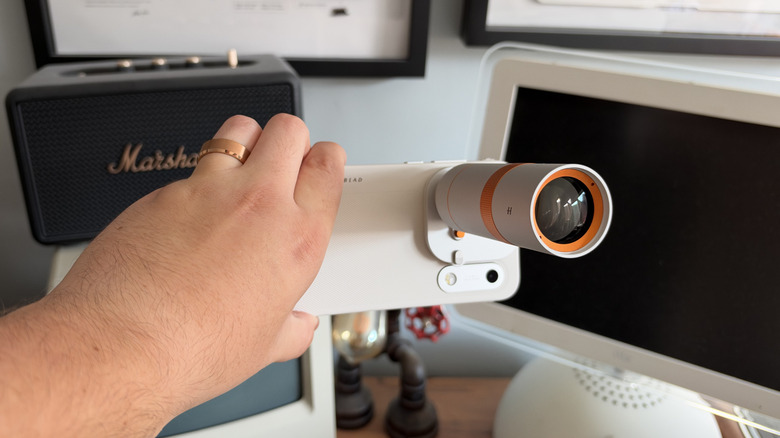
The Oppo Find X10 Pro Max packs the 2nm MediaTek Dimensity 9600 Pro chipset, paired with 12GB of RAM. BGR's Geekbench testing returned scores of 3,052 in single-core and 10,439 in multi-core. That falls behind the Snapdragon Extreme by quite a bit, but BGR's reviewer found that in daily use it still handles everything thrown at it, including Asphalt Legends and Metalstorm at maximum graphics.
What earns its spot on this list are the three 200MP sensors on the back, which no other phone offers. Daytime shots and portrait mode are the strongest here. Oppo also offers an optional teleconverter kit, which adds 10x optical zoom for up to 40x total zoom. Our reviewer found it produces unusually good macro and night frames for an add-on accessory. However, night performance isn't as good on the ultrawide, the telephoto struggles to focus in the dark, and night video shows noticeable jitter.
The 6.8-inch 1.5K LTPO AMOLED display runs at 144 Hz with 2,000 nits peak brightness, the 8,000mAh silicon-carbon battery charges at 80W, and the phone carries both IP68 and IP69 water and dust resistance ratings. There are no magnets in the body, so the only way to get magnetic charging is via a case with a ring built in.
Google Pixel 11 Pro XL
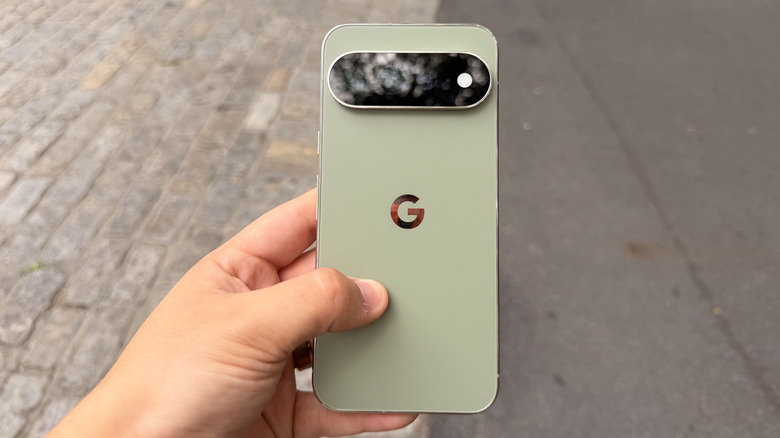
The Tensor G6 inside the Pixel 11 Pro XL is the weakest chip in any phone on this list. Geekbench 6 returned 2,739 single-core and 7,586 multi-core scores, and 3DMark Wild Life Extreme came back at 3,338, less than half of what the Snapdragon 8 Elite Gen 5 scores. Under heavy multitasking across navigation, music, email, and photo library searches, I found that the phone dropped frames and the back panel got hot. There are plenty of Android phones more powerful than the Pixel 11, but the device still earns its place on this list.
Google's Tensor G6 carries 50% more TPU compute than the G5 in the Pixel 10 Pro, with a claimed 3.5x gain on on-device AI processing. The phone offers a 50MP main camera sensor on a 1/1.3-inch size, a 48MP ultrawide lens with autofocus, and a redesigned 48MP 5x telephoto lens with 30% more light sensitivity. It is the best camera on any Android phone I've tested, largely thanks to the image processing that Google implements.
The 6.8-inch Super Actua display hits 486 ppi and 3,600 nits peak outdoor brightness, while the 5,115mAh battery gave me about seven hours of screen time. Charging is 45W wired and 25W Qi 2.2 with Pixelsnap magnets built in. It might not be worth upgrading to from its predecessor, however. RAM dropped from 16GB to 12GB, the battery shrank slightly, and the AI-powered Pro Zoom feature became unreliable past about 80x.
How we ranked these phones
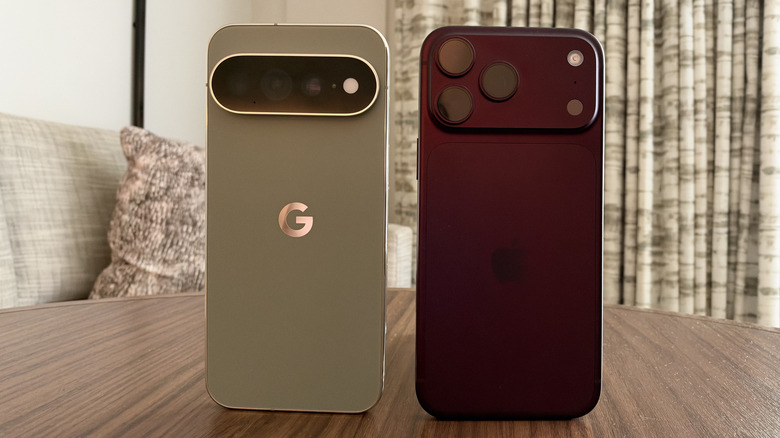
Every device here has been tested and reviewed by BGR. I also have each of the devices in this list myself, and have carried each of them around in my pocket.
To rank them, we considered a number of factors. We looked at peak performance first, which was measured through Geekbench and 3DMark benchmarking scores and our own first-hand use. Sustained performance matters more than a benchmark score, which is why we relied on our own reviews and testing to see how each handset fares through a long gaming session or a 4K export. We also looked at RAM, which helps decide how many apps stay active in the background rather than reloading every time you switch between them.
Next, we considered camera hardware, since a phone with a fast chip but a bad camera probably isn't one you actually want to use. Finally, we factored in battery life and charging speeds, since raw power means little if the phone can't last the day or top up quickly.