

7 Annoying EV Myths That Just Refuse To Die
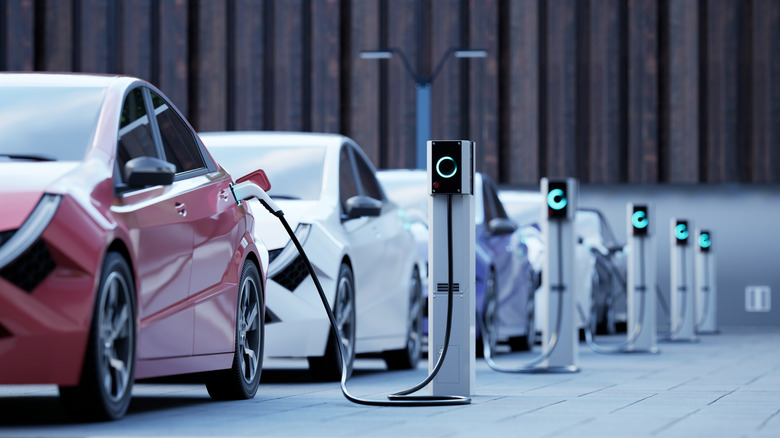
Electric vehicle sales have been rising through the years, claiming more than 25% of global new car sales from January to October last year, according to think tank Ember Energy. In comparison, this figure was below 3% in 2019. Despite their booming popularity, misinformation about EVs continues to spread on social media and other channels. We're here to clear things up.
While there are some EV trends we're worried about in 2026, we're confident that the best electric vehicles will continue to push the technology to greater heights. Unfortunately, because there are distortions about the performance, reliability, and safety of EVs, some people might be considering against making the switch from ICEVs (internal combustion engine vehicles). It's ultimately their decision, but it shouldn't be based on falsehoods against EVs.
We've identified eight annoying EV myths that have persisted for one reason or another, and we're going to debunk them. We'll use data and analysis from reputable sources, including government agencies and industry experts, to dispel these misleading statements about EVs once and for all.
EVs aren't better for the environment
As EVs use electric motors over internal combustion engines, they don't release greenhouse gas emissions while you drive them. However, the production of large lithium-ion batteries that power EVs requires mining metals such as lithium and nickel, which then need to be heated to high temperatures. As a result, the emissions when making a new EV may be 80% more than building an equivalent ICEV.
However, a study by the Internal Council on Clean Transportation shows that over its lifetime, the greenhouse gas emissions of an electric SUV with a 300-mile range are lower by 71% compared to those of an ICE SUV. The emissions from battery production account for 25% of an EV's total emissions over its lifetime, but the tailpipe emissions of an ICEV can already be higher than the EV's total life-cycle emissions.
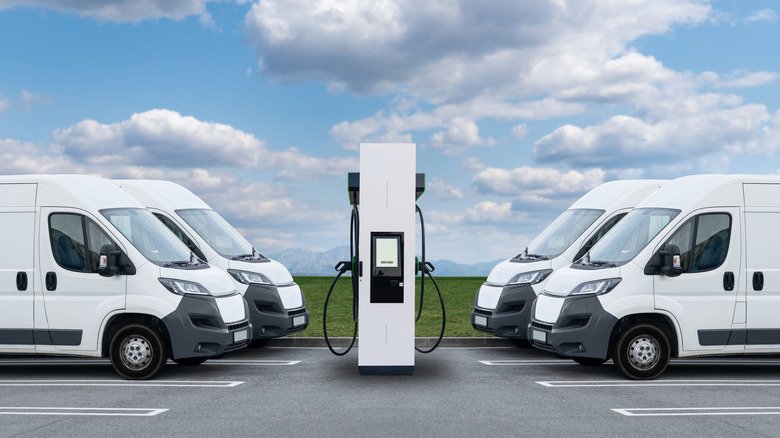
The figures from the study confirm findings from similar research by the FAMU-FSU College of Engineering. A cradle-to-grave life-cycle analysis comparing a Ford E-transit van and a Ford Transit van revealed that the EV's carbon emissions per kilometer were significantly lower than those of the ICEV. The Ford E-transit van emitted 363.2 grams of carbon dioxide equivalent per kilometer, which is 23% less than the 469.1 gCO2-eq/km for the Ford Transit van.
While it's true that EVs start with a so-called emissions debt, they more than pay it back and are overall better for the environment than ICEVs.
EVs are much more expensive than ICE vehicles
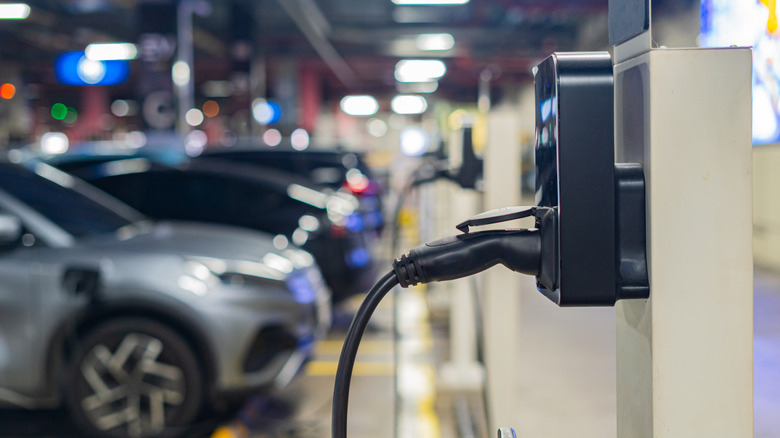
EV sales are rising, but the transition would be quicker if not for the generally higher purchase prices of EVs compared to ICEVs. It doesn't help that the federal tax credit of $7,500 for acquiring electric vehicles expired in September 2025.
Once you get past the price tag, though, the total cost of ownership for EVs is actually lower compared to ICEVs, according to the International Energy Agency. In our analysis on how much cheaper it is to drive an electric vehicle than a gas car, we found that it's more affordable to fully charge an EV's battery than to fill an ICEV's tank with gasoline. The cost of maintaining and repairing EVs may also be lower than that of ICEVs because they have fewer moving parts, but this may vary by model. Our list of the EVs with the cheapest maintenance costs should give you an idea of what to expect.
The upfront cost of buying an EV is more expensive than that of an ICEV, but even that may soon change, according to the IEA. With both old and new carmakers competing in this fledgling market, EVs are expected to become more affordable, and policy support from governments may help trim manufacturing costs, further slashing prices. It might not be long before EVs become cheaper than ICEVs.
EVs don't have enough range
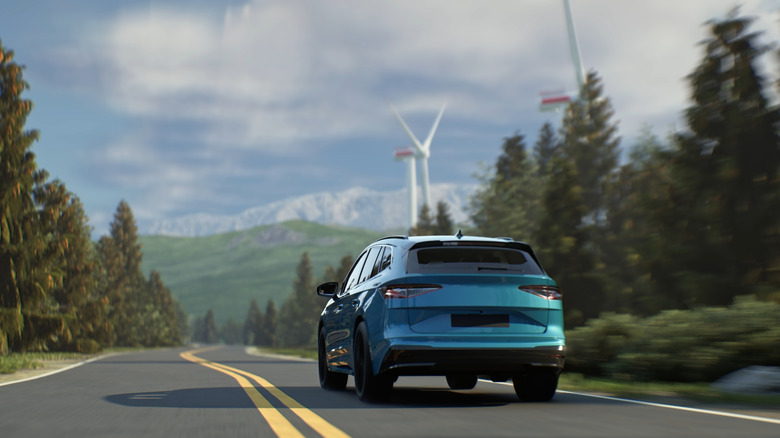
The range of EVs, or the distance they can travel before their fully-charged battery is depleted, has been a focal point of criticism of the technology. Are you sure that you'll be able to get to where you want to go? That may have been a serious question in 2010, when early EVs only offered 80 to 100 mile ranges, according to Electrical Innovations. So-called range anxiety may no longer have legs in 2025, though. Premium EVs can provide more than 400 miles of range, while mid-range EVs can give you about 250 to 350 miles. The range of budget-friendly EVs is usually between 150 and 250 miles, which should still be more than enough for most people because, according to a 2023 survey by the AAA Foundation for Traffic Safety, Americans drove an average of only about 29.1 miles per day.
If you'll be going on a cross-country drive, there are ways you can extend your EV's range, but you'll also surely find a spot for recharging somewhere along the way. According to the U.S. Department of Energy's Office of Critical Minerals and Energy Innovation, there are more than 78,000 EV charging stations across the US, with nearly 241,000 EV charging ports available. In comparison, there are almost 197,000 retail gas station locations in the US, according to xMap, which is nearly triple the number of EV charging stations. However, EVs only accounted for 1.4% of all registered vehicles in the US as of 2023, according to Self Inc.
EV batteries need replacements every few years
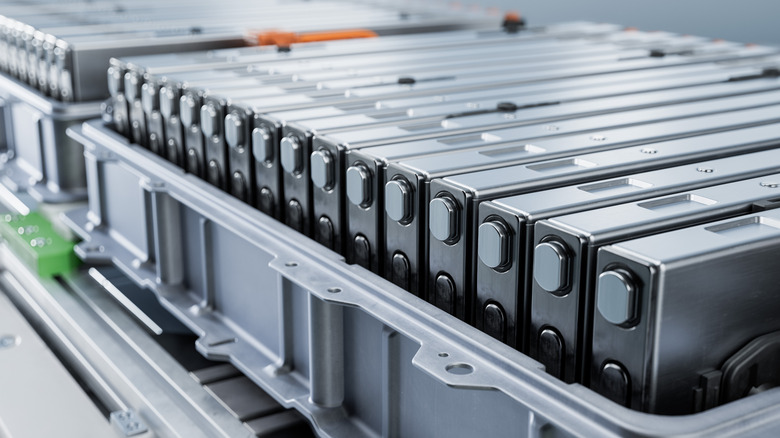
It can cost anywhere from $5,000 to $20,000 to replace an EV battery, according to Recharged. That's the bulk of the cost of the EV, so if you think that you'll have to buy a new battery every few years, you'll be overwhelmed by how much you'll have to spend.
Thankfully, that's not the case. All car manufacturers provide a warranty of at least eight years or 100,000 miles on EV battery packs, according to Car and Driver, which should give you an idea of how long they're expected to last. The average electric vehicle (including batteries) has a lifespan of about 18.4 years, compared with 18.7 years for the average internal combustion vehicle.
Do you know where EV batteries go after their lifespan ends? They're recycled, with components such as lithium, nickel, copper, and cobalt returned to the supply chain for reuse. So not only do EV batteries not need replacements every few years, but they will also contribute to the production of batteries for the next generation of EVs.
EV charging takes a long time
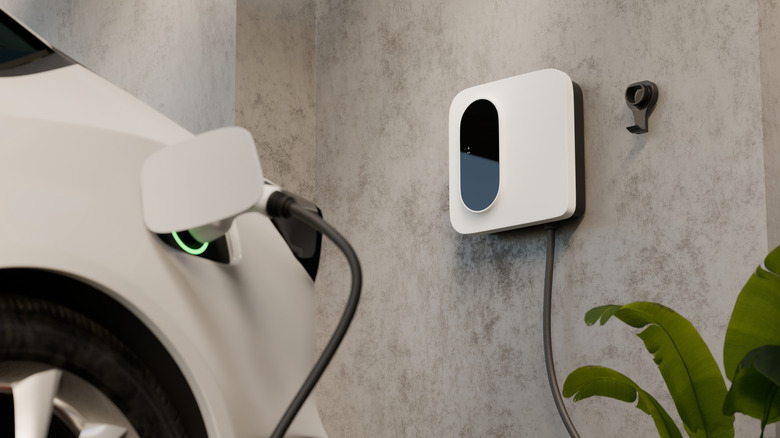
EVs can take up between 40 and 50 hours to charge from 0% to 80%, but only if you're using Level 1 equipment through a residential AC outlet that's rated at 120V, according to the U.S. Department of Transportation. If you're using Level 2 equipment, it only takes four to 10 hours, and if you're using Level 3 equipment, also known as Direct Current Fast Charging (DCFC) equipment, the waiting time goes down to between 20 minutes and 1 hour.
You don't need to go to an EV charging station to get faster recharging, though. While installing Level 3 equipment in a residential setting is currently impractical because of the necessary infrastructure and high cost, Level 2 equipment is currently the recommended way for EV charging at home, according to SolarTech.
A 2024 survey by Consumer Reports showed that 88% of EV owners have Level 2 chargers at home. You'll spend anywhere from $500 to $4,000 for installation, depending on how much extra work needs to be done, such as upgrading your wiring or extending from your main electrical panel. It's an additional cost, but it's worth it to go from just 3 miles of range per hour of charging from Level 1 equipment to about 25 miles of range per hour.
Faster charging tech for EVs is on the way, though. BYD's new EVs can recharge as fast as filling up a gas tank, and that could become the standard sooner than we think.
EVs are a fire risk
Ever since the cases of exploding smartphones, there has been increased attention on the safety of batteries in mobile devices. This is why there are electronics you're not allowed to pack in your carry-on luggage. These concerns have extended to EVs, because even though we've identified the safest EVs in crash tests, what can you do if their batteries catch fire?
While there is a chance for EV batteries to go up in flames, it's not happening at a rate that should be a cause for concern. Research by EV FireSafe revealed that there is a 0.0012% of an EV's battery catching fire, compared to a 0.1% chance for an ICEV. The company added that EV batteries igniting or exploding without warning are unlikely, because if such an event were to happen, there would be lots of warning signs that would give you enough time to evacuate the EV.
EV batteries are equipped with battery management systems that monitor their temperature, voltage, and state of charge. They work with thermal management systems to regulate temperature and prevent overheating that could lead to thermal runaway, which is when heat uncontrollably builds up within the battery cells. With these technologies in place, catching fire shouldn't be a concern for EVs.
EVs emit electromagnetic fields that harm humans and animals
Home electronics give off radiation, and EVs do as well. Radiation is a scary word because it evokes images of nuclear disasters, but there's no need for alarm here. You, your family, and your pets won't get sick as the levels of radiation emitted by EVs are not enough to be considered dangerous, according to the Electric Vehicle Council.
EVs emit extremely low-frequency (ELF) radiation, a type of non-ionizing radiation. This simply means that it's not strong enough to break the chemical bonds in the DNA of living things. A study by the German Automobile Club (ADAC), cited by CarSifu, further confirmed that the electromagnetic fields generated by EVs are safe and that people with implants shouldn't worry about driving or riding in them.
The study, which was commissioned by Germany's Federal Office for Radiation Protection and the Federal Ministry for the Environment, examined 11 EVs, two plug-in hybrid vehicles, and an ICEV. The radiation levels were measured using probes on a seat dummy while the cars were driving and charging. Electromagnetic fields were found across all vehicle types, but not at unsafe levels.