

5 Budget Android Phones Worth Buying If You Hate Huge Phones

We may receive a commission on purchases made from links.
The smartphone market has rapidly moved towards bigger phones, with screen sizes of 6.6 to 6.8 inches now becoming standard. And while there are merits to using a big phone, like more screen real estate for work, gaming, and video calls, as well as bigger batteries and cameras, small phones are finally making a comeback. People are once again appreciating their compact and lightweight designs, which make them easy to use with one hand and allow them to fit easily into even small pockets.
But while the best small phones, like the Samsung Galaxy S26 or S25 or the Google Pixel 11, are easy picks, you shouldn't have to splurge a lot for a compact Android smartphone. The thing, though, is that the number of small budget Android phones on the market is far lower, as the mid-range and budget segments usually prioritize large screen sizes to look closer to flagships. To help you out, we've researched this market and found the five best budget small Android phones.
All of our selections have screen sizes of less than 6.4 inches, with a few featuring just 4-inch screens as well. We've also included phones from various price segments, from those under $600 to phones under $300 and even $150, so there's an option for everyone. Our choices include both popular options like the Google Pixel 10a and Moto Razr+ 2024, as well as lesser-known, offbeat options like the Bluefox NX1, OnePlus 13s, and Motorola Edge 60 Neo. But rest assured that they all run fairly recent Android versions and offer several years of OS and security updates.
Google Pixel 10a
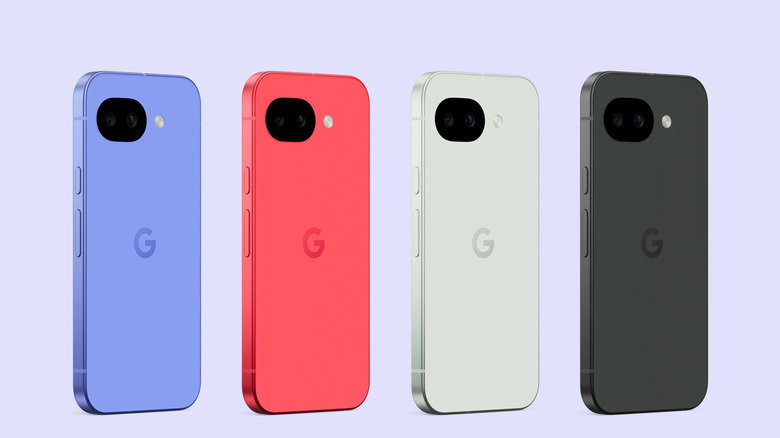
The Google Pixel 10a is our top recommendation for people looking for a budget-friendly compact Android smartphone. At 6.06 x 2.87 x 0.35 inches and 6.46 oz, it's very convenient to carry around and comes with a crisp 6.3-inch P-OLED display with 1,080 x 2,424 resolution, a 120 Hz refresh rate, and 3,000 nits of peak brightness. You can buy one of two versions: 128 GB of storage for $599 or 256 GB of storage for $699. Both come with 8 GB of RAM and the Google Tensor G4 chip, which, according to TechRadar, supports "nearly all daily tasks," including web browsing, emails, social media, and even some gaming and video editing.
It features a dual-camera setup at the back, with a 48 MP main lens that TechRadar says is "excellent for everyday shots" and a 13 MP ultrawide lens. It's the same hardware as on the Pixel 9a, but the Pixel 10a also includes several new software-based, Gemini-supported features like Camera Coach, Auto Best Take, Add Me, and Audio Magic Eraser that help you improve your photos and videos. The Pixel 10a is also a good budget option for AI features, as you get Magic Compose, Call Assist, and Gemini Live.
As with every recent Google Pixel phone, the Pixel 10a also comes with one of the industry's longest Android software support guarantees. That's seven years of Android OS updates and security patches, plus you get Android 16 in the first place. Speaking of lasting a long time, the Pixel 10a packs a large 5,100mAh battery that will "last you all day and then some," according to Android Central. There's also support for wireless charging.
Bluefox NX1
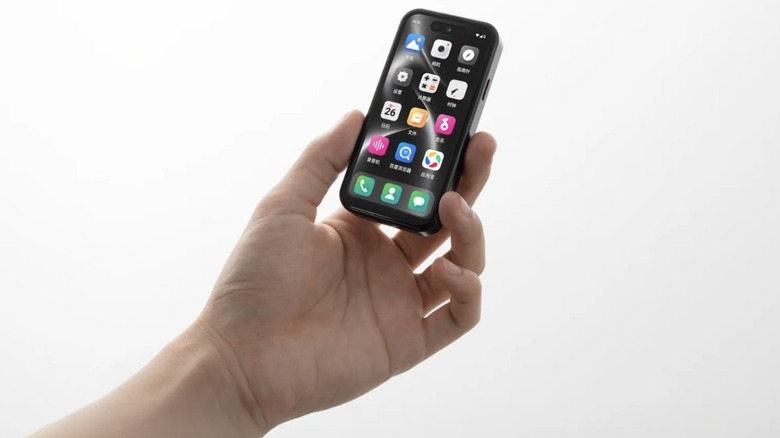
Aiphor's Bluefox NX1 is as small as they come in this day and age. It's by far the most compact phone we've stumbled across during our research, with a 4-inch LCD panel offering 540 x 1,168 resolution, 321 ppi, 500 nits of peak brightness, and a 60 Hz refresh rate. It boasts a one-hand fit, and rightly so, given that it measures just 3.96 x 1.94 x 0.49 inches and weighs 3.73 oz. A major perk of this phone is its price: its base model, with 4 GB of RAM and 64 GB of storage, costs just $135.98, while the 8 GB RAM/128 GB version is only $175.56. The latter is the better deal according to us.
Under the hood, it's powered by a MediaTek Helio G81 octa-core processor and comes with bloat-free Android 15, offering a smooth and clutter-free experience. Of course, it's no performance beast, but it doesn't want to be, either. Aiphor itself calls it "perfect as a backup phone," though it can also be a first choice for folks who need an affordable Android phone for basic tasks. We also like that it doesn't compromise on essential sensors like the pedometer, gyroscope, and compass.
Battery life is quite decent, too. It packs a 3,000mAh battery capable of delivering up to 8 hours of video playback, according to the brand. There are, of course, some compromises. It doesn't have a fingerprint sensor or Face ID, and the camera system — a 20 MP rear camera and a 5 MP selfie lens — is below par. Plus, it only charges at 10 W. That said, it has a USB-C port and supports a microSD card, which can increase storage to 2 TB.
Moto Razr+ 2024
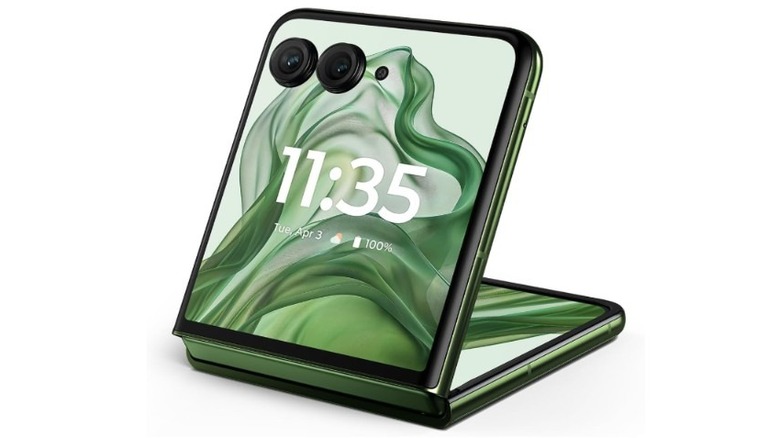
Flip phones are easily the most compact "regular-sized" phones, thanks to their hybrid form factor. And we've found the Moto Razr+ 2024 to be the best mid-range flip phone you can buy right now, priced at $549.99 for the 12 GB/256 GB variant. It comes with a small 4-inch cover display with 1,272 x 1,080 resolution and a dynamic refresh rate of up to 165 Hz. You can use it for everyday tasks like replying to messages, clicking pictures, running Gemini, watching videos, and playing games, even outdoors, thanks to its peak brightness of 2,400 nits.
The phone measures just 3.48 by 2.91 by 0.59 inches when closed and is also quite lightweight at just 6.67 oz. "It's also easier to open and close one-handed," according to PCMag. Beneath all that is the Snapdragon 8s Gen 3 chip, which is significantly more powerful than the previous-gen Razr Plus (2023). It scored 1,834 and 4,848 in Geekbench 6 single-core and multi-core tests, respectively, via Tom's Guide, which said that the phone is "fluid and responsive" to use.
Additionally, the Razr+ 2024 comes with a 4,000mAh battery that Phone Arena found could last over a day and a half. It also supports 45 W of wired charging and 15 W of wireless charging. As for the cameras, you get a 50 MP main camera and a 50 MP telephoto lens instead of the ultrawide lens we usually see in dual-camera setups. That said, a highlight is that you can use the rear cameras for selfies. The only noticeable downsides are that it comes with the slightly old Android 14 out of the box, plus you only get three years of OS releases and four years of security updates.
OnePlus 13s

OnePlus has exited North America and Europe, but the OnePlus 13s — the Indian version of the OnePlus 13T sold in China — is a solid option for small phone lovers looking for flagship-level performance at a lower cost. It's currently priced at around $556 for 12 GB of RAM and 256 GB of storage. There are two more variants: 12 GB / 512 GB and 16 GB / 512 GB. The phone measures 5.94 by 2.82 by 0.32 inches and rocks a sharp 6.32-inch 1.5K AMOLED screen with 1,216 x 2,640 resolution and a 120 Hz refresh rate.
"It manages to push through every task or game you throw at it," according to Beebom Gadgets, which calls it the best compact gaming smartphone. It's powered by the Qualcomm Snapdragon 8 Elite chipset, which scored 2,976 and 8,939 in Geekbench 6 single-core and multi-core tests, respectively. That makes the OnePlus 13s more powerful than proper flagships like the Samsung Galaxy S26 FE. The camera setup includes a 50 MP main rear camera, a 50 MP telephoto lens, and a 32 MP selfie camera.
Battery life and fast charging speed have long been major highlights of OnePlus phones, and the OnePlus 13s is no different. Despite its small package, it boasts a 5,850mAh battery, along with support for 80 W charging. That's the largest battery and the fastest charging of all the phones on this list. We also like that it comes with an 80 W SuperVOOC charger, at a time when most smartphone makers no longer include chargers in the box. Lastly, you get Android 15-based OxygenOS 15 out of the box, along with three Android OS updates and six years of security updates.
Motorola Edge 60 Neo
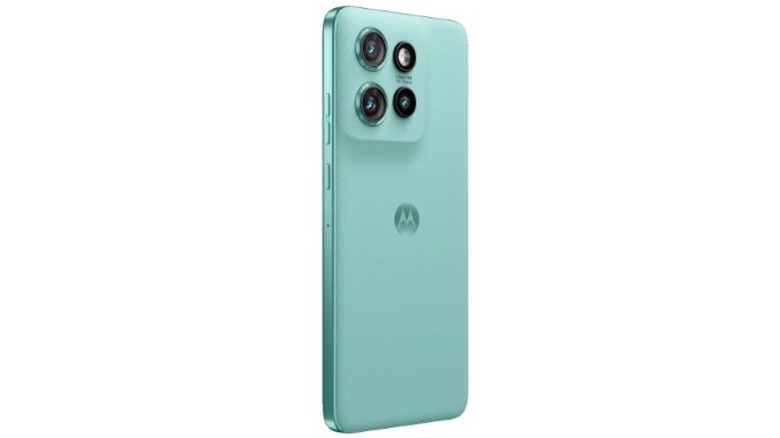
Launched in 2025 in select European markets, the Motorola Edge 60 Neo offers a powerful value proposition. It measures just 6.07 x 2.80 x 0.32 inches and features a 6.36-inch P-OLED display with 3,000 nits of peak brightness, a flagship-like 120 Hz refresh rate, and support for HDR10+ and one billion colors. Moreover, it's among the best budget Android phones that can last five years, thanks to five major OS upgrades and security patches until 2031. It comes with Android 15 out of the box. Right now, the 8 GB RAM/256 GB storage model is available for £229.99 (~$305), while the 12 GB RAM version costs £381.00 (~$505).
TrustedReviews calls it "one of the best phones in its price range," and for good reason. It has an impressive camera setup, with a 32 MP front camera and three lenses at the back: a 50 MP main camera that delivers "reasonably detailed, vibrant shots," a 13 MP ultrawide lens, and a 10 MP telephoto lens with 3x optical zoom. Then there's its MediaTek Dimensity 7400 chipset, which scored 1,095 and 3,111 in Geekbench 6 single-core and multi-core tests, respectively, and 1,031 in 3DMark Wild Life testing, via TrustedReviews.
That makes it more powerful than the Edge 50 Neo and Edge 60 Fusion. More importantly, it offers sufficient power for important AI features, including support for Moto AI, Gemini, Circle to Search, and more. The Motorola Edge 60 Neo is also more robust than its predecessors, thanks to an all-new IP69 certification. Lastly, it also has a bigger battery. You get 5,000mAh worth of juice, along with fast 68 W charging and 15 W wireless charging.
How we selected these budget small Android phones
We had two major make-or-break criteria while looking for phones for this guide. The first was the dimensions of the phone, including the screen size. To keep things simple, we decided that only phones with a screen size of less than 6.4 inches would qualify for our guide. We even have a couple of options with 4-inch screens, including a flip phone whose cover display we considered because of its everyday usability.
Second, we only picked budget-friendly Android phones. Even then, we have options in multiple price segments, from mid-range sub-$600 phones to sub-$300 phones and even one under $150. However, we also prioritized other factors during our evaluations. We looked at the display quality and refresh rate, battery life and charging, raw benchmark performance, cameras, and features.
While choosing between phones, we considered what real-world users and renowned tech experts have to say about them. We looked at reviews and ratings on platforms such as Amazon, as well as on popular independent testing sites like TechRadar, Phone Arena, PCMag, and Tom's Guide. So, you can rest assured that they're all quality products that will last you a long time. Speaking of durability, we also only picked smartphones that are relatively recent launches and offer a good number of Android OS releases and security updates.