

Will The iPhone Duo Replace Your iPad?
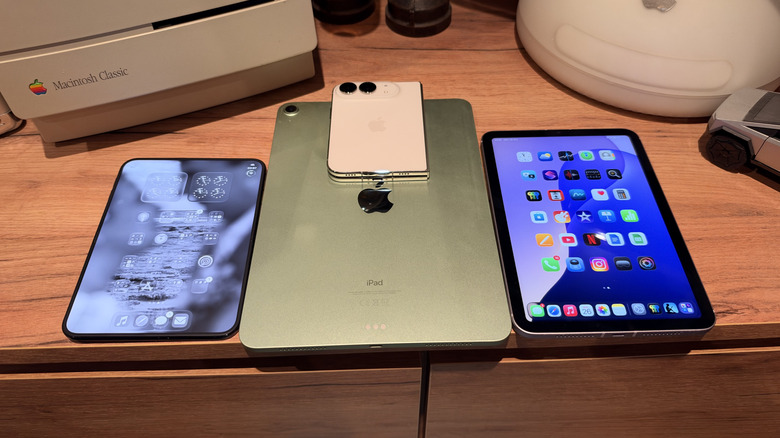
Unfolded, the iPhone Duo offers a 7.6-inch screen. The smallest iPad — which is the new OLED iPad mini that Apple announced on October 26 — offers an 8.5-inch screen. Less than an inch separates Apple's most expensive phone from its smallest tablet, which raises an obvious question for anyone who owns both: Will the iPhone Duo replace your iPad?
I have been using the Duo since launch and already own the 2024 iPad mini, so I can tell you that the answer actually has little to do with screen size. The Duo is an excellent device for reading, watching widescreen videos, and messaging. That's probably half of what people use an iPad for, though it gets nowhere near the productivity half. Plus, the Duo scores points for portability, since it can fold up to fit in your pocket. But you can get iPads with a much larger display.
Apple put iOS 27 on the Duo and iPadOS 27 on its tablets, and the two operating systems handle a large screen in different ways. You'll notice that most when you try to do more than one thing at once. The hardware differs too, mostly in the accessories each device supports rather than the panel sizes. When it comes to productivity, because of accessory support and external display support, the Duo won't likely replace the iPad.
The software
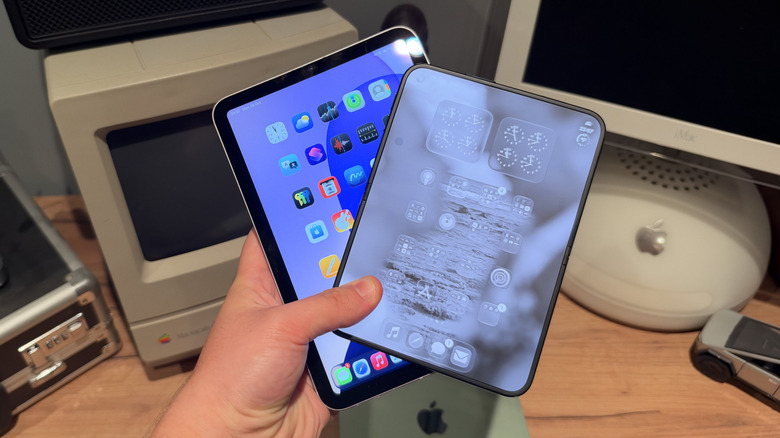
The Duo runs iOS 27, which Apple adapted to handle the folding screen. Split View arrives on iPhone for the first time, so you can open two apps at once side by side, two windows of the same app, or saved app pairs you can jump back into. Opening the Duo gives you two Home Screen pages, with the Dock and Lock Screen controls running down the side.
iPadOS 27 offers considerably more for a bigger screen on every iPad in the lineup. Apple's tablets get freely resizable windows, window tiling, and Exposé, spreading out every window that's open at once. Plus, iPadOS 27.2 adds an extended display mode when you plug into an external monitor, which matters more on an iPad Air or iPad Pro. While an iPad can float as many windows as you can fit, the Duo stops at two. Apps on an iPad are iPad apps, built for a larger canvas. Apps on the Duo are iPhone apps that have been rebuilt. Almost everything I use daily handles the inner display properly, including Slack, Notion, and YouTube, with Google Maps the one holdout so far. But running those apps on an iPad will give you significantly more room.
Split View is easy to trigger from the Duo's multitasking window, and I have used it more than I expected to — mostly for dragging images into apps rather than saving them to my camera roll first. The keyboard is the weak spot. In Split View it fills the entire screen rather than half of it, covering the bottom of whatever is running on the other side. Safari also feels more constrained than it should when open. Siri AI behaves the same on both, however.
The hardware
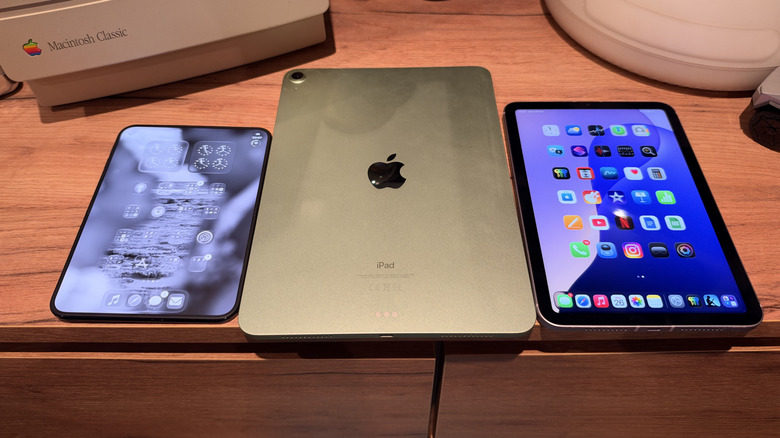
At 7.6 inches, the iPhone Duo's inner display is smaller than every iPad in Apple's lineup. The latest iPad mini is 8.5 inches, the base iPad and the 11-inch iPad Air sit near 11 inches, and the 13-inch Air and 13-inch Pro are the largest. The Duo's 5.4-inch cover screen carries 90% of the screen area of an iPhone 18 Pro, which is why full apps work well on it.
The Duo's inner display reaches 3,000 nits of peak outdoor brightness with a nano-texture finish, ProMotion, and Always On. Interestingly, it can dim down to just one nit for nighttime reading. The M5 iPad Pro and its tandem OLED manage 1,000 nits for SDR and 1,600 nits peak on HDR content, the new iPad mini tops out at 1,200 nits, and the Air and base iPad still use LCDs rated at 500 nits, or 600 on the 13-inch Air. ProMotion — Apple's 120 Hz refresh rate — only comes on the Duo and the iPad Pro. The Duo and the new iPad mini share the A20 Pro chip, which is the same one that's in the iPhone 18 Pro.
It leaves the A16 chip in the base iPad behind by a few years now. Apple's other iPads all sport M-series chips brought down from the Mac lineup. The M4 chip in the iPad Air brings an 8-core CPU and 12 GB of memory, while the M5 chip in the Pro goes to 10 cores and up to 16 GB. The Duo has a 48MP Fusion Main with a 2x digital crop, a 48MP Fusion Ultrawide, a 12MP Center Stage selfie snapper, and an under-display FaceTime camera on the inner display. Meanwhile, all other iPads come with a 12MP front and rear camera.
Accessories support
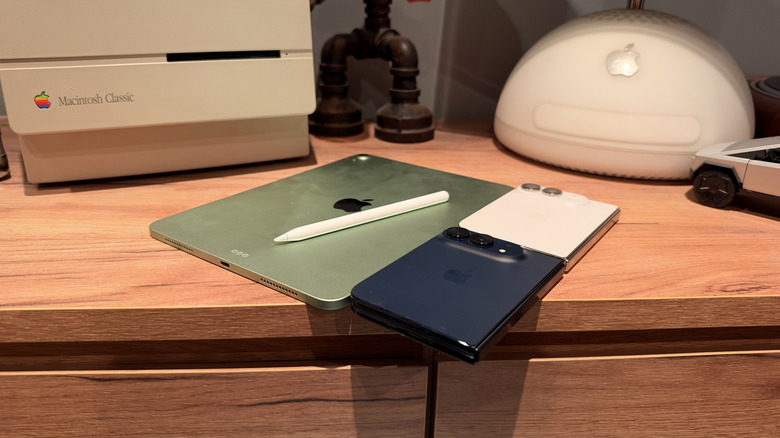
Support for the USB-C Apple Pencil will arrive later this year for the iPhone Duo, which covers notes, sketches, and Markup on either display. Every iPad except the base model works with Apple Pencil Pro, which adds squeeze, tilt, roll, and Find My support. There is no official way to carry a Pencil on the Duo, though it clings to the hinge magnets firmly enough that I have not lost one yet. It will magnetically attach to the side of most iPads, however.
Neither the Duo nor the iPad mini has a first-party keyboard option, but they can pair to any regular Bluetooth keyboard — which will probably be larger than the device itself. The base iPad pairs with Apple's Magic Keyboard Folio, while the Air and the Pro support a Magic Keyboard with a trackpad and proper cursor support. That's one of the main arguments for why an Apple tablet can stand in for a work laptop.
Apple offers a $79 case or a $129 Folio with a kickstand for the Duo. MagSafe wallets and many other accessories you may use every day do not fit because the phone is too short. However, the Duo can prop itself up in Tent Mode with the hinge, acting as sort of a stand for itself — so the Folio is less of a necessity. The new iPad mini gets a TechWoven Smart Folio with adjustable viewing angles, and every other iPad has a folio of its own.
Can the iPhone Duo replace your iPad?
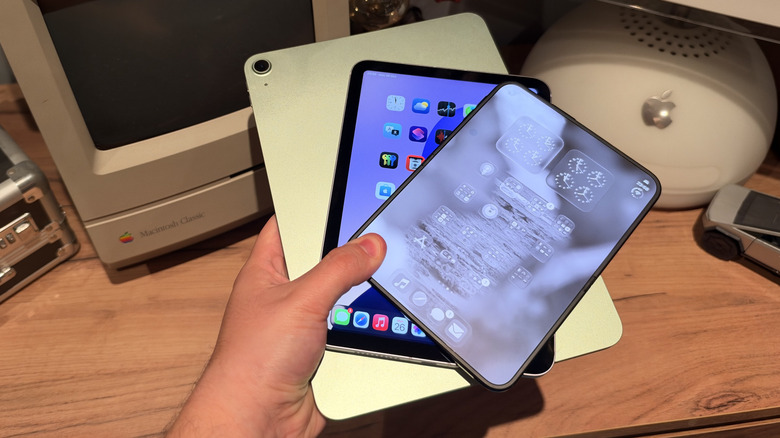
Whether the iPhone Duo will replace your iPad or not depends, though the iPad mini is probably the only Apple tablet you could replace without much inconvenience. Reading, scrolling, video, and browsing all work remarkably well on the Duo's inner screen, and it fits in a pocket while doing them, which no iPad manages. The 2024 iPad mini's biggest weakness was its screen, and the Duo beats even the new OLED iPad mini on brightness and refresh rate.
The base iPad is still the best value option. At $1,999, the Duo starts higher than any iPad in the lineup. Apple's $449 11-inch tablet remains the easy recommendation for most people for that reason alone. iPad Air owners have more to consider. An 11-inch or 13-inch screen gives you far more room than the Duo, but the LCD panel won't look as good as the Duo's. But the M4 chip handles more than the A20 Pro will, so it's a better option for performance.
Anyone who mostly watches and browses on an Air could hand that job to the Duo and lose only screen size, but those who work on an Air should probably stick with it. iPad Pro owners should definitely keep their tablets. The Tandem OLED display, M5 chip, Magic Keyboard with a trackpad, and an external display support are well beyond what the Duo offers, which makes it the right pick for productivity.