

9 Cool New Gadgets You Can Only Find In China

China's position as a global manufacturing leader is nothing new. It started decades ago as the country rapidly industrialized, leveraging its large population to offer cheaper labor than many other countries in the world. This created an ecosystem where cutting-edge gadgets would be conceptualized and designed in Silicon Valley, but manufactured at a lower cost in China. That's not the case anymore. Today, China stands at the cutting edge of global manufacturing, including the research and development of new technologies.
It is more common now for innovative gadgets to be invented entirely in China and manufactured first for the domestic market, before arriving in the West as Silicon Valley plays catch-up. The country has mostly shed the taint of churning low-quality products and instead produces high-quality luxury goods, along with affordable options that are miles better than most alternatives you will find elsewhere. A big reason behind this is China's mastery over the entire electronics pipeline.
From the screens to the batteries, the sensors, or the USB ports, everything is made close by in China, putting the complete supply chain in one place. This makes innovation easier, as a new product can be conceptualized and prototyped quickly, with easy access to customized parts, unlike the United States, where you will likely have to wait for weeks for the right components. You will see this in practice in every tech expo, where Chinese companies roll out cool new gadgets that are a step beyond anything in the global markets. Skeptical? Let's look at some examples of groundbreaking devices only available in China.
Character pod AI assistants

Asking ChatGPT trivial questions or seeking advice on life problems feels very natural. And that's just base-level stuff, as some users say that many AI chatbots are better than ChatGPT, conversing in a manner that feels like talking to a virtual companion. Some apps have been trying to take this dynamic even further. Grok went viral last year with its AI personas, featuring a stylized character on the screen with expressive gestures and synthesized voice instead of just text chat.
But even this approach has its limits. The flatness of the phone or computer screen is very apparent, making it clear that you are not dealing with a virtual person but just some pixels under glass. Its range of expressions is also very limited, and it does not react to touchscreen inputs or remember past conversations. Recognizing these deficiencies, researchers and engineers in China created the character pod AI. There are multiple brands with their own offerings, but the core idea is the same — a cylindrical device with a curved OLED screen, giving the character a three-dimensional presence.
The character can even face the camera, so it can hold conversations while looking into the (real) person's eyes, and the AI is programmed with a more varied set of animations to feel more expressive. The AI models used are also advanced, keeping track of past interactions and responding naturally like a true virtual companion. Some models are even integrating professional voice acting to give the character a higher-quality sound than the monotone synthesized AI voice.
Xpeng Land Aircraft Carrier
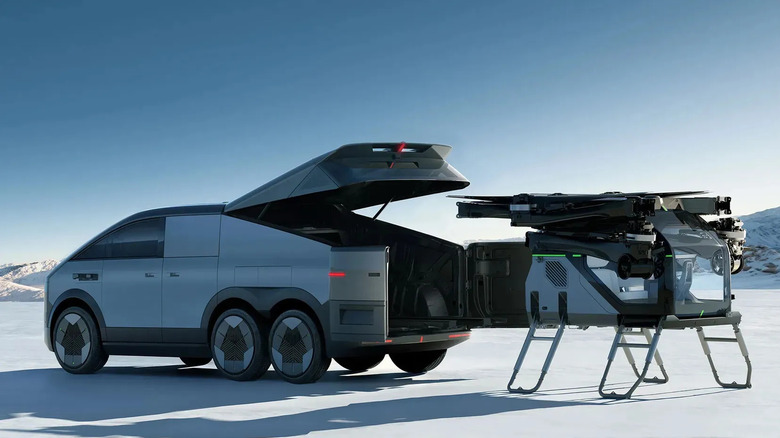
China's best-known technological success story right now is perhaps the electric vehicle. Tesla's products may be more iconic, but it is Chinese EVs that are taking global markets by storm. Not only are these cars cheaper, but they also offer a lot more variety than models made in the West, and without much, if any, sacrifice in quality. China has made incredible advances in both battery technology and engines, allowing the country's engineers to innovate faster in this space than its competitors.
Chinese EVs are already coming to Canada, though their release in the US still remains uncertain. Europe is a major market, too, but the biggest consumer base still remains China itself, and the manufacturers continue to roll out innovative new cars to make an impact in this competitive landscape. All of which brings us to Xpeng, a well-known EV brand, which announced something more incredible than most companies are even dreaming about at this point – a flying car. At least, sort of.
Officially, Xpeng calls it the Land Aircraft Carrier. What this means is that instead of a car that can fly, you get a car that releases a flying craft instead. It's a pretty far-out thing to imagine, but it's real. The Xpeng Land Aircraft Carrier is a six-wheeled EV that detaches a large quadcopter when needed, carrying two people in flight over short distances. And the company is already taking orders, ready to ship out by the end of 2026. This certainly must be the wildest product on our list (right?).
Body Park ATOM AI fitness trainer
Fitness gadgets started with some basic sensors in smartwatches, which could give an estimate of how many miles you have covered. But sensors improved, and we got proper fitness bands that track multiple health metrics, from heart rate to the steps walked, and do it with a surprising level of accuracy. Then we got smart rings that can do complete fitness tracking with an unobtrusive form factor, making it even more convenient.
Now we even have AI. Google Health is built upon Gemini AI, and there are many other fitness apps you can try instead of Google Health, as well. These apps take the data being tracked by your fitness bands or rings and provide smart analytics on them, building a picture of your overall health and advising you. But even AI can only do so much with sensor data.
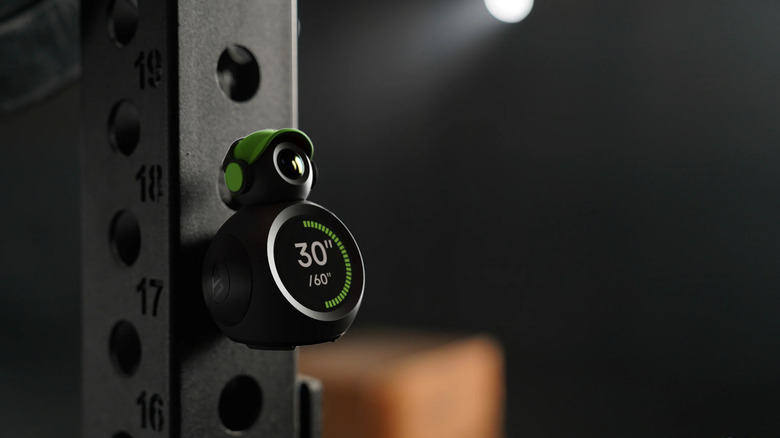
In particular, AI cannot see you exercise or count the number of reps you are doing during your workout. It cannot judge if you have the correct form while performing a set. That's where the ATOM, from Chinese fitness technology company BodyPark, comes in. It is basically an AI fitness trainer that lives inside a smart camera device, instead of an app on your phone. You place it nearby or snap it to a surface using the portable mount when you work out, and it tracks your exercise. It can count your reps, correct your form, and guide you like a personal fitness coach, complete with voice interaction.
Quanta X1 Pro
There is a robotics arms race going on in the world right now. Be it the US, China, or Japan, companies in leading nations are trying to perfect humanoid robots. And amazing developments are emerging on an almost daily basis. Companies have showcased dancing robots, running robots, even robots doing martial arts. But why, then, do we not see these robots actually playing a role in the real world? Are these showcases even real?
Kind of. You see, while it is true that machine learning advances have made more dextrous humanoid robots possible, the fact remains that this only works well in controlled settings. In the sterile workshop devoid of complications, these robots can indeed achieve incredible feats. Unleashed into a normal room, these same robots are reduced to confusion, unable to deal with the randomly placed objects and the uncertain stimuli.
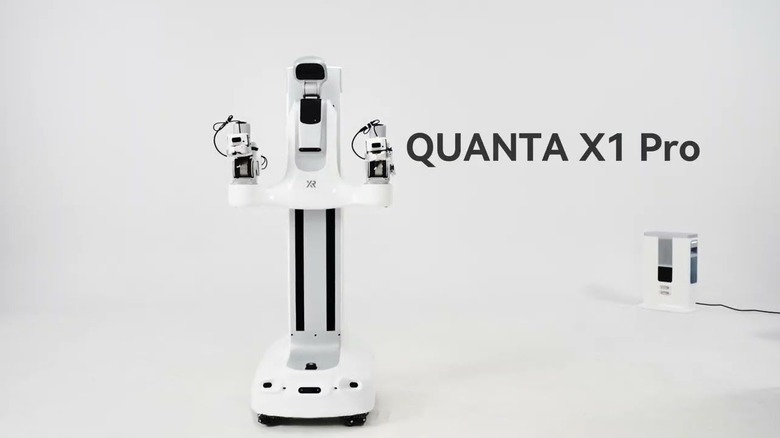
This is why if you look at the best home robots that can solve everyday problems, you will find simpler designs, nothing with actual arms. But if you live in Shenzhen, China, you can hire a house cleaning robot that can pick up objects and do simple chores around the house. Called the Quanta X1 Pro, this newest offering from X Square Robot is designed to operate in chaotic home environments, dextrously handling even delicate objects like flowers without damaging them. It is still slow, but it learns (backed by the WALL-B AI world model), and as it rolls out across houses, doing odd jobs, it improves even further.
AYANEO Pocket Play
The gaming handheld market has really heated up over the past few years. The handheld form factor, of course, has been around for decades, with Nintendo consoles like the Game Boy Advance and PlayStation's PSP portable defining the market. Fast forward to now, where we have options like the Steam Deck and the Nintendo Switch. Portable hardware has come really far, and now it is possible for a small handheld to offer a complete gaming experience on par with a home console, often running the same games as well.
The Steam Deck, in particular, took the market by storm, offering the complete PC gaming library on a handheld. For this reason (among others), people are still buying Steam Decks for almost $1,000. Of course, China has started making inroads into this market, as well, with manufacturers like AYANEO offering equally powerful gaming handhelds at much lower price points. Chinese brands even make Android handheld consoles that can play retro games through emulation for a budget portable-gaming experience.
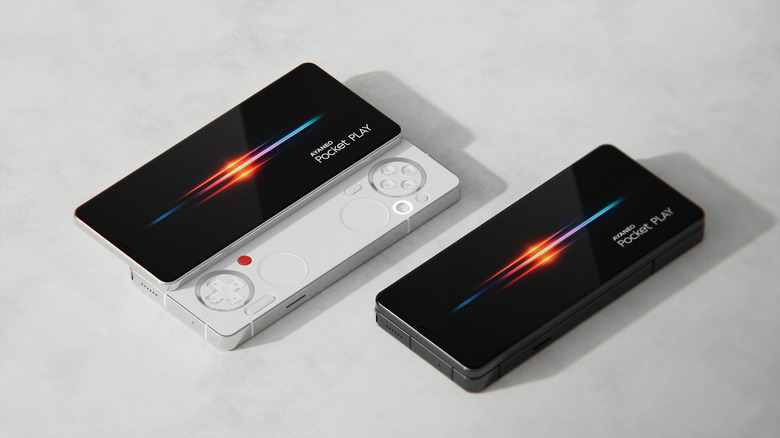
All of this begs the question: What if we could have a smartphone that could also double up as a gaming console? Well, that's exactly what the AYANEO Pocket Play is about. It is a fully functional Android smartphone with an OLED touchscreen, equipped with a deck of controls that can slide out, turning it into an equally functional handheld gaming device. You get all the features of both types of devices: camera, D-pad, access to smartphone apps, and the latest video games across many platforms, all on one device.
Climbing robot vacuums
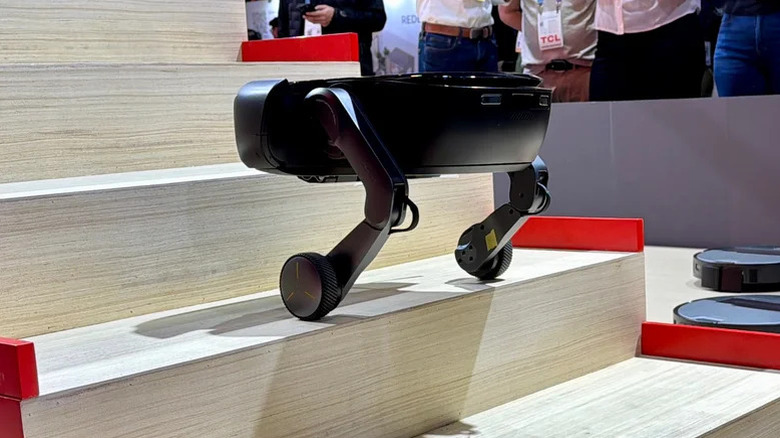
Robot vacuums are not a new technology. You set one up, and it automatically travels around the house vacuuming the floors, occasionally tripping up on tricky obstacles or corners. It is these edge cases that companies have been trying to solve, creating ever smarter robot vacuums that can navigate messy spaces without getting stuck. But one obstacle that has stumped robot vacuums for years is stairs.
In fact, none of the best robot vacuums you can buy in 2026 can handle stairs. It is not a question of how smart the robot is — no matter how good the AI agent is, it cannot make a small wheeled disk climb vertical stairs. What is needed is a completely new form of mobility that can handle the normal floors while also having a way to scale vertical surfaces. And Chinese brands have done just that.
The Roborock Saros rover solves this problem with a unique design. It has a rectangular body instead of the usual disk, with two thick wheels, one on each side of the unit. The wheels are actually at the ends of two folding legs, and when the vacuum encounters stairs, it unfolds these wheeled legs to actually stand up. This lets it climb stairs while also cleaning them, one step at a time. The Dreame Cyber X, on the other hand, features a mobile docking station. The robot vacuum is normal, but the carrier itself is a rover that can quickly ascend stairs, releasing the vacuum at the next floor to continue cleaning.
Honor robot phone

The whole social media craze means that people are serious about taking videos now. Instagram influencers and viral TikTok channels have taught us the value of professionally shot video, with smooth transitions and creative camera angles. The camera quality itself can be fixed by buying a better phone (or a proper camera), but the angles and the stability are trickier to achieve.
One way is to get a camera drone. A drone like this can hover around at any given position, accurately tracking your movement and taking aerial shots. While this works well, it also involves learning how to operate a drone, which is not everyone's cup of tea. The second, and more popular option, is to use a gimbal. A gimbal is basically a robotic arm that clasps a camera or a phone to maneuver it, providing stable shots on any needed angle without the hassle of a flying drone.
You can buy some great gimbals for your iPhone and start shooting like a professional, but this approach can feel a bit clunky, too, and it distances the phone from you. So Honor, the Chinese phone maker, devised an ingenious solution – a robot phone. It is basically a smartphone with an integrated gimbal arm, with the back camera attached to the end of the arm instead of embedded in the phone body. The robot is AI-powered, so you can control the camera through voice commands, having it track objects or give spinning shots, and then fold neatly into the back to look like a normal phone when not needed.
LiberLive C2
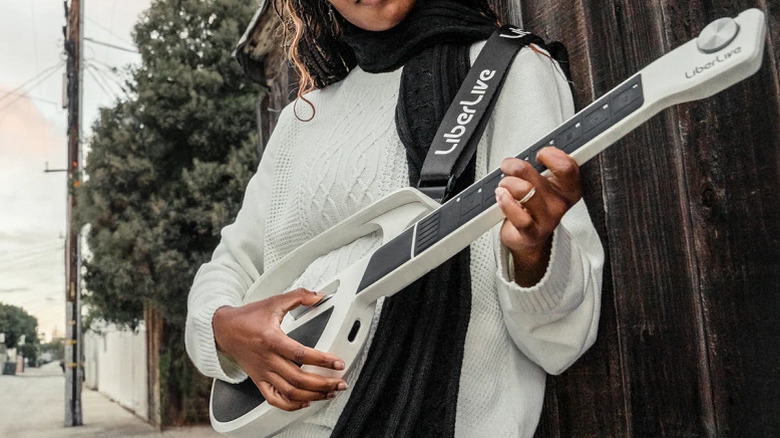
LiberLive, a Hong Kong-based music technology company, gained fame a few years ago when it released the world's first stringless guitar. That may sound like an impossible line, but it's true — the LiberLive C1 features no strings, metallic or otherwise, and instead incorporates buttons and touch-sensitive areas on its stem to act as the controls. No getting your fingers scratched on the sharp strings or struggling to find the perfect spot and force to pluck them. You just hold the stem, strum the smooth paddle button, and it plays.
More than just stringless, the LiberLive C1 is a smart guitar. You can select songs to play with the companion app, and the chords you need to hit light up, paired with a proprietary chip that uses sampled sounds to match the tune. This made it an immediate hit for guitar beginners, but it didn't find much purchase with more skilled players. After all, a guitar like this couldn't capture the expressivity and dynamism of strumming on an acoustic guitar.
Enter the LiberLive C2. Instead of simply playing sampled audio files, this model features a full-fledged dynamic audio system called the LiberAOS. This system takes into account the pressure applied by the player or the angle of the magnetic pick to modify the output tone, mimicking the fluid, expressive sound of an acoustic guitar. Any beginner can pick up this guitar and start playing quality music without extensive skill or training, making it a truly one-of-a-kind instrument.
Unitree GD01
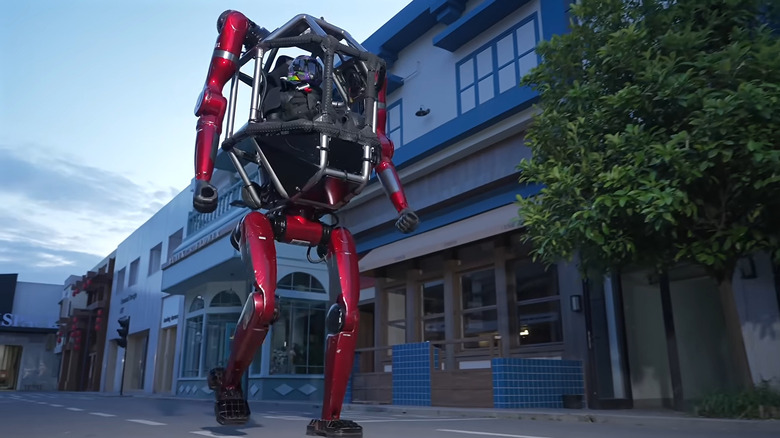
Remember how we said that the flying car was the wildest product on this list? Well, we lied. This one is even more extreme. Because while a flying car has been anticipated for decades now, the concept of a human-piloted mecha is straight-up science fiction. Oh, we have seen it in movies and video games, sure, but it has always been considered impractical. Of course, recent years have brought advances in many related technologies that are not quite mecha but still adjacent to it.
Robotics in China has progressed greatly, with many practical offerings coming out for military or industrial usage. Robot dogs, for example, can carry heavy loads and traverse complex terrain, designed to work as research assistants or intelligent scouts. Then there are the increasingly complex AI exoskeletons that give people superhuman power, strapping onto legs to seamlessly support their weight and movements. This, many felt, was the closest we would get to a proper humanoid mecha.
Then Unitree showcased the GD01. It is a massive humanoid robot with arms, legs, and a cockpit for a human pilot to sit in. The CEO of the company himself demonstrated piloting this futuristic mecha, walking around a workshop upright and knocking over a wall, suffering no personal or mechanical damage. The GD01 can even transform into a quadruped mode to handle movement across more uneven terrain. And the wildest part is that this is not some one-off prototype, but an actual robot you can buy ... provided you can shell out $650,000.