

The 4 Most Powerful Foldable Phones You Can Buy Right Now
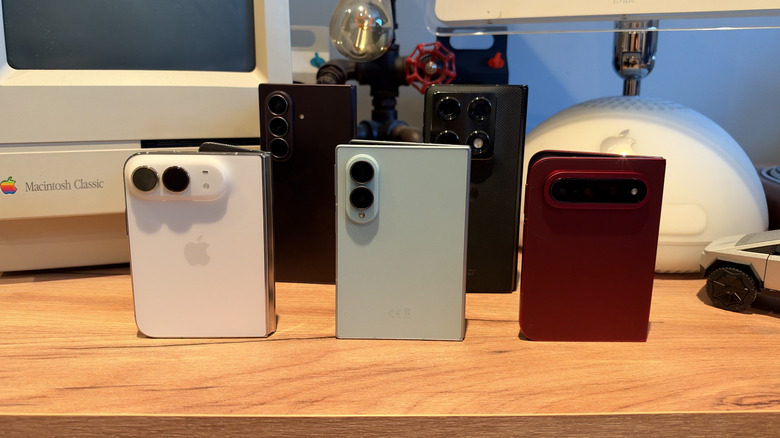
When Apple launched the iPhone Duo in October 2026, the foldable market became a little more competitive. Foldables arguably require a bit more power than regular slab phones. After all, a foldable phone has two displays, far less room for cooling, and gives up battery space to a hinge. While a benchmark score is a good way to tell you how a device performs at its best, what tends to matter more is what it's like in the real world. How many apps can it run without freezing up, does the battery really last all day, and is the camera good enough?
Comparing all the foldable phones that were released in 2026, I have singled out what I believe to be the four most powerful when it comes to actual usage. I have carried every single one of these phones in my pocket, in addition to other foldables that didn't make the cut, like the formidable Xiaomi 18 Fold and Motorola Razr Fold. Additionally, BGR has reviewed every phone here. The selection below is based on peak performance, sustained use, daily life, and camera hardware together.
Apple iPhone Duo
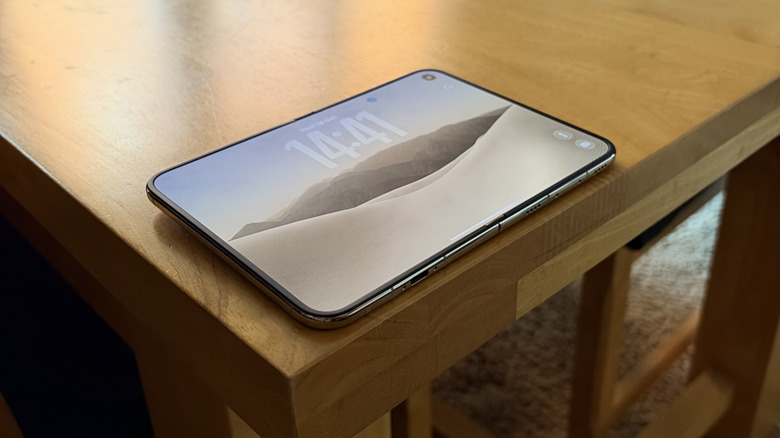
Apple's first foldable packs the A20 Pro chip, the same 2 nm processor that can be found in the iPhone 18 Pro. It's composed of a 6-core CPU, a 7-core GPU, a dual 16-core neural engine, and has 50% more memory bandwidth than the iPhone 17 Pro. When I tested the phone, it scored 4,002 in the Geekbench 7 single-core test and 11,123 in multi-core, putting it on the same level as Apple's slab flagship for 2026.
Apple has squeezed a vapor chamber and a flexible graphite layer across both halves of the Duo's body, and it claims up to 35% higher sustained performance than the iPhone 17 Pro. After using the phone for a week, I found that demanding games, photo editing, and running two apps side by side in split view all worked smoothly. Moving between the 5.4-inch outer display and the 7.6-inch inner display was always seamless. However, the Duo does get warm around the camera bump — warmer than the iPhone 18 Pro doing the same work.
The camera is where the $1,999 price stings. Apple only offers 48 MP sensors, a 2x digital crop, and no dedicated telephoto lens, which leaves photography closer to an iPhone 17 than an iPhone 18 Pro. At just under 9 ounces, it's also the heaviest iPhone Apple has ever built. If you're choosing between Apple and Samsung, I've put the iPhone Duo and the Galaxy Fold 8 head-to-head, and I've also tested whether the Duo can take over from your iPad.
Samsung Galaxy Z Fold 8 Ultra
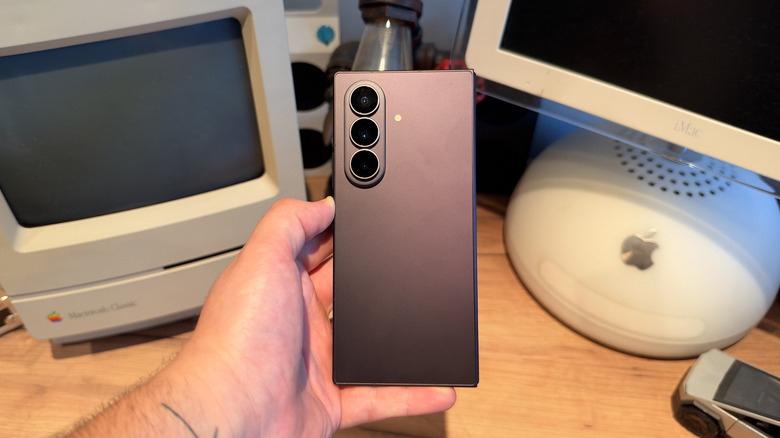
Samsung's most capable foldable packs the 3 nm Snapdragon 8 Elite Gen 5 for Galaxy with 12 GB or 16 GB of RAM. BGR's Galaxy Z Fold 8 Ultra review found that the device scored 3,666 single-core and 10,878 multi-core in Geekbench 6, and our reviewer found it handled heavy multi-window work and mobile gaming without complaint. Samsung's Ultra foldable uses the same processor as the standard (and cheaper) Galaxy Fold 8, so the Ultra name doesn't mean you get a faster processor. What it buys is everything else this foldable phone does well.
The inner display is an 8-inch LTPO AMOLED 2X panel with a 2,256-by-2,504 resolution, 3,000 nits of peak brightness, and an anti-glare coating. The 5,000 mAh silicon-carbon battery cell inside is the largest that Samsung has fitted in a book-style foldable to date — only the Galaxy Z TriFold had a bigger battery. You get a 200 MP main camera sensor with optical image stabilization (OIS), a new 50 MP ultrawide lens with a 120-degree field of view, and a 10 MP 3x telephoto lens — which is the only optical zoom lens in any of Samsung's 2026 foldables.
At $2,099, this is the most expensive phone here, and not everything is perfect. The IP48 water- and dust-resistance rating means the handset only offers limited dust protection, which could be problematic for a folding phone. There are no built-in magnets for Qi 2.2 alignment, and low-light detail trails the Galaxy S26 Ultra. The camera module is also thick enough that the phone rocks when it's flat on a desk.
Google Pixel 11 Pro Fold
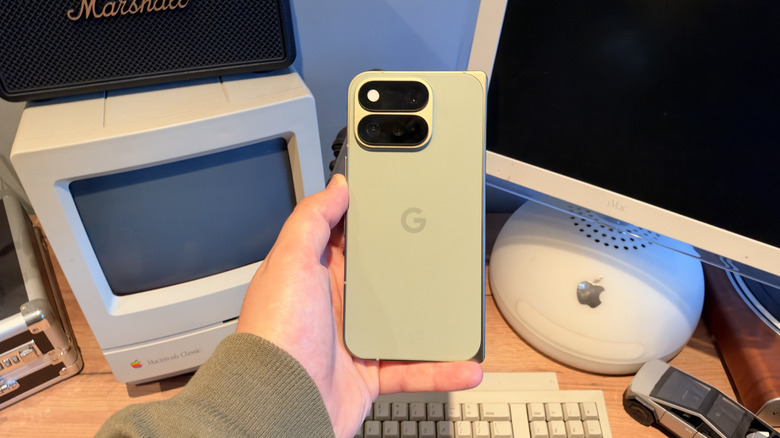
Google's 2026 foldable phone isn't on this list because of its peak benchmark scores. In fact, the Tensor G6 processor inside the Pixel 11 Pro Fold falls well behind the Snapdragon 8 Elite Gen 5 on raw numbers, has no ray tracing support, and makes gaming the weakest part of the phone. There are plenty of Android phones that outrun the Pixel 11 series on silicon alone. But this phone can do plenty of other things that make it a powerful handset.
The 16 GB of RAM makes this the best multitasker in Google's 2026 phone lineup by a wide margin. Both the Pixel 11 and the 11 Pro XL struggled under heavy multitasking, dropping frames and lagging behind my typing. But the 11 Pro Fold fared much better and stayed cool through extended use in warm weather. The cameras are the best of any foldable on this list, as the Pixel offers a 48 MP main sensor, a 10.5 MP ultrawide lens with autofocus, and a 10.8 MP 5x telephoto lens that reaches 30x with Google's AI-assisted Super Zoom.
Durability holds up too, as the Pixel is the only other foldable besides the iPhone Duo to offer IP68 water- and dust-resistance. Plus, it has a ceramic outer display and a glass fiber composite back. At $1,899, its weak spots are a 4,750 mAh battery that only gave me five to six hours of screen-on time, 30 W charging, and a crease you can both see and feel. I've compared the Pixel 11 Pro Fold with the Galaxy Z Fold 8 and compared it to the iPhone Duo if you're torn between them.
Samsung Galaxy Z Fold 8
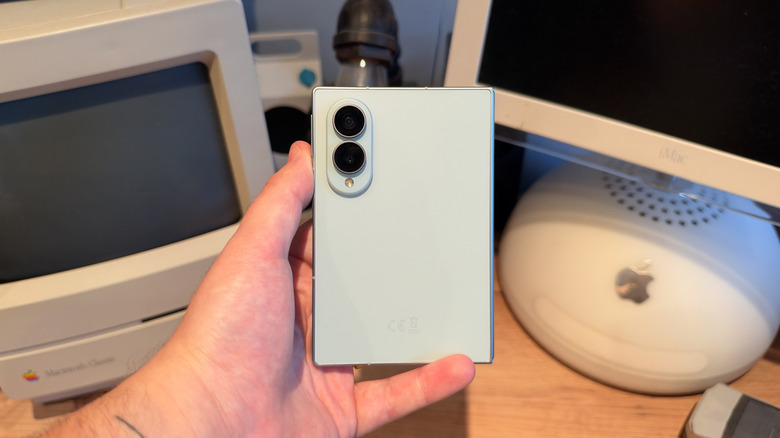
The regular Galaxy Z Fold 8 packs the same Snapdragon 8 Elite Gen 5 for Galaxy processor as the Ultra handset, and also has the same 12 GB and 16 GB RAM options. That's great if you prefer the smaller passport-style shape, as you don't have to sacrifice performance to get it. BGR's review found it never dropped a beat across split-screen apps, web pages, or switching between the two displays.
The Fold 8 measures 0.18 inches thick when open, which leaves less room inside for cooling than the Ultra has. As a result, our reviewer found that it runs warmer than a similarly powerful slab phone during long gaming sessions, though it never throttled to the point of frustration. The Fold 8 offers two 50 MP lenses — a main and an ultrawide — with no optical zoom of any kind. Instead, it relies entirely on digital crop up to 10x (like the iPhone Duo), and detail starts to blur together the more you zoom in. Like its Ultra counterpart, it also only has an IP48 rating, and it is missing Qi 2.2 magnets.
But the device also does plenty right. The 7.6-inch inner display is a 4:3 panel at 2,448-by-1,848 resolution, both screens hit 3,000 nits, the 4,800 mAh battery can last for a full day of heavy use, and 45 W wired charging reaches roughly 65% in half an hour. At just over 7 ounces, it's the lightest foldable in this list.
How we ranked these foldable phones
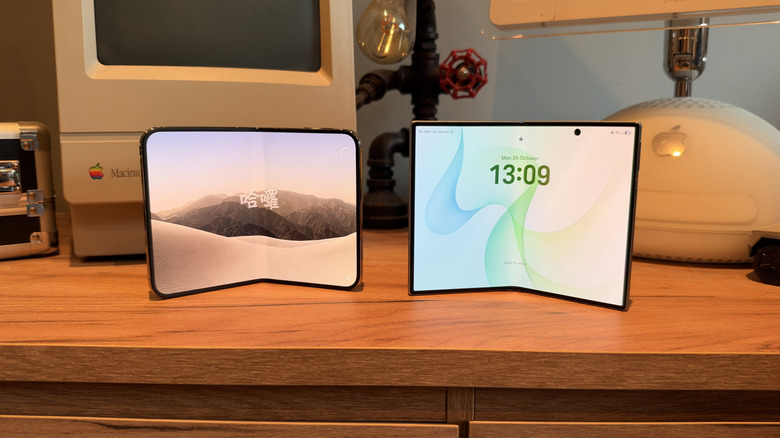
Every device here has been tested and reviewed by BGR. I also have each of the devices in this list myself, and have carried each of them around in my pocket.
To rank these foldable phones, we considered a number of factors. We looked at peak performance first, which was measured through Geekbench benchmarking scores and our first-hand use of the devices. Sustained performance matters more on a foldable than it does on a slab phone, which is also why we relied on our own testing of the devices to see how they fare in longer sessions.
We also looked at RAM, which can be particularly important when you're running two apps on a large inner display. Next, we considered camera hardware, since a phone with a fast chip but a bad camera probably isn't one you actually want to use. Finally, we considered availability, as we cannot recommend a phone you can't buy globally no matter how good the hardware is.