

BGR's Best Of Tech Awards 2026

We may receive a commission on purchases made from links.
As we approach the final stretch of 2026, it's inevitable that we start thinking about the electronics that defined the year. While the continued spread of AI -– and the explosive rise of memory prices that resulted -– dominated headlines, the year was still loaded with interesting, noteworthy releases, from powerful smartphones and laptops to unique smart home devices. We covered many of them exhaustively throughout 2026, and for BGR's first annual Best of Tech awards, we put our heads together to identify the top new releases across more than two dozen categories.
The winners on this list were selected based on BGR's own hands-on coverage, reviews, and extensive editorial experience. We looked at a variety of factors when picking each winner, including build quality and performance, and the result is a list of every device that stood out among its competitors and set the standard for what consumers should expect from their tech. Whether you're looking for a new pair of headphones, a sleep-tracking smart ring, or your next gaming laptop, our picks have you covered.
Best premium smartphone: Galaxy S26 Ultra
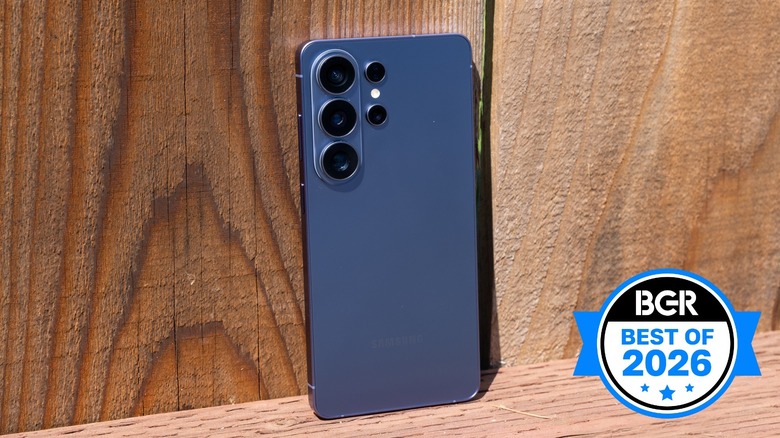
While the iPhone 17 Pro was no slouch this year, the iPhone 17 stole the show by adding a selection of features that were previously exclusive to the Pro models. As a result, the door was left slightly ajar for another brand to swoop in and snag the title of the best premium smartphone in 2026, and that's exactly what Samsung did with the Galaxy S26 Ultra.
As we explained earlier this year, the S26 Ultra doesn't break too much new ground, but the changes Samsung did make were welcome. For instance, "the blocky, square design of Ultra devices is gone now, in favor of a design that's more in line with the other devices in the Galaxy S26 series." Then there's the new Privacy Display feature, which we dubbed "downright cool." It's more than just a gimmick, especially if you work from your phone on long commutes and want to keep your messages and documents safe from prying eyes.
Those changes and additions are complemented by first-rate performance, speedy charging, and four capable rear cameras. As always, there's plenty of competition in this price range — some of which might meet your demands even better than Samsung's latest premium slab — but the Galaxy S26 Ultra squeaks out the win for us this year.
Best affordable smartphone: Google Pixel 10a
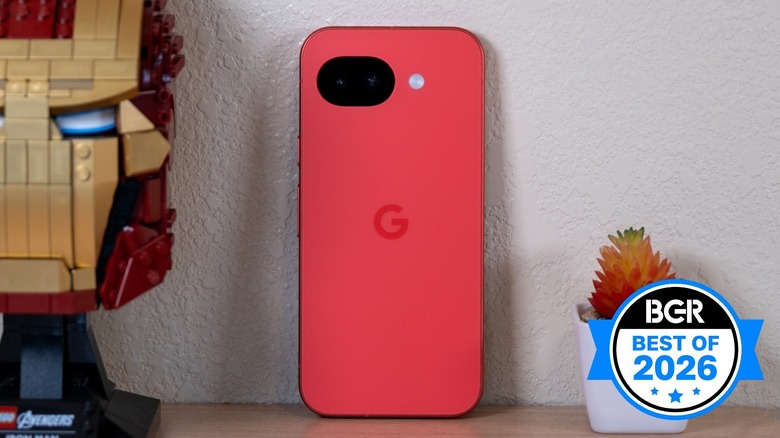
With the same chip, design, battery, and camera as last year's model, the Pixel 10a might seem like a surprising addition. Here's the thing: boring doesn't necessarily mean bad. If you aren't loyal to a single brand, the affordable Android sector can be overwhelming, but rather than taking a risk on a device from a vendor you might not be as familiar with, the safest bet might also be the right one.
As noted in our Pixel 10a review, the device "looks and feels decently premium despite its lower price," which starts at $500 for the 128GB model. Other notable assets of the phone include its bright, sharp, and responsive display, approachable software interface, and sleek design. Plus, while the camera isn't quite the best you'll find on an affordable phone, we found that "shots from all three cameras come out sharp and well-exposed in daylight and indoor conditions."
The most obvious caveat here is that Pixel 9a owners aren't going to find many reasons to upgrade this year. That said, anyone else in the market for an affordable, feature-rich phone with a great camera should strongly consider the Pixel 10a during their search.
Best foldable smartphone: Galaxy Z Fold 8
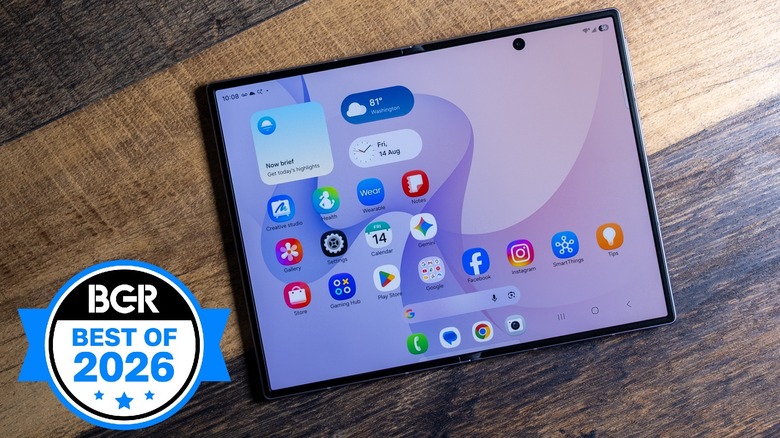
To address the elephant in the room: we weren't able to get our hands on the iPhone Duo prior to the publication of this list. That said, Samsung has had many more years to figure out foldable phones in the meantime, and the Galaxy Z Fold 8 might be its most complete attempt yet. And it's not just the more squat form factor that attracted attention — this is an all-rounder with impressive specs, top-flight performance, solid battery life, and a price that undercuts much of the competition.
If you were curious about foldables but were looking for a middle ground between the sizable Z Fold and the compact Z Flip, Samsung has heard your pleas. On the outside is a slightly undersized 5.5-inch cover display, while the inside features a bright, impressive 7.6-inch AMOLED display. The Snapdragon 8 Elite Gen 5 chipset within means it can handle any mobile game or productivity task you throw at it, and a hefty 4,800mAh silicon-carbon battery keeps the dual-screen device running all day.
"The Samsung Galaxy Z Fold 8 is one of the most refined book-style foldables Samsung has made, and the passport shape makes it unique among foldable devices in 2026," reads our review from August — one month prior to Apple revealing its own passport-shaped foldable. That doesn't take away from Samsung's accomplishment here or the overall refinement of Samsung's line of foldable devices over the past eight years. The Z Fold 8 is a sharp, premium, efficient smartphone that made its mark.
Best gaming smartphone: RedMagic 11S Pro
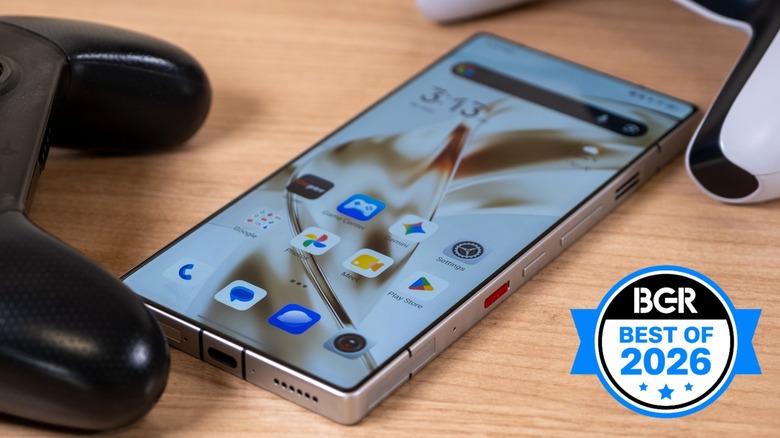
Most modern smartphones are more than capable of tackling any mobile game you throw at them, but with console emulation advancing at a rapid pace and innovative solutions like GameSir's GameHub app bringing PC games to Android, there's a growing market for incredibly powerful phones. Among those devices, the RedMagic 11S Pro currently reigns supreme.
Despite its relatively affordable price point, the phone has some of the highest benchmark scores of any mobile device we've ever tested. But, as noted in our RedMagic 11S Pro review, numbers are just part of the story. "What sets the 11S Pro apart is how long it maintains that performance," we wrote, and you're unlikely to find many phones with sustained performance that outlasts the RedMagic.
It's not a phone we'd recommend for just any consumer, but beyond its raw performance, the 11S Pro also features a 6.85-inch AMOLED display, long-lasting 7,500 mAh battery, surprisingly competitive durability, and software that puts deep customization at your fingertips. There are some clear compromises, such as the subpar cameras and relatively loud fan noise when the device is being pushed to its limits, but those are tradeoffs many mobile gamers will be willing to make.
Best premium laptop: MacBook Pro (M5 Max)
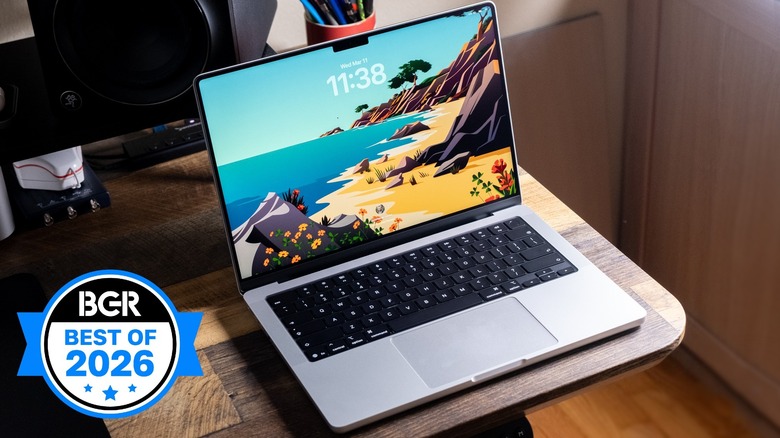
If your job requires a true powerhouse of a laptop on a daily basis, look no further than Apple's latest rendition of the MacBook Pro. Starting at $4,099 for a 14-inch model and $4,399 for the 16-inch, the 2026 MacBook Pro with an M5 Max chip is basically daring you to throw something at it that you think it can't handle. Whether you work in AI, graphic design, video editing, or filmmaking, there's almost nothing this laptop won't be able to run smoothly.
As always, there's a fairly wide variety of options when customizing the MacBook Pro, but every M5 Max model features at least a Liquid Retina XDR display, 18-core CPU, 32-core GPU, 36GB of unified memory, 2TB of storage, 72.4Wh lithium-polymer battery, a six-speaker sound system, and a 12MP Center Stage camera. Connectivity options include three Thunderbolt 5 ports, HDMI port, SDXC card slot, 3.5 mm headphone jack, and the ability to connect up to four external displays at 60Hz and 6K resolution.
Admittedly, your personal laptop needs might steer you in a different direction, and there is certainly plenty of viable competition on the market. But if you need a machine that will last you for years to come, the M5 Max MacBook Pro won't let you down. As we said in our M5 Max MacBook Pro review, it's "an incredible laptop for those who need the best and are willing to pay for it."
Best budget laptop: MacBook Neo
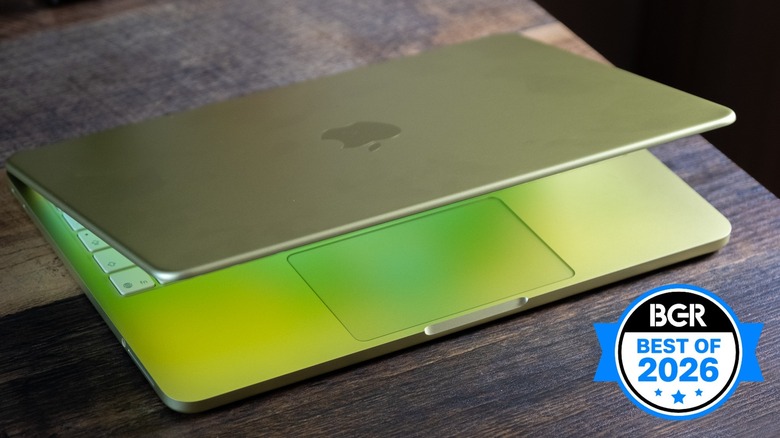
Due to ballooning memory prices, the MacBook Neo isn't quite as good of a deal as it was when we reviewed it, but even a $100 price hike doesn't take away from the value proposition on offer here. For $699, you get 8GB of RAM, a 256GB SSD, a Liquid Retina display, an aluminum enclosure, and an affordable entry point into Apple's macOS ecosystem. If you mostly use your laptop for sending emails, browsing the internet, and drafting documents, the MacBook Neo is a no-brainer.
In our MacBook Neo review, we noted that A18 Pro system-on-chip that powers the laptop "isn't just capable — it actually beats plenty of laptop-class chips on the Windows side and even many of Apple's older M-series chips." While this laptop might be a step down from the likes of the MacBook Pro, it's no slouch, and handily outperforms many pricier options. Unless you're a multitasking power user, the MacBook Neo should handle whatever you throw at it.
Then there's the design. Affordable laptops often look and feel cheaper than premium alternatives, but that's not the case for Apple's 2026 release. We said the MacBook Neo "[redefines] what laptops in this price point should feel like," and we stand by it months later. Combine the elevated performance and design with a long-lasting battery, an excellent keyboard and touchpad, and a solid display, and the MacBook Neo notches a decisive victory — even if it does start at $699 now.
Best gaming laptop: Alienware 16X Aurora
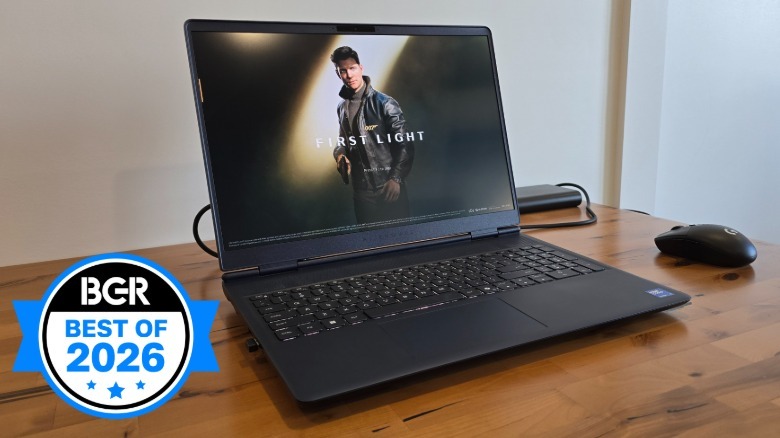
Alienware's middle-tier gaming laptop, to much success, endeavors to offer impressive gaming performance in a premium, unassuming package. The Alienware 16X Aurora eschews the brand's iconic out-of-this-world styling for something more subdued, without compromising on performance. With up to a 5070 Ti mobile GPU, 32GB of RAM, and an Intel Ultra 9 290HX Plus processor, this laptop could handle most games thrown at it with ease. And per our review, "when all these components are combined together is where Alienware truly shines."
While it certainly can perform double-duty as a gaming and productivity machine, "the greatest mileage you'll ever get out of the Alienware 16X Aurora is from its primary directive" in playing games. Titles like "Cyberpunk 2077," "Red Dead Redemption 2," "007 First Light," and more all ran at high settings with impressive framerates. Paired with that impressive 16-inch, 1600p OLED screen (new to this generation), gaming on the laptop screen alone is an excellent way to enjoy your favorite titles.
The only thing you realistically sacrifice with the Aurora is on the productivity side, as you have to make some concessions like poor port placement and battery life. One benefit to the softer, more elegant exterior design, along with "Stealth Mode" for quieter gaming, is how incognito this laptop can become in public settings. Assuming work is only a part-time occupation for this laptop, gaming in this mobile form factor is largely excellent.
Best laptop-replacement tablet: Honor MagicPad4
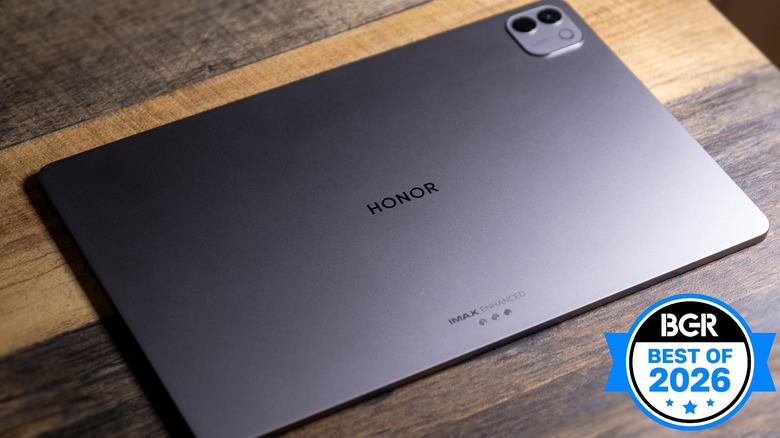
Striking a deft balance between productivity, convenience, and portability are the characteristics that define a premium tablet experience. Most tablet power users gravitate toward Apple's iPad family for these perks, but Android tablets like Honor's MagicPad4 have put up more and more of a fight lately. A fantastic OLED panel, ultra-thin form factor, and streamlined productivity tools make the MagicPad4 an easy recommendation.
In our review of the Honor MagicPad4, we said this Android tablet "feels refined and premium" thanks to its 450g weight, 4.8mm thickness, and vibrant 12.3-inch OLED panel. Under the hood, the Snapdragon 8 Gen 5 processor alongside 12GB (or 16GB) of RAM provide plenty of overhead for light mobile productivity, including "heavy multitasking across numerous apps" on its dedicated PC mode. The available companion keyboard and mouse support highlights the main benefit of Honor's tablet here; potent productivity in a mobile form factor.
Honor also has a reputation for producing high-performance hardware that can elevate mobile games. With its 165Hz OLED display, powerful chipset, and features like AI Super Resolution and frame generation, it's also no slouch for gaming. For Android purists or those who maybe don't want to shell out for a new iPad Pro, "the MagicPad4 is one of the best options you can buy today." Even against options like the Samsung Galaxy Tab, the MagicPad4 offers comparable performance against a more efficient software offering and design.
Best gaming tablet: RedMagic Astra 2
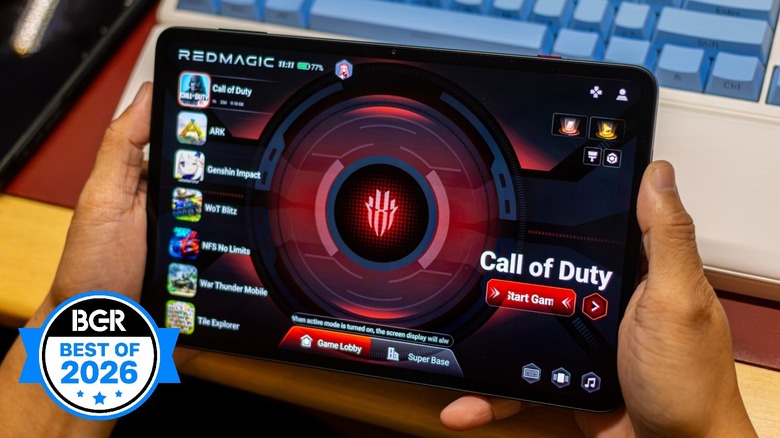
The rise of retro gaming handhelds (one of which you'll find on this list) has made gaming phones and laptops obsolete for some gamers (myself included). That said, others prefer to have a single device that can serve more than one purpose. That's why a fine-tuned, ultra-powerful gaming tablet like the RedMagic Astra 2 still has a place among the sea of new Android devices with built-in controllers.
"Since the RedMagic Astra 2 is designed specifically for gaming, it comes with top-tier specs to give players the best possible experience," Jowi Morales wrote in our review. Those specs include a 9.06-inch OLED display featuring up to 185Hz refresh rate, Snapdragon 8 Elite Gen 5 processor, up to 16GB of RAM, 512GB of storage, liquid cooling, and an 8,300mAh dual-cell battery. It's an absolute beast that should be able to play any game you throw at it smoothly.
As our review concluded, "if you're tired of gaming on smartphones and want a bigger screen without compromising portability, this tablet is an absolute game changer." It's fast, it's light, it's got a long-lasting battery and a vibrant display — all for a reasonable starting price of $699. I might not be the target audience for a gaming tablet, but those who are need to check the Astra 2 out.
Best premium monitor: Apple Studio Display XDR
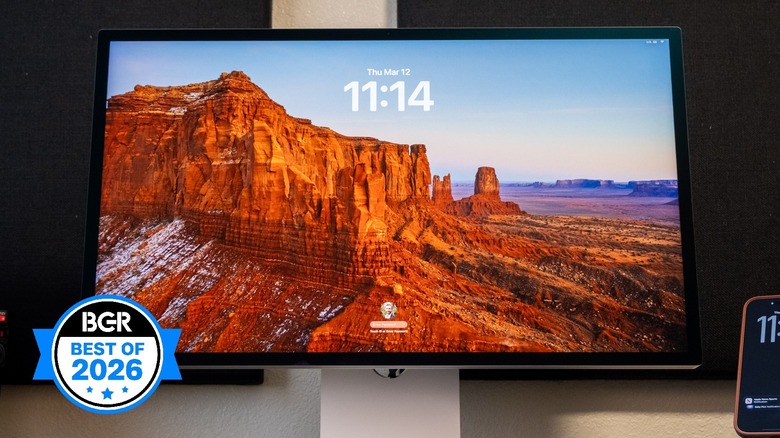
If you're going to shell out for a top-of-the-line computer monitor, you're going to have trouble finding anything that tops Apple's Studio Display XDR. "By almost any measure, the Apple Studio Display XDR is an exceptional professional display," we said in our review, and it holds true months later. Apple has had its share of hardware misses in recent years — this simply isn't one of them.
Of course, when you're paying potentially twice as much for a monitor as you did for your laptop, you expect the best of the best. That's pretty much what you'll get on the Studio Display XDR, which has a 27-inch 5K display with a 120Hz refresh rate, Mini-LED backlight, built-in six-speaker system, two Thunderbolt 5 ports, two USB-C ports, and 12MP Center Stage camera.
"As a whole, the Apple Studio Display XDR is one of the most accurate and vibrant monitors out there," Christian de Looper explained in his review for BGR. "The color accuracy really is very, very good, and when combined with the features on offer by the monitor, you get an experience that's definitely built for professionals."
Best mouse: Logitech G305 X SUPERLIGHT

Enduring popularity aside, the one downside to Logitech's G Pro X Superlight mouse was any prospective buyers had to adhere to the one-size-fits-all form factor. That changed as Logitech's mouse expanded into a lineup of Superlight-designed mice, each with their own grips and form factors. This year saw an even greater expansion into Logitech's weightless gaming mice, with the iconic G305 shape joining its thinner comrades.
Slimming down from nearly 100 grams to 59g, the G305 X Superlight variant ditches the battery requirement for a rechargeable cell while still maintaining its iconic shape and grip. Sporting the updated HERO sensor with 44K DPI and 678 IPS tracking speed, snap adjustments to your aim shouldn't faze you, especially in games like "Deadlock" or "Overwatch" that have higher tracking requirements. That all comes with the overkill 8 kHz polling rate for constant, low-latency use.
You also still get stellar battery life at 130-ish hours of persistent use, along with Type-C fast charging. If you prefer the shape of the G305 but want the added benefit of a lightweight mouse, the Superlight variant is an obvious choice for competitive gaming.
Best keyboard: Logitech G512 X

Similar to Logitech's expansive mice selection, so too does the brand offer a ton of keyboard options. The Logitech G512 X keyboard in particular dips its toes into the highly customizable mechanical keyboard market to great success. Eschewing the brand's typical bespoke options, this keyboard offers more versatility with its uncharacteristic modability and comfort for both work and play.
Available in both 75% and 98% layouts, the G512 X features what Logitech describes as "hybrid analog/mechanical" switches. Whether you choose the "Tactile" (clacky, louder) or "Linear" (smooth, softer) keys, you also get nine distinct analog switches with different actuation points. You can swap these out across most of the usable keyboard expressly for customizing the gaming experience. Beyond that, you get hot-swappable switches across the board that support 3-pin and 5-pin keys.
Barging into enthusiast territory typically occupied by the likes of Keychron, the Logitech G512 X offers a solid middle ground between gaming prowess and mechanical keyboard purism. You get all the bells and whistles of RGB, extra switch storage, programmable dials, and a gasket mounted board. Its all-plastic board design is really the only downer compared to steel or aluminum shells, but for gamers looking to dabble in enthusiast keyboards, the Logitech G512 X is a great entry point.
Best gaming monitor: Alienware AW39 5K
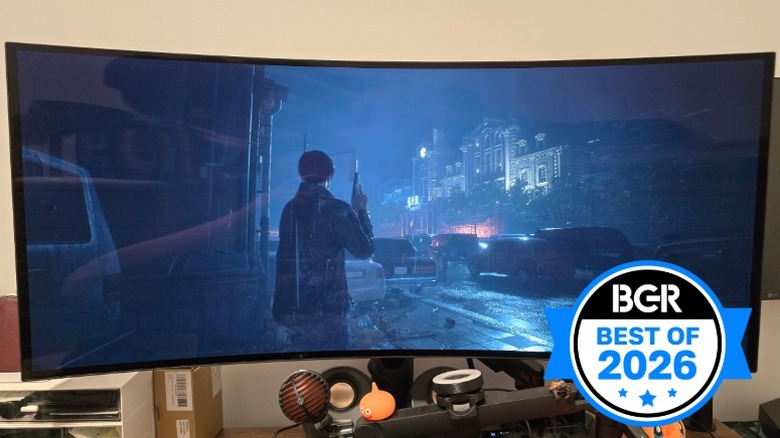
Thanks to tandem RGB stripe technology, OLED monitors are taking big steps in tackling issues that have plagued older technology, producing excellent new monitors as a result. Alienware's AW39 5K monitor is one such display, boasting a vibrant 5120x2160 native resolution, incredible color accuracy, and a massive 39-inch span that makes every game incredible. Obviously that's a high bar to clear with your PC gaming rig, but assuming you have the specs to justify it, the AW39 is excellent.
Similar to Alienware's Aurora laptop design, the AW39 monitor doesn't have a whole lot of frills beyond the panel itself. As noted in our review, "the most impressive design aspect of the AW39's design is how thin the 39-inch panel is," at 50mm width. As for the actual display, the amount of legwork at all levels of performance this display utilizes is truly impressive. Games at higher framerates on the dedicated "esports" modes help you maintain a competitive edge, while more cinematic games look incredible even without pushing 60 fps.
Overall, this Alienware monitor has a lot going for it: "The panel quality is excellent, color accuracy is true-to-form ... Gaming is smooth and vibrant and will assuredly provide a proper high-fidelity experience at native resolution, 4K, or even in the other HD and 21:9 resolutions." Some of the default color settings may need a tweak over time, but out of the box, it's very capable. Otherwise, as long as your PC gaming rig can handle it, this ultrawide panel is the one to snag.
Best gaming controller: SteelSeries Aeon Pro
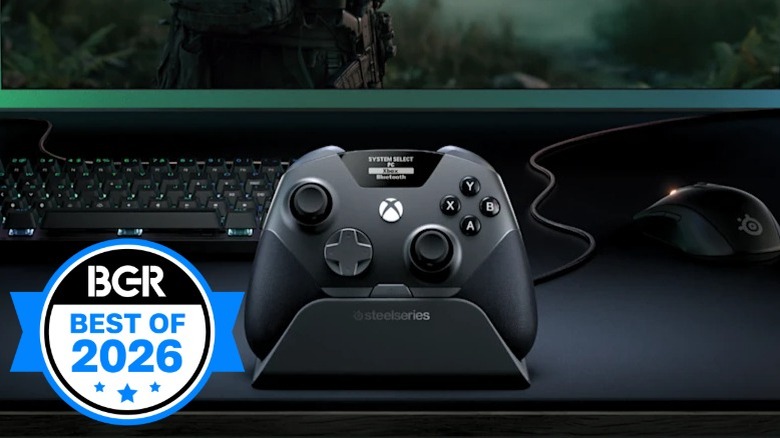
PC gamers who also dabble with the occasional console game often have to juggle multiple accessories across devices. Picking up the SteelSeries Aeon Pro, whether you're playing on PC or Xbox, it becomes immediately clear you're using a premium controller. The familiar Xbox-like shape, smart screen and compatibility menus, along with refined sticks, back paddles, and triggers, all make this one of the best options for a variety of gaming genres.
Said smart screen pairs with the SteelSeries GG app to offer a suite of customization. You get hall effect sticks with adjustable dead zones, remappable buttons, and triggers with adjustable actuation, all assignable to different game "profiles" that you can swap between on the fly, directly on the controller. And similar to SteelSeries' other peripherals, the Aeon Pro also utilizes the hot-swappable battery system that its headsets and other devices also employ.
Many of the unique features from the Aeon Pro mimic the "Pro" and "Elite" series controllers from PlayStation and Xbox, but ratchets things up even further. That much is reflected in the price, as this controller is the most expensive in comparison. However, you get all those features, alongside the smart screen functionality, even more customization options, and more. If you need a definitive PC/Xbox peripheral for daily gaming, the SteelSeries Aeon Pro is great.
Best Bluetooth speaker: Sonos Play
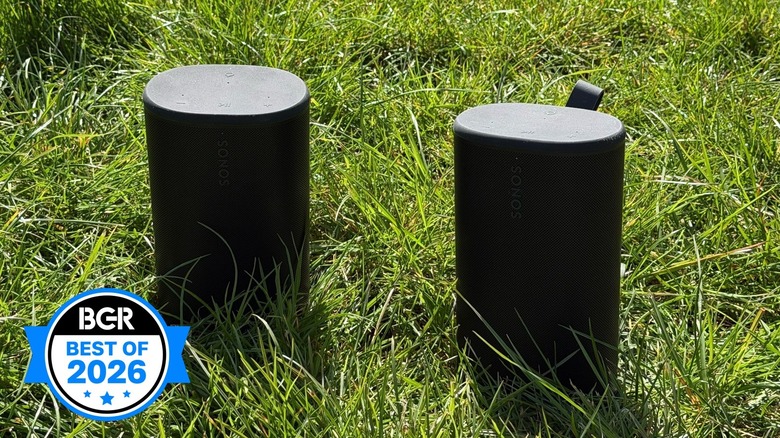
When you're shopping for Bluetooth speakers, there are seemingly countless options to choose from. Depending on your needs, a vast majority of them will probably do the job, but if you're looking for a versatile portable speaker that separates itself from the crowded field (and don't mind paying for it), the Sonos Play is worth a look.
There are always going to be tradeoffs when miniaturizing a product like a speaker, but the Sonos Play has the hardware to stand toe to toe with larger competitors. As noted in our review, the speaker has two 90-degree angled tweeters, a central mid-woofer, two force-cancelling passive radiators for bass, and an Auto TruePlay feature that calibrates music to suit the environment. As a result, "the sound feels rich," especially indoors.
At $299, the Sonos Play is a notable step up in price from the likes of the Beats Pill, Anker Soundcore 2, or Ultimate Ears Wonderboom 4. That said, if you're looking for more than just something to play music in the background while doing chores or hosting friends (or you and your friends simply prefer better-sounding speakers), the Sonos Play is one of the best new entries of 2026. That's doubly true if you already own a bunch of other Sonos products and want to sync them all up.
Best over-ear headphones: Apple AirPods Max 2
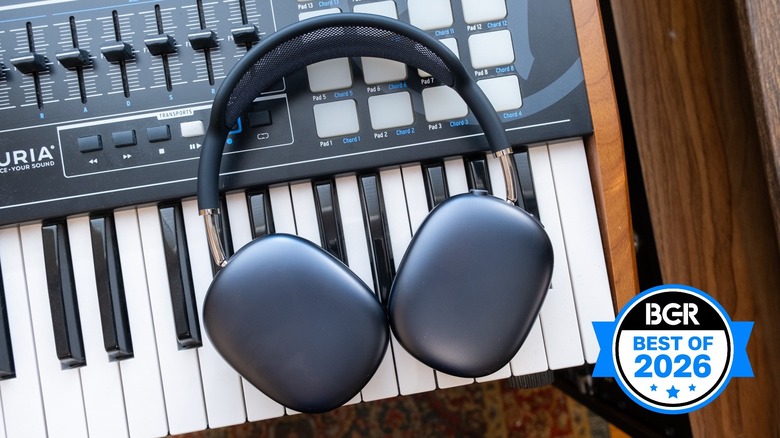
Apple has taken some relatively big swings in recent weeks with the debuts of the iPhone Duo, Siri AI, and Apple HomeView, but one of its best releases in 2026 was far less groundbreaking. Apple's AirPods Max 2 kept the design of the original model while overhauling the internals, resulting in one of the best pairs of over-ear headphones on the market. Our reviewer even went as far as to say that he preferred "both the noise cancellation and the sound profile [of the AirPods Max 2] over the Sony WH-1000XM6 and the Bose QuietComfort Ultra Headphones (Gen 2)."
That's high praise, especially for headphones that look virtually indistinguishable from a pair that launched in 2020. Again, it's what's inside that counts. Upgrades include enhanced active noise cancellation, improved audio quality, and new features like Adaptive Audio, Conversation Awareness, Voice Isolation, and Live Translation, powered by Apple's H2 chip. This isn't just a refresh — it's a new generation of the AirPods Max. $549 is expensive, but you get what you pay for.
Best earbuds: Sony WF-1000XM6
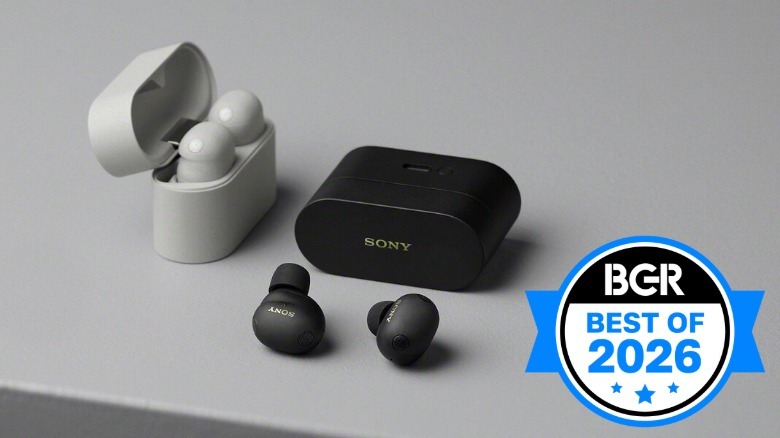
Sony headphones have historically reigned supreme among other audio accessories for incredible sound quality, paired with impressive noise cancellation. The newest iteration of its popular earbuds, the Sony WF-1000XM6, has made huge strides beyond sound quality and ANC as well. Improvements to the earbuds' shape and ear comfort, as well as better sound customization in the app, all make Sony's earbuds the best they've ever been.
They're not cheap at $329.99 MSRP, but you do get a premium for what you pay. The biggest features on display are Sony's algorithms and design contours that work in tandem to provide best-in-class noise cancellation. Multiple exterior sensors, moldable memory foam ear tips, and two separate processors for audio processing and exterior noise all work together to quiet down your surroundings. Passive isolation is also solid thanks to the contoured shape of the buds.
The exterior microphones also lend themselves well to a solid transparency mode. Passthrough audio is really solid, though with any pair of headphones, sound quality does suffer in favor of bringing in outside noise. However, in full ANC mode, along with tweaks to your preference in the Sound Connect app, the listening experience of the WF-1000XM6 buds is well worth the high asking price.
Best gaming headset: SteelSeries Arctis Nova Elite

Top-tier headsets for gaming aren't always limited to the products designed explicitly for the medium. However, many of the examples that do get produced primarily for that purpose often surpass that reputation as a marketing gimmick. SteelSeries' Arctis Nova Elite headset is one such example, which is a premium option that excels at gaming, music, and more. Its major caveat is that you will certainly pay for it come checkout time.
However, the features and specs you get at its price point do their absolute best to justify the high cost of entry. Sporting 40mm drivers and appropriately Hi-Res audio support (wired and wireless) for 96kHz/24-bit playback, reviewer Andy Zahn noted that "the SteelSeries Arctis Nova Elite is the most impressive headset I have ever used." The included GameHub sound interface also means it supports connections to PCs, gaming consoles, and other sources seamlessly.
Our review would've been positive on sound quality alone, but this headset's party trick of included, hot-swappable spare batteries means your headphones are never dead in the water. Pair that with the highly customizable EQ in the SteelSeries GG app, and this headset's sheer functionality is unparalleled. At $599.99, the Arctis Nova Elite are by no means affordable, but per our review, "it's a splurge which will yield what is very nearly a no-compromises audio experience."
Best retro gaming handheld: Retroid Pocket 6
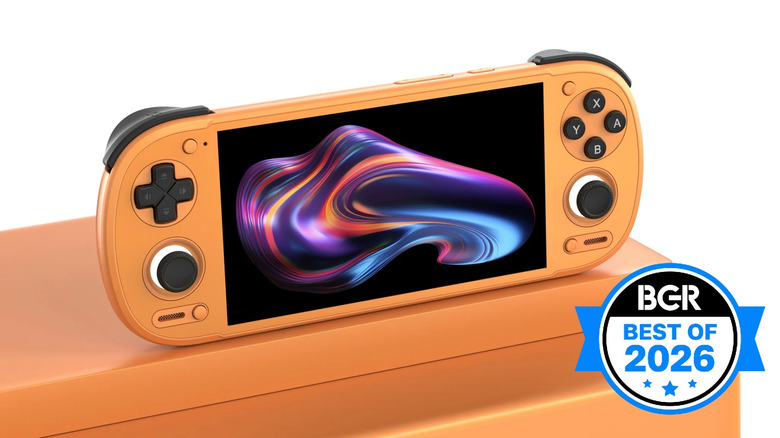
For gamers, the relatively recent rise of retro gaming handhelds has fundamentally changed the game (pun intended). Suddenly, it's not only possible, but somewhat trivial to bring decades worth of classic games with you anywhere you go. In fact, retro handhelds have become so powerful that some are even capable of playing PlayStation 3, Xbox 360, and PC games without breaking a sweat.
There are dozens of these devices available today, from dirt cheap Game Boy copycats to pricey widescreen Steam Deck competitors. If you don't do your research, your head might be spinning as you navigate a surprisingly crowded field. There's no perfect answer for every gamer, but the Retroid Pocket 6 comes close to being a universal crowd pleaser by providing plenty of power at a reasonable price, with great ergonomics and an AMOLED display to boot.
Other specifications include a Snapdragon 8 Gen 2 processor, an Adreno 740 GPU, up to 12GB of RAM, 128GB of built-in storage, a 6,000mAh battery, and 3D Hall sensor joysticks. Running Android 13, this device is capable of playing more games than you'd be able to finish in multiple lifetimes, and with tech prices spiking, the $244 MSRP is a sight for sore eyes.
Best mid-range 4K MiniLED TV: Hisense UR8
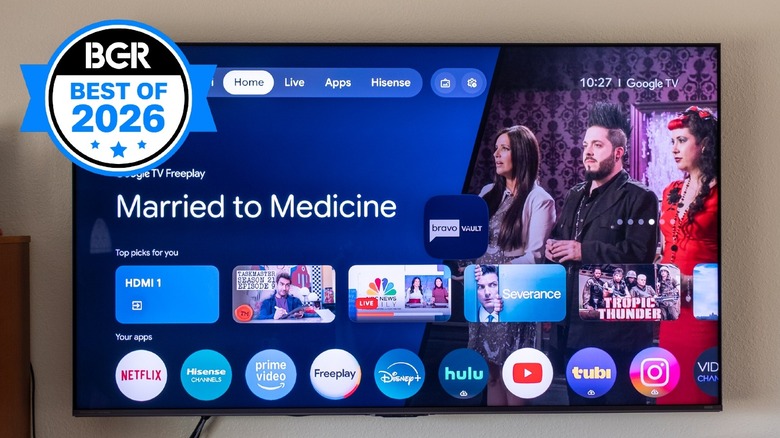
When it comes to the price range Hisense typically occupies, you often can get a solid, budget-friendly TV from the brand. The Hisense UR8 is no different, offering up a 55-inch (and options up to 100 inches) display with RGB MiniLED panel tech, up to 3,500 nits brightness with an anti-glare coating, and plenty of connectivity. It's not a particularly flashy design, nor is the base audio setup particularly compelling, but for the money, it's an excellent TV to choose.
In practice, the display maintains a really solid degree of accuracy across the colorscape, along with plenty of accurate blacks in spite of its higher brightness rating. Altogether, per our UR8 review, "The RGB LEDs deliver higher color saturation, high-contrast blooming is meaningfully reduced, and the native refresh rate jumps from 165Hz to 180Hz." In comparison to OLED TVs at a similar price point, the Hisense UR8 ultimately becomes the better deal.
The picture quality isn't always perfect, of course, but any degree of artifacting in higher motion scenes was minimal. That, and like many TVs, you're better off opting for a soundbar. Caveats aside, this TV becomes a great value proposition. "If you're looking for a TV in this price range for a room that has a decent amount of ambient light, then the Hisense UR8 is an easy recommendation."
Best 4K laser projector: AWOL Vision Aetherion Max

Some of us are on the lookout for the best deal, trying to squeeze the most we can out of a limited budget, but others just want the best they can get their hands on. For over $4,500 (though regularly on sale for under $3,600), you would expect the AWOL Vision Aetherion Max 4K UST triple laser projector to provide an unparalleled experience, and in our testing, that's exactly what it did. This is the key ingredient to building a true home theater.
"It's difficult to convey how utterly gorgeous the projection from the Aetherion Max looks in person," James Bruce said in our review. "The color quality, black levels, edge-to-edge clarity from AWOL Vision's PixelLock technology, and brightness are simply superb." And that's just scratching the surface of the feature set, which also includes gaming-centric features such as Dolby Vision Gaming, VRR, ALLM, and 1ms input lag at 4K resolution.
Anyone on the hunt for a premium laser projector that will impress any and every visitor who comes over to watch a movie, the AWOL Vision Aetherion Max is hard to beat. With a brightness of 3,300 ISO lumens, 6000:1 native contrast, and a maximum screen size of 200 inches, there's a good chance this projector will convert you from televisions permanently.
Best smart doorbell: Aqara Doorbell Camera G400
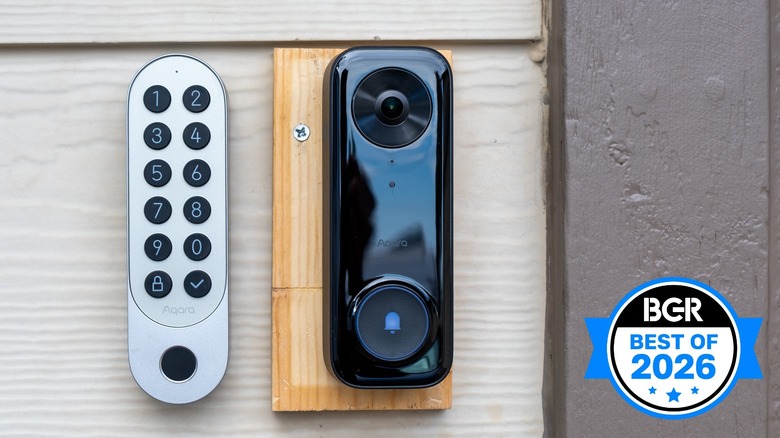
One of the key components of any modern smart home is a smart doorbell camera. After all, how else are you supposed to know when a package is delivered or identify an unexpected visitor who shows up at your front door? While obvious choices include Ring, Google Nest, and Eufy, we want to highlight a lesser-known option here: Aqara's Doorbell Camera G400.
First and foremost, it's worth noting that this is a hardwired doorbell camera. If that's a dealbreaker, check out the Aqara Doorbell Camera Hub G410. If not, the G400 features 2K video with a 165-degree field of view, infrared night vision, dual-band Wi-Fi 6 support, IP65 weatherproofing, smart detection, and the ability to set quick replies when you can't respond live. That's a fairly impressive feature set for a $99 device.
What might put the G400 over the top for some is smart ecosystem support. Apple HomeKit, Amazon Alexa, Google Home, SmartThings — whichever ecosystem you've chosen, the Aqara will likely be able to slide right in. There are cheaper options and there are pricier options with more features, but the G400 strikes a great balance between affordability and performance.
Best smartwatch: Apple Watch Series 12
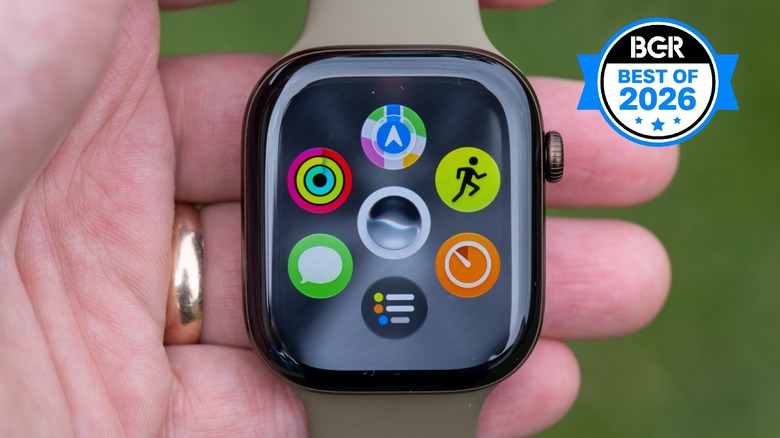
Apple's smartwatch dominance is no coincidence. For years, Apple has been building some of the most capable, approachable, and user-friendly wearables on the market, and the Apple Watch Series 12 continues that trend. It's not going to be a revelation for anyone with a Series 10 or Series 11, but as we said in our review, "Apple has made the most consequential internal changes to its smartwatch in years" by redesigning its health sensing platform and upgrading to the S11 chip.
"In everyday use, the Series 12 feels snappy," reviewer Christian de Looper said. "Apps launch quickly, scrolling through the Smart Stack is fluid, and Siri responses come back reasonably quickly." He then added that "the health sensing platform alone justifies the price" for anyone considering upgrading.
Beyond the improvements to health tracking, "fast charging eases the daily battery routine, the S11 chip keeps everything running smoothly without sacrificing battery life, and the sensing platform is genuinely a generation ahead of what came before." There are more powerful smartwatches out there (including Apple's own Apple Watch Ultra 3), but the feature set you're getting here at a significantly lower price point is tough to beat.
Best smart ring: Oura Ring 5
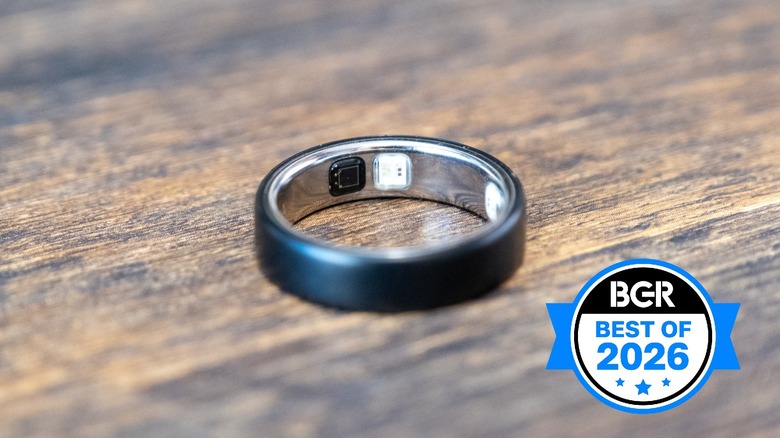
When it comes to smart rings, Oura is the undisputed market leader, and it got there in part by simply beating everyone else to the punch. There are some serious challengers that have sprung up in recent years, from RingConn to Halo to Ultrahuman and even Samsung's Galaxy Ring, but none have caught up to Oura just yet. For now, the exorbitant price is likely the only thing stopping anyone interested in smart rings from choosing Oura.
"The Oura Ring 5 is the best smart ring you can buy if you're not locked into a Samsung phone," said Christian de Looper in our review (referencing the Galaxy Ring). "The smaller titanium build makes it easy to wear 24/7, the battery life of 6 to 8 real-world days embarrasses most smartwatches, and the sleep and recovery analysis remains among the best of any consumer health tracker."
That last point is key — there are other solid smart rings out there, some of them a fraction of the price of Oura's. But if you're buying a smart ring, you're probably doing so to track your health. That's where the Oura Ring 5 outclasses its competition, and that's why it's difficult to recommend anything else. That said, you can probably skip upgrading if you own an Oura Ring 4.
Best robot vacuum: Roborock Saros 20
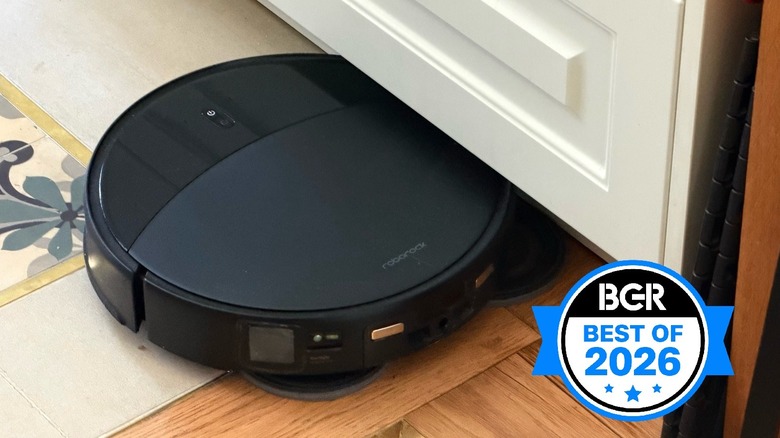
Other than buying a home or a car, there are few shopping experiences more stressful than buying a major appliance. Robot vacuums might not quite fall under that category, but there are now so many to choose from that it can be difficult to even know where to start. There are plenty of great options for a wide range of budgets, but if you're in the market for a flagship robot vacuum and mop that has every bell and whistle you could possibly need, acquaint yourself with the Roborock Saros 20.
It's worth noting up front that there is no "best" robovac for everyone. Some people have carpets and rugs covering their entire home, others only have hardwood or stone. It's vital to do research before committing to one, but the Roborock Saros 20 is about as close to a universal option as you'll find. In addition to 36,000 Pa suction power, the Saros 20 features dual spinning mops with variable pressure, flexible arms to reach edges and corners, the ability to climb over small ledges and dividers, and one of the best apps of any robovac on the market.
As we said in our review, "the Saros 20 is a worthwhile purchase if you're in the market for a top-of-the-line robovac." It's effective on nearly any surface, it battery lasts for hours and recharges quickly, its docking station takes care of all the dirty work for you, and it's smart enough to avoid objects and pets while it cleans. For $1,600, you'd expect this to be the last robot vacuum you buy for a very long time, and it absolutely accomplishes that goal.
Best robot mower: Ecovacs GOAT A3000 LiDAR Pro
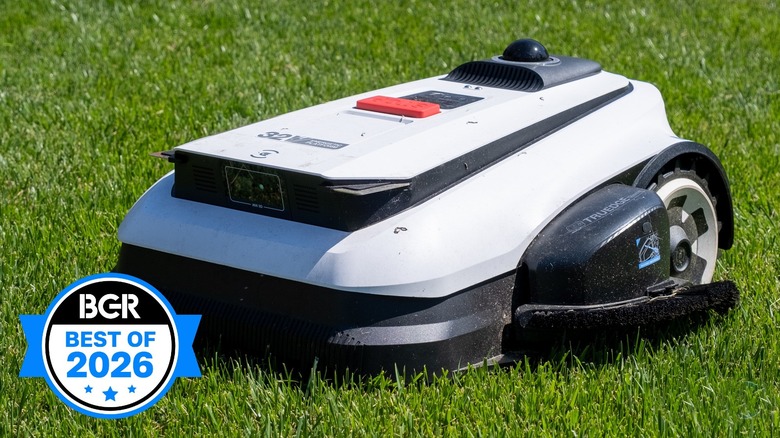
The prospect of AI stealing many of our jobs is a terrifying one, but when it comes to chores and home maintenance, there are plenty that I wouldn't mind a machine doing for me. Cutting the yard is one of them, and in recent years, robot lawn mowers have become increasingly capable of doing the work on a homeowner's behalf. There are quite a few to choose from, but the one that impressed us the most this year was the Ecovacs GOAT A3000 LiDAR Pro.
As noted in our review, the A3000 LiDAR Pro features a 360-degree rotating LiDAR navigation system on top and a 3D ToF sensor on the front that allow it to map and navigate your yard without the need for GPS. Combine that with an AI object recognition system, and the robot mower is able to do its work with minimal interaction from the owner. There's an app for fine-tuning settings and preferences, a battery capable of powering the mower for over two hours, dual cutting blades that cover 13 inches across, and TrueEdge tech to tackle hard-to-reach areas near walls and fences.
There's no question that the $2,500 price tag is a steep one, but if you pay to have your lawn taken care of by someone else, the robot mower might end up paying for itself after a few years. As our review said at the time, the Ecovacs mower "eliminates the vast majority of mowing work for most residential properties." It just comes down to how much value you see in that possibility.